| Key Insight | Explanation |
|---|---|
| Graphic design covers far more than logos | Professional graphic design services span brand identity, web design, marketing materials, packaging, social content, and motion graphics. |
| First impressions are made visually | Research consistently shows that users form an opinion about a website within 50 milliseconds, making design quality a direct commercial factor. |
| Costs vary widely by provider type | Freelancers, crowdsourcing platforms, subscription services, and full-service agencies each carry different price points, timelines, and quality levels. |
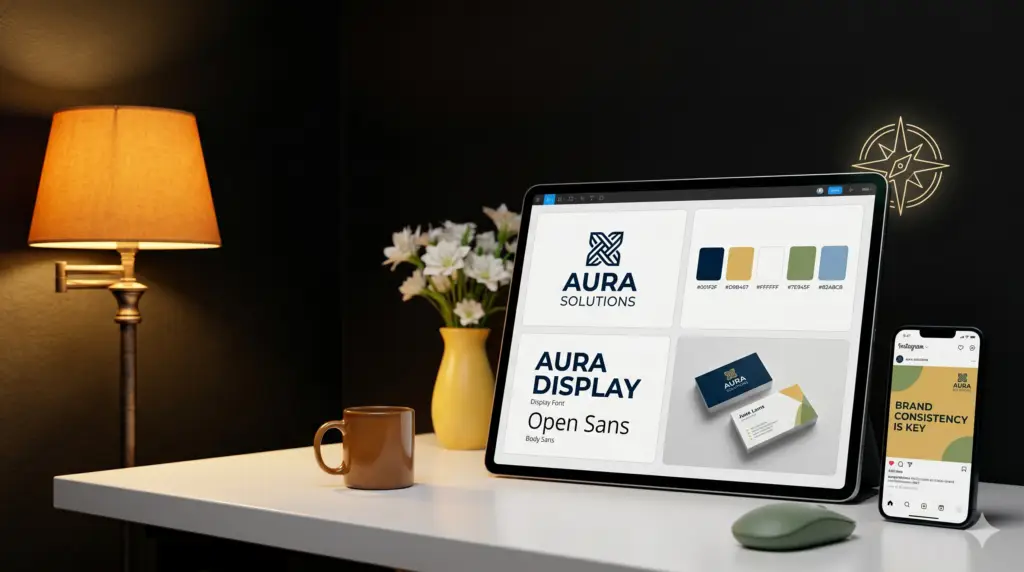
| Consistency builds brand trust | Brands that present a consistent visual identity across all touchpoints are perceived as more credible and professional by potential customers. |
| Design and digital marketing work together | Strong visual design amplifies SEO, PPC, and social media performance by improving click-through rates and on-page engagement. |
| Small businesses benefit most from integrated agencies | Working with a full-service agency that combines design, development, and marketing under one roof reduces friction and delivers faster results. |
Graphic design services are one of the most powerful investments a business can make. Yet most business owners don’t know exactly what they’re buying until they’ve already paid for the wrong thing. Graphic design services encompass the professional creation of visual content, including logos, websites, marketing materials, social media graphics, and packaging, to communicate a brand’s message clearly and compellingly. Done well, they turn browsers into buyers. Done badly, they quietly cost you customers every single day.
This guide covers everything you need to know: what graphic design services include, how the process works, what you should pay, and how to pick a provider that actually delivers results for your business.

What Are Graphic Design Services?
Graphic design services are professional creative solutions that use visual elements including typography, color, imagery, and layout to communicate ideas, build brand identity, and drive audience action. They span both digital and print formats and are used by businesses of every size across virtually every industry.
A Working Definition
At their core, graphic design services translate your business goals into visual communication. A well-designed logo tells a potential customer what kind of business you are before they’ve read a single word. A well-designed website keeps them on the page long enough to convert. These aren’t aesthetic luxuries. They’re commercial tools.
According to the Lemonade Stand design team, professional graphic design services span everything from infographics and business cards to full brand identity systems [1]. The scope is broader than most people assume.
Institutional providers such as UCLA’s Mail, Document & Distribution Services define design services to include binders, flyers, stationery, business cards, posters, brochures, catalogs, and reports [2]. Even government agencies like the Colorado Department of Central Services list graphic design work as covering brochures, calendars, conference materials, digital photo manipulation, and direct mail [3].
Why It Matters for Your Business
Visual communication isn’t optional in 2026. Customers encounter dozens of competing brands before they make a purchase decision. Your design is often the first thing they see and the last thing they remember.
Industry analysts suggest that consistent brand presentation across all platforms can increase revenue by up to 23%. That figure reflects something real: when your visual identity is coherent, customers trust you more. And trust converts.
- Graphic design shapes first impressions before a single word is read
- Strong visual identity differentiates you from competitors in crowded markets
- Professional design signals credibility to both customers and search engines
- Good design reduces friction in the buying journey by guiding attention
- Consistent visuals across channels reinforce brand recall and loyalty
Types of Graphic Design Services in 2026
this approach cover a broad range of specializations, from brand identity and web design to motion graphics and packaging. Understanding the different types helps you identify exactly what your business needs.
The Main Categories
Platforms like Superside and Designhill both organize their offerings into distinct disciplines, which reflects how the industry itself is structured [4][5]. Here’s a breakdown of the most common categories:
| Design Type | What It Covers | Best For |
|---|---|---|
| Brand Identity Design | Logos, color palettes, typography systems, brand guidelines | New businesses, rebrands |
| Web & UI Design | Website layouts, app interfaces, landing pages, UX wireframes | Any business with a digital presence |
| Marketing & Advertising Design | Social media graphics, display ads, email headers, PPC creatives | Businesses running campaigns |
| Print Design | Brochures, flyers, business cards, posters, banners | Local businesses, events, trade shows |
| Packaging Design | Product packaging, labels, unboxing experience design | Ecommerce and retail brands |
| Motion Graphics | Animated logos, explainer videos, social video content | Social media, YouTube, presentations |
| Publication Design | Magazines, reports, catalogues, internal documents | Corporates, institutions, publishers |
What Most Small Businesses Actually Need
In practice, most small and medium-sized businesses need a combination of brand identity design, web design, and marketing materials. These three categories form the foundation of a professional online presence.
Understanding how graphic design connects to customer acquisition is important. If you’re building a digital marketing strategy, it’s worth reading about what lead generation means for graphic designers and how strong visual assets directly support your ability to attract and convert new clients.
Pro Tip: Don’t commission design types in isolation. A logo designed without a broader brand identity system often leads to inconsistency across your website, social media, and print materials. Brief your designer on all the places your brand will appear before the first concept is created.
How Graphic Design Services Work
The graphic design process typically follows a structured workflow from initial brief through to final delivery, covering discovery, concept development, revision, and sign-off. Understanding this process helps you get better results and avoid wasted time.
The Standard Design Process
Whether you’re working with a freelancer on Fiverr, a crowdsourcing platform like DesignCrowd, or a full-service agency, the core workflow is similar [6][7]. Here’s how a professional engagement typically runs:
- Discovery and briefing: You share your business goals, target audience, brand preferences, and any existing assets. The better your brief, the better the output.
- Research and strategy: The designer researches your industry, competitors, and audience to inform creative direction. This step is often skipped by cheaper providers, and it shows.
- Concept development: Initial design concepts are created and presented, usually two to three options depending on the scope.
- Feedback and revision: You review the concepts and provide structured feedback. Most professional engagements include two to three rounds of revisions.
- Refinement: The chosen concept is refined based on feedback until it meets the agreed brief.
- Final delivery: Files are delivered in the agreed formats, typically including both print-ready and web-optimized versions.
- Brand guidelines (where applicable): For identity projects, a brand guidelines document is produced to ensure consistent application going forward.
Provider Models: What’s the Difference?
The type of provider you choose shapes the experience significantly. Freelance marketplaces offer speed and low cost but variable quality. Subscription-based services like those reviewed by Superside’s 2026 roundup offer predictable monthly costs for ongoing volume [8]. Full-service agencies offer strategic input alongside execution, which matters most when design needs to connect to broader marketing goals.
At Three Girls Media, we’ve found that clients who come to us after trying a cheap freelance route almost always cite the same problem: the design looked fine in isolation but didn’t work across their website, social channels, and print materials. Integration matters.
Key Benefits of Professional Graphic Design
Professional this deliver measurable commercial benefits, including stronger brand recognition, higher conversion rates, and improved customer trust. These aren’t soft outcomes. They translate directly into enquiries and revenue.
The Business Case for Good Design
Research from Stanford University’s Web Credibility Project found that 75% of users judge a company’s credibility based on its website design alone. That’s three quarters of your potential customers making a trust decision before they’ve read your pricing, your testimonials, or your contact details.
Professional it address this directly. Here’s what you gain:
- Increased brand recognition: Consistent visual identity makes your business memorable across every touchpoint
- Higher conversion rates: Well-designed landing pages and marketing materials guide users toward action more effectively
- Improved perceived value: Professional design signals quality, allowing you to command higher prices
- Better SEO performance: Optimized images, clear visual hierarchy, and fast-loading design all contribute to search rankings
- Stronger social media engagement: High-quality visuals consistently outperform text-only content in click-through and share rates
- Reduced bounce rate: Bounce rate (the percentage of visitors who leave after viewing just one page) drops when design creates a clear, welcoming user journey
Design as a Competitive Advantage
For small businesses in particular, design is one of the few areas where you can outperform much larger competitors without a proportionally larger budget. A well-designed website from a specialist agency can look more authoritative than a multinational’s outdated site.
Institutions like Woman’s Hospital’s in-house graphic services team recognize this, noting that professional design brings ideas to life across everything from simple to complex projects [9]. The same principle applies to your business.
Pro Tip: When briefing a designer, always provide three examples of brands whose visual identity you admire, even if they’re outside your industry. This gives designers a faster route to understanding your aesthetic preferences than written descriptions alone.
Common Mistakes and How to Avoid Them
The most common mistakes businesses make with this method include choosing on price alone, failing to brief designers properly, and treating design as a one-time exercise rather than an ongoing asset. Each of these mistakes has a predictable cost.
Pitfalls to Watch For
A common mistake is commissioning a logo without thinking about where it will be used. A logo that looks great on a business card may be unreadable as a website favicon (the tiny icon that appears in browser tabs) or illegible when printed on a dark background. Always ask for your logo in multiple formats and color variations from the outset.
Another pitfall: treating the design brief as optional. Designers aren’t mind readers. The less context you provide, the more revision rounds you’ll need, and the higher the final cost. A one-page brief covering your audience, competitors, tone of voice, and preferred style can cut revision cycles in half.
- Choosing on price alone: The cheapest option rarely accounts for revision time, file format delivery, or strategic input
- Skipping the brand guidelines document: Without guidelines, every new piece of design work drifts from the original identity
- Using low-resolution files: Web designers and printers need different file formats; always request both from your designer
- Ignoring accessibility: Poor color contrast and illegible typography exclude users with visual impairments and can affect legal compliance
- Treating design as finished: Your brand identity should evolve as your business grows; plan for periodic reviews
The Hidden Cost of Poor Design
In one project we handled for a healthcare practice in Surrey, the client had been using a logo designed by a relative. It had no vector version (a scalable file format that stays sharp at any size), which meant every time they needed a new banner or sign, they were paying for a redesign from scratch. Investing in a proper brand identity at the start would have cost less than the accumulated redesign fees over three years.
Academic institutions like American River College’s design services team emphasize the importance of professional production standards for everything from signage to enrollment guides [10]. The same standards apply in commercial settings.
Best Practices for Choosing Design Services in 2026
Choosing the right graphic design service in 2026 means evaluating providers on portfolio quality, process transparency, file delivery standards, and their ability to integrate design with your broader marketing strategy.
How to Evaluate Providers
The market for this strategy has never been more fragmented. You can commission work through global freelance platforms, subscription-based design services, crowdsourcing contests, or full-service agencies. Each model has legitimate use cases. The key is matching the model to your actual need.
- For one-off, low-stakes assets (social media post templates, simple flyers): freelance platforms like Fiverr or ComeUp offer speed and affordability [6][11]
- For brand identity and logo design: look for agencies or senior freelancers with a portfolio in your industry
- For ongoing design volume: subscription services offer predictable costs but limited strategic input
- For integrated design and marketing: a full-service agency that combines graphic design with web development, SEO, and PPC delivers the strongest commercial results
Questions to Ask Before You Hire
Our team at Three Girls Media recommends asking every prospective design provider these questions before signing anything:
- What file formats will I receive on delivery?
- How many revision rounds are included in the quoted price?
- Do you have experience designing for my industry?
- Will you produce brand guidelines as part of this project?
- How will the design integrate with my website and marketing materials?
- Who retains intellectual property rights to the final files?
That last question matters more than most people realize. Some design platforms and freelancers retain rights to work until full payment is received, or include licensing restrictions that limit how you can use the files commercially. Always clarify ownership upfront.
Flat-rate design services like Edge Creative Services have popularized unlimited revision models, which can work well for businesses with ongoing, predictable design needs [12]. Just read the terms carefully before committing.
Pro Tip: Always request a small paid test project before committing to a large engagement. A £150–£300 test piece (a single social media template or a one-page flyer) tells you more about a designer’s process, communication style, and output quality than any portfolio review.
Sources & References
- UCLA Mail, Document & Distribution Services, “Design Services”, 2026
- Colorado Department of Central Services, “Graphic Design”, 2026
- Fiverr, “Graphic Design Services — Find a Graphic Designer Today”, 2026
- Woman’s Hospital, “Woman’s Graphic Services”, 2026
- American River College, “Graphic Design Services”, 2026
Frequently Asked Questions
1. What are the services of a graphic designer?
A professional graphic designer provides a wide range of visual communication services, including brand identity creation (logos, color systems, typography), web and app interface design, marketing material production (brochures, social ads, email graphics), packaging design, and motion graphics. this approach also cover publication layout, infographic creation, and the development of brand guidelines that ensure visual consistency across every platform your business uses. The scope goes well beyond logo design.
2. What are the 7 main types of graphic design?
The seven most recognized types of graphic design are: brand identity design (logos, visual systems), web and UI design (websites, apps, landing pages), advertising and marketing design (ads, social graphics, email campaigns), motion graphics and animation (video content, animated logos), packaging design (product labels and unboxing experience), publication and typographic design (reports, magazines, books), and illustration (custom artwork for editorial or commercial use). Each discipline requires distinct technical skills, so most agencies specialize in two or three areas rather than all seven equally.
3. What was Paul Rand’s design style?
Paul Rand (1914–1996) is widely regarded as one of the founding figures of modern American corporate identity design. His style fused European Modernism (particularly the Bauhaus movement’s emphasis on functional simplicity) with American commercial pragmatism, producing logos that were bold, geometric, and instantly recognizable. His work for IBM, UPS, and ABC demonstrated that great this could distill complex brand identities into simple, scalable marks that remained effective for decades. Rand believed strongly that good design was good business.
4. How much should I pay for graphic design?
Costs for it vary significantly depending on provider type, project complexity, and geography. As of 2026, freelance rates in the UK typically range from £25–£75 per hour for junior designers to £75–£150 per hour for senior practitioners. A professional logo with brand guidelines from an experienced agency costs between £500 and £3,000 in the UK market. Subscription-based unlimited design services run from approximately £300–£1,500 per month. Results may vary based on your specific brief, revision requirements, and the experience level of the designer you engage.
5. What’s the difference between freelance and agency graphic design services?
Freelancers typically offer lower hourly rates and direct communication with the person doing the work, but they may lack the breadth of skills needed for a full brand identity project and often have limited capacity for ongoing support. Agencies bring a team of specialists under one roof, including designers, strategists, developers, and marketers, which means your graphic design integrates directly with your website, SEO, and advertising campaigns. For businesses that need design to drive commercial results rather than just look good, a full-service agency usually delivers stronger, more measurable outcomes.
6. Can graphic design services help with SEO?
Yes, directly. Search engines reward websites that deliver good user experiences, and design is a core component of that. Properly optimized images (correct file formats, compressed sizes, descriptive alt text) improve page load speed and accessibility, both of which are ranking factors. Clear visual hierarchy reduces bounce rate (the percentage of visitors who leave after one page), which signals relevance to Google. this method that are integrated with your web development and SEO strategy produce measurably better search performance than design created in isolation.
Conclusion
this strategy are not a cosmetic expense. They’re a commercial investment that shapes how potential customers perceive, trust, and engage with your business from the first click onward. The businesses that treat design as a strategic asset rather than an afterthought are the ones that consistently outperform their competitors online.
The most important decision isn’t which designer to hire. It’s whether your design is working alongside your website, your SEO, and your marketing campaigns as a coherent system. That’s where the real return comes from.
Three Girls Media brings 10+ years of award-winning design and digital marketing expertise to businesses across Surrey, South London, and beyond. We design with conversion in mind, not just aesthetics, because a beautiful website that doesn’t win you customers isn’t doing its job. If you’re ready to invest in this approach that actually move the needle for your business, get in touch for a free, no-obligation quote.
Recommended Articles
Explore more from our content library: