If you’ve ever wondered whether local SEO still pulls its weight, the data leaves little room for doubt. Nearly every consumer now turns to the internet before setting foot in a shop, booking a service, or picking up the phone to a nearby business. What’s changed isn’t whether people search locally — it’s how, and increasingly, that includes AI-generated summaries sitting above the results you’re used to competing for.
Below is a fresh breakdown of where local search stands right now, covering everything from Google Business Profile performance to the growing role of AI Overviews, and what it all means for businesses trying to be found.
Local Search Is Still the First Stop for Most Buyers
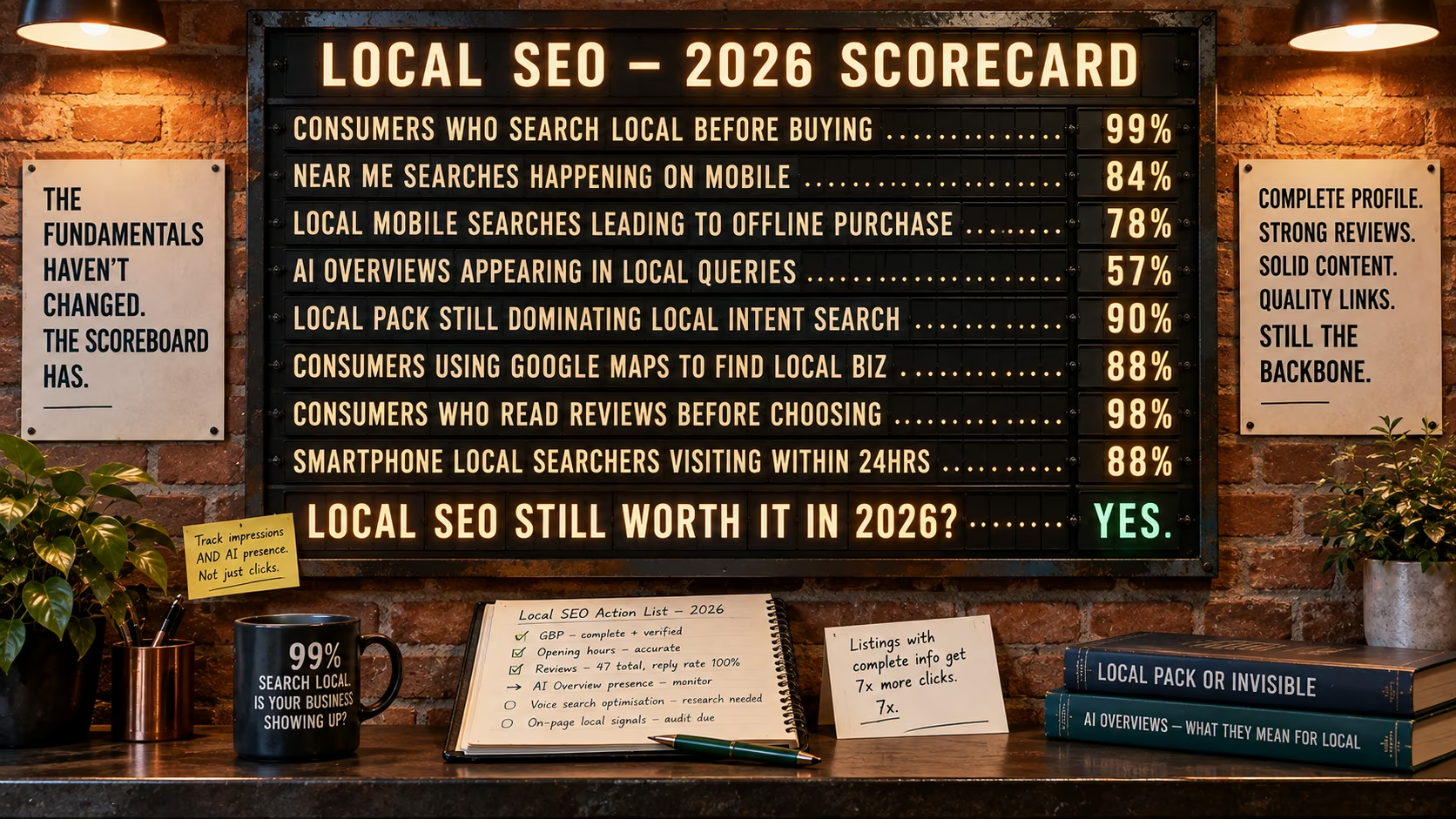
The vast majority of consumers research businesses online before they buy anything nearby. According to BrightLocal, 99% of people have used the internet to find information about a local business within the past year, and a separate Statista study found that a fifth of consumers search for nearby businesses every single day.
That volume of searching doesn’t automatically translate into visibility, though. Moz’s industry research suggests that well over half of businesses still haven’t built local SEO into their marketing strategy, which leaves a significant gap for those willing to invest in it properly. Trust plays a role too — Google’s own data shows customers are 2.7 times more likely to trust a business with a complete, accurate profile than one with gaps in its information.
Mobile Devices Are Where Local Decisions Get Made
Local search and mobile search have effectively become the same conversation. Research from RedLocalSEO puts the share of “near me” searches happening on mobile at 84%, while local mobile queries are reportedly growing considerably faster than desktop search overall, according to SynUp. Crucially, this isn’t idle browsing: SearchEngineLand found that 78% of local mobile searches lead to an offline purchase, which tells you exactly how commercially valuable that traffic is if you can capture it.
For any business without a mobile-friendly website, fast-loading pages, and clear contact details above the fold, this is where visibility quietly leaks away before a customer ever reaches the shop.
AI Overviews Are Now Part of the Local Results Page
This is the biggest shift in local search since Google introduced the map pack. Research from WhiteSpark found that AI Overviews now appear for at least 57% of local-style queries, climbing as high as 80% depending on the category. Separate analysis from LocalFalcon puts the figure closer to 40% across a broader sample of local business searches, with service-based categories like personal injury solicitors and window cleaning seeing AI answer boxes appear in roughly two-thirds of queries.
What’s reassuring is that traditional local packs haven’t been pushed aside. The same WhiteSpark study found local pack results still dominate more than 90% of purely local-intent searches, with AI Overviews making only a modest 15% inroad into that specific space. Businesses aren’t choosing between optimising for AI or for traditional local search — they increasingly need both, which is why adoption is climbing fast: nearly all small businesses now use at least one AI-enabled tool, according to AP News, and the vast majority who’ve adopted it already call it valuable to their operations.
The Google Map Pack Still Decides Who Gets Picked
Long before a customer clicks through to a website, they’re often making a decision based on three listings alone. Businesses appearing in the Google 3-Pack earn considerably more traffic and more direct actions — calls, direction requests, website clicks — than those ranked further down, according to SOCi’s analysis of hundreds of thousands of listings.
Backlinko’s behavioural research shows that 42% of local searchers click straight into the Map Pack, and RedLocalSEO puts consumer preference for 3-pack results at 68%. Google Maps itself remains the dominant discovery tool too — BrightLocal found 88% of people use it to find local businesses, compared to just 12% using Apple Maps.
Your Google Business Profile Is Working Harder Than You Realise
A well-maintained profile isn’t just a directory listing — it’s a direct sales channel. Birdeye’s research found verified profiles receive over 21,600 views a year and generate around 595 phone calls annually, close to 50 a month, purely from organic visibility. Roughly 45% of businesses receive appointment requests directly through their profile, according to Publer.
Accuracy matters enormously here. BrightLocal found that 62% of consumers will actively avoid a business if they spot incorrect information online, and correct opening hours are the single detail consumers care about most for retail businesses specifically. Listings with complete, accurate information get seven times more clicks than incomplete ones, per Publer’s data — a difference that’s hard to ignore given how little effort it takes to fix.
Rankings Still Come Down to On-Page Signals and Links
Despite everything changing around it, the mechanics behind local rankings have stayed fairly consistent. WhiteSpark’s ranking factors survey identifies roughly 149 individual signals feeding into local rankings, with on-page signals carrying the most weight at 36%, followed by link signals at 26% and behavioural signals at 9%. Dedicated service pages, strong internal linking, quality inbound links, and clear geographic keyword relevance consistently score highest among individual ranking factors.
Roughly a third of local SEO professionals also point to Google Business Profile optimisation as the single most important factor for map pack visibility, according to the same research — reinforcing that profile work and website work need to happen in tandem, not as separate projects.
Reviews Are Still the Deciding Factor for Most Customers
Review management isn’t optional anymore — it’s core infrastructure. BrightLocal found that 98% of people read online reviews at least occasionally before choosing a local business, and 89% are more likely to choose a business that responds to reviews, whether positive or negative. Trust in reviews now nearly rivals trust in personal recommendations, with 49% of consumers rating the two as equally credible.
The commercial impact is measurable too. BrightLocal’s conversion research found that businesses improving their rating from 3.5 to 3.7 stars saw conversion rates jump by nearly 120% — the steepest gain recorded at any point on the ratings scale. Even at a larger scale, enterprise locations replying to at least 32% of reviews achieved 80% higher conversion rates than competitors replying to just 10%.
Local Searches Convert Fast When You’re Visible
Local intent tends to be immediate, commercial intent. SynUp’s research found 88% of smartphone local searchers visit or call a business within 24 hours, and older but still widely cited data from SearchEngineWatch puts the share of mobile local searches ending in a purchase at roughly 80%. Businesses with photos on their profile also see a measurable lift — Google reports 42% more direction requests and 35% more website clicks compared with profiles lacking imagery.
Voice Search Is Quietly Becoming a Local Search Habit
Voice assistants haven’t taken over search, but they’ve carved out a meaningful niche specifically for local queries. BrightLocal found 58% of people have used voice search to find local business information in the past year, and SynUp’s data suggests roughly three-quarters of all voice searches are “near me” or locally focused — a share expected to keep climbing as smart speakers and voice assistants become more embedded in daily routines.
What This Means Going Forward
Nothing here suggests local SEO fundamentals are going away — a complete profile, strong reviews, solid on-page content, and quality links remain the backbone of visibility. What’s changed is the scoreboard: with AI Overviews now appearing across a large share of local queries, click-through rate alone no longer tells the full story. Businesses that want to stay visible in 2026 need to track impressions and presence across both traditional results and AI-generated summaries, not just clicks to their website.