Ask five people what Google Ads costs and you’ll get five different answers, usually followed by “it depends”. Frustrating, but true. The good news is that you can work out a sensible figure for your own business with a few simple sums.
There’s no minimum spend and no joining fee. You set a budget, and you pay when someone clicks your advert. Most small UK businesses start with somewhere between a few hundred and a couple of thousand pounds a month, depending on their industry and goals. Here’s how the pricing actually works, what influences it, and how to avoid paying more than you need to.
How Google Ads Pricing Works
You Pay Per Click, Not Per Advert
Google Ads runs on a pay-per-click model. Your advert can appear thousands of times without costing you anything. You’re charged only when someone clicks through to your website, or in some campaign types when they call you directly. Each click has a price, known as your cost per click, or CPC.
That price isn’t fixed. It’s decided in an auction every time someone searches. Google weighs up how much you’re willing to pay, how relevant your advert and landing page are, and how competitive the search is. You can read more about how it works on the Google Ads website.
Your Budget Sets the Ceiling
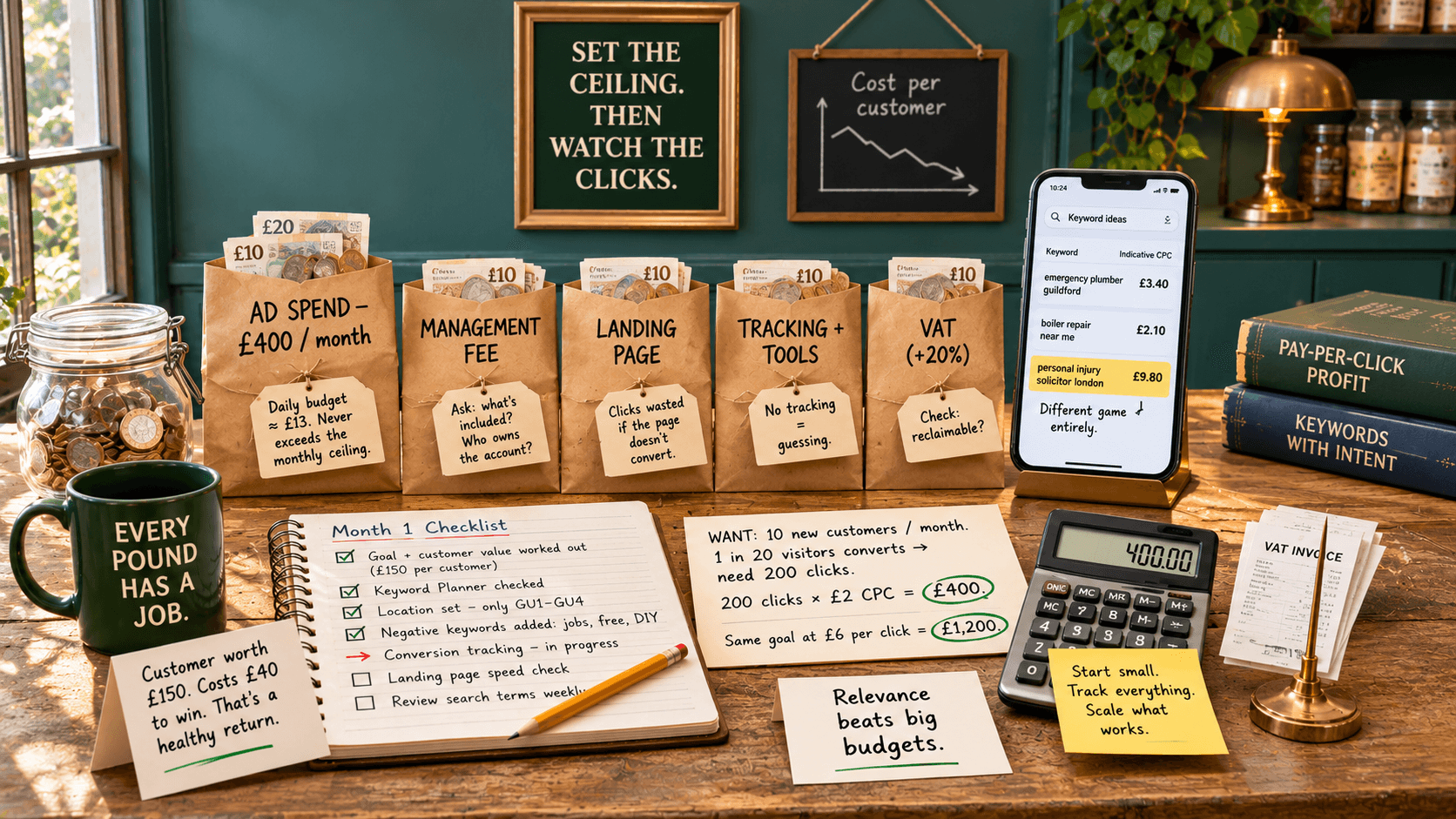
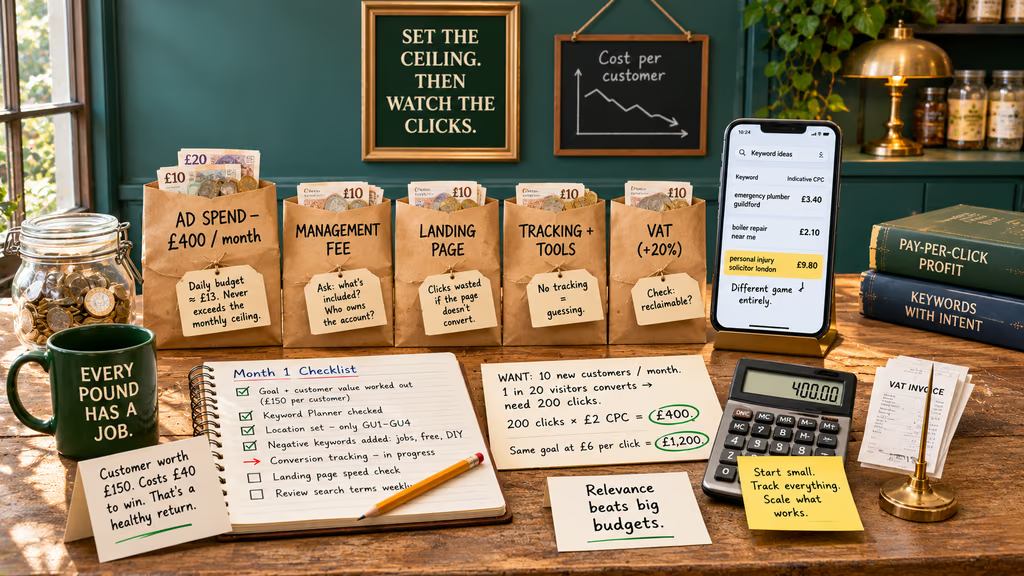
You choose a daily budget, and Google aims to spend roughly that amount on average over the month. On any given day it can spend a bit more or less, but it won’t exceed your monthly limit, which is based on your daily budget multiplied by the average number of days in a month. This gives you real control. You can start small, pause whenever you like and adjust as you learn.
Quality Matters as Much as Money
Google rewards adverts that people find useful. Your Quality Score reflects how relevant your keywords, advert wording and landing page are to what someone searched for. Higher quality generally means lower costs and better positions, so a well-built campaign can beat a bigger-spending rival. Poor relevance does the opposite, quietly driving up what you pay per click.
What Does a Click Cost in the UK?
Costs Vary Enormously by Industry
Quoted averages differ depending on the source, and no one publishes a definitive UK-wide figure. Broadly, many local services and trades see clicks in the region of £1 to £4, while ecommerce typically falls somewhere similar. Highly competitive sectors like legal services, insurance and finance can cost several times that, sometimes £5 to £12 or more per click.
Treat any single “average UK CPC” with caution. A plumber targeting a small town and a solicitor bidding for personal injury searches in London are playing completely different games. The most reliable way to estimate your own costs is to use Google’s free Keyword Planner, which shows indicative bid ranges for the exact phrases you want to target.
Why Your Costs May Differ From the Averages
Several things push your click costs up or down. Competition is the biggest, with more advertisers chasing the same keyword meaning higher bids. Location matters too, as big cities tend to cost more than smaller towns. Broad keywords usually cost more and waste more than specific ones. Time of year plays a part, with costs often rising in busy seasons like the lead-up to Christmas. Finally, the quality of your advert and landing page affects what you pay for every click.
CPCs have also been trending upwards in recent years as more businesses compete for the same space, so it’s wise to budget with a little headroom.
How Much Should You Budget?
Work Backwards From Your Goal
Rather than picking a number at random, start with what you want to achieve. Decide how many new customers or enquiries you need, estimate what share of visitors will convert, and multiply by your expected CPC.
Here’s a simple way to do it. Say you want ten new customers a month, your website turns one in twenty visitors into customers, and clicks cost about £2. You’d need roughly 200 clicks, which comes to around £400. If clicks cost £6, the same result needs £1,200. The method is the same whatever the numbers, and it immediately tells you whether Google Ads is viable for your sector.
Then check the maths against your profit. If a new customer is worth £150 to you and costs £40 to win through ads, that’s a healthy return. If winning that customer costs more than they’re worth, the campaign needs fixing or shouldn’t run at all.
Sensible Starting Budgets
For many small UK businesses, £300 to £500 a month is a reasonable amount for a first campaign in a modest-competition market, enough to gather useful data without risking too much. Businesses in more competitive fields, or those wanting steady lead flow, often spend £750 to £3,000 a month. Very low budgets in expensive industries rarely generate enough clicks to learn anything meaningful.
Start focused rather than broad. A small budget concentrated on a few high-intent searches in a defined area will outperform the same money spread thinly across many.
The Costs Beyond Your Ad Spend
Management Fees
If you hire a freelancer or agency to run your campaigns, expect to pay a management fee on top of your ad spend. This is commonly either a percentage of spend or a flat monthly fee, and it varies widely depending on the provider and the complexity of the account. Ask exactly what’s included, how often you’ll get reports and whether you own the Google Ads account. Be wary of anyone who locks you into long contracts or won’t share account access.
Your Website and Landing Pages
Paying for clicks is wasted if the page they land on doesn’t convince visitors to act. A clear, fast, mobile-friendly landing page with an obvious call to action is part of your real cost. If your website needs work first, factor that in. Check your page speed using PageSpeed Insights before you spend a penny on clicks.
Tracking and Tools
You’ll want conversion tracking set up so you know which clicks lead to calls, forms or sales. Google’s own tools are free, but call-tracking software or extra reporting tools may carry a monthly fee. Without tracking, you’re guessing where your money goes.
VAT
Google typically adds VAT to ad spend for UK advertisers, so check whether the figures you see are inclusive or exclusive. If you’re VAT-registered, you can usually reclaim it, but it’s worth confirming the current rules on GOV.UK or with your accountant, as it affects your true cost.
How to Stop Wasting Money on Google Ads
Be Specific With Keywords
Target phrases that show clear buying intent, such as “emergency plumber Guildford” rather than just “plumber”. Use phrase and exact match options where appropriate, and add negative keywords to block irrelevant searches like “jobs”, “free” or “DIY”. Check your search terms report regularly to see what people actually typed before clicking.
Target Tightly by Location
For local businesses, restrict ads to the areas you really serve. Showing adverts across the whole country, or to people outside your catchment, burns money fast. If your business serves particular postcodes or towns, set those locations precisely.
Write Honest, Relevant Adverts
Match your advert text to the search, mention what you offer and where, and send people to a page that delivers on that promise. Remember that UK advertising must follow the ASA’s advertising codes, so avoid misleading claims or exaggerated promises.
Review and Refine
Check performance regularly. Pause keywords that spend without converting, shift budget to the ones that work, and test different advert wording. Be cautious with fully automated campaign types if you have a small budget and limited data, because they can spend quickly without giving you much control.
Are Google Ads Worth It for a Small Business?
They can be, particularly when customers are actively searching for what you offer and you can turn clicks into profitable sales. Google Ads works best for businesses with clear services, a decent margin and a landing page that converts. It’s less suitable if your margins are razor-thin, your market is extremely competitive or your website isn’t ready.
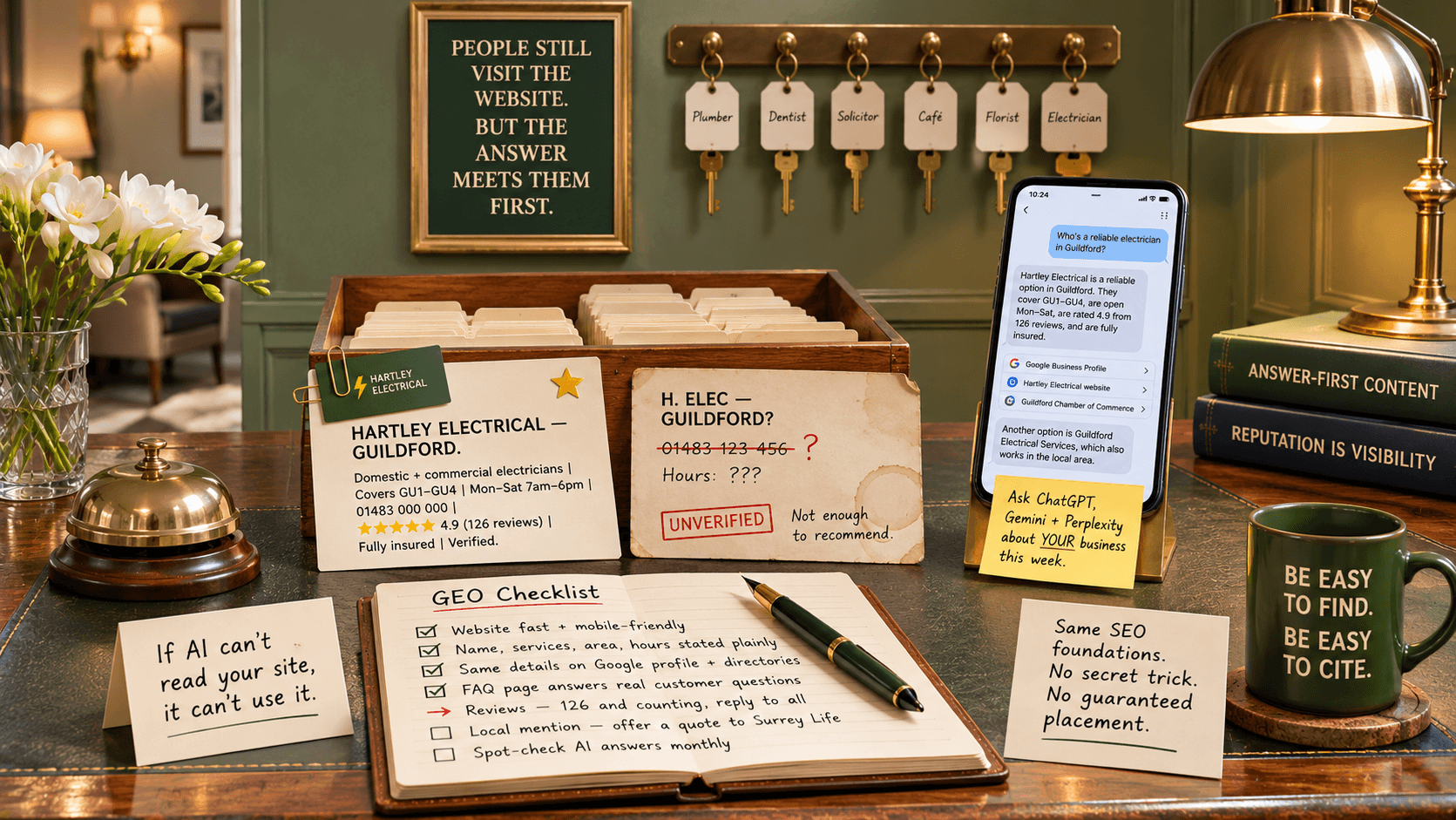
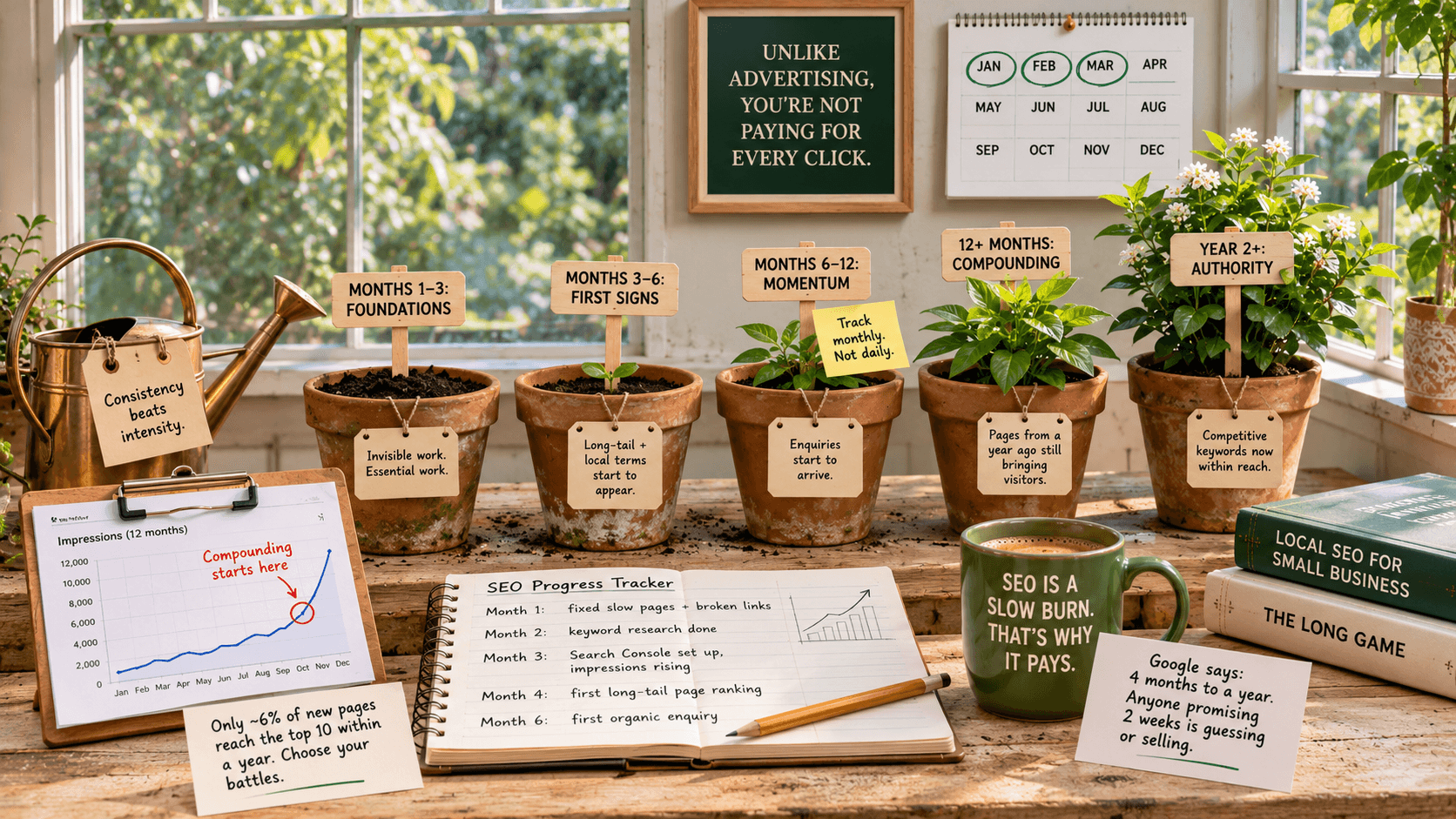
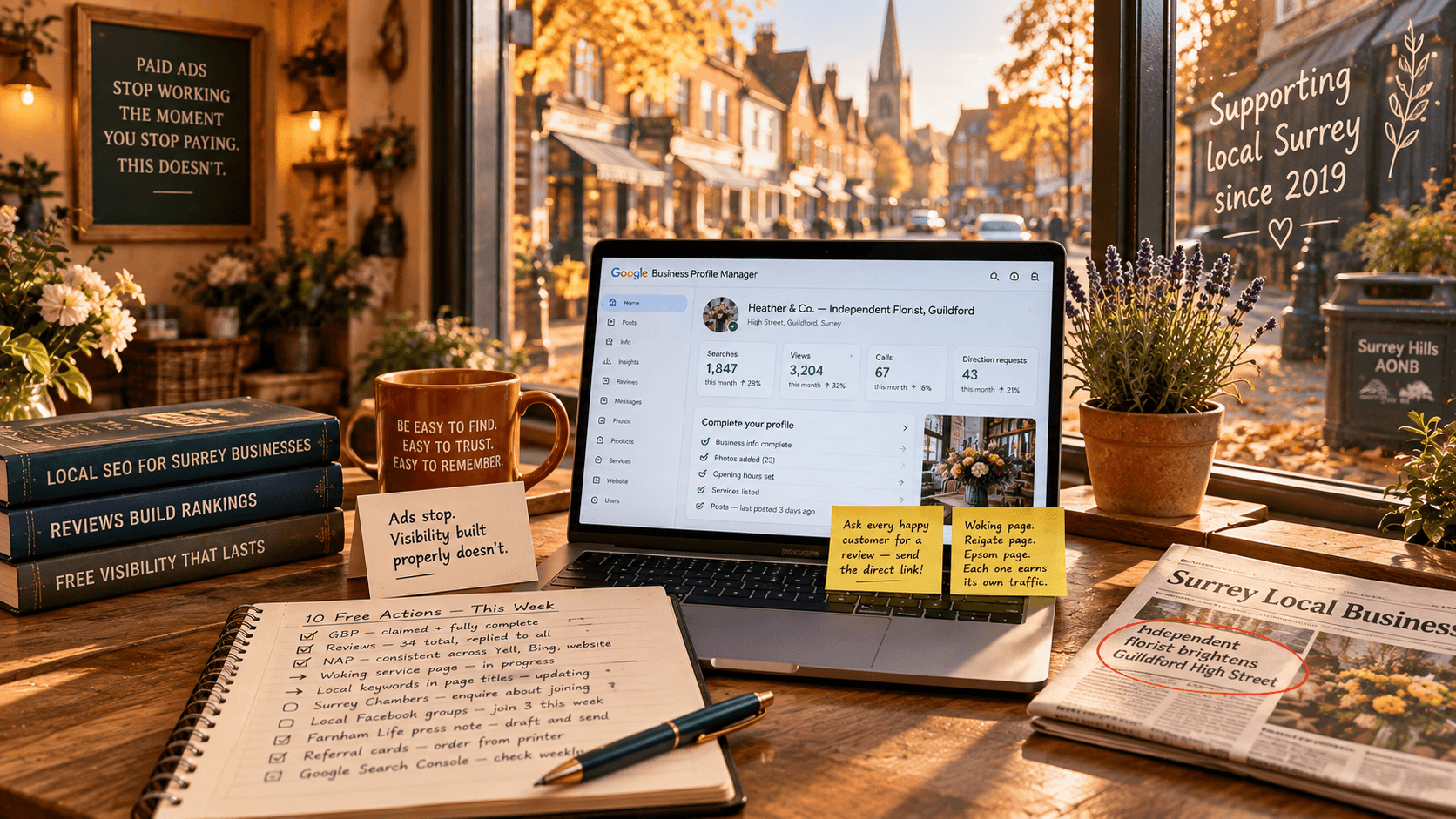
Remember too that ads and organic search complement each other. Ads deliver speed, while SEO and your Google Business Profile build longer-term visibility without a click charge. Many small businesses use ads to generate leads quickly while their organic presence grows.
Start Small, Track Everything, and Scale What Works
So, how much do Google Ads cost for a small UK business? There’s no fixed price, but a realistic starting range is a few hundred pounds a month, with costs rising in competitive sectors or if you add management fees, website improvements and VAT. Your real cost depends on your industry, your location, the quality of your campaign and, above all, how well your website turns clicks into customers.
Work backwards from your goals, check keyword prices in Keyword Planner, set a budget you’re comfortable with and track every enquiry. Keep your targeting tight, review your search terms and be ready to pause what doesn’t pay. Treated this way, Google Ads is a controllable investment rather than a gamble, and one you can scale gradually as the results justify it.