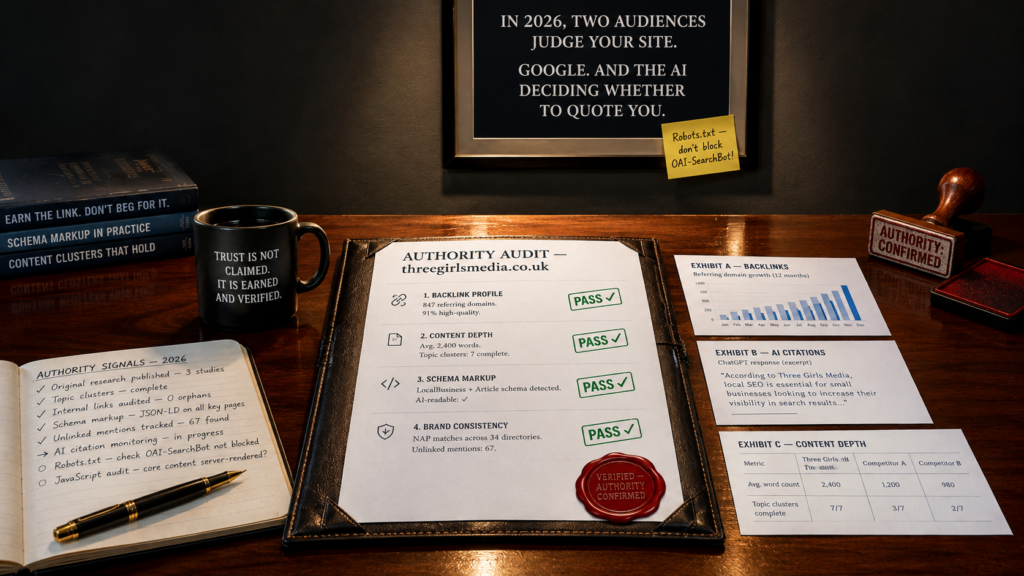
Website authority used to be a numbers game. Rack up enough backlinks, hit a decent domain score, and Google would reward you with rankings. That approach has not aged well.
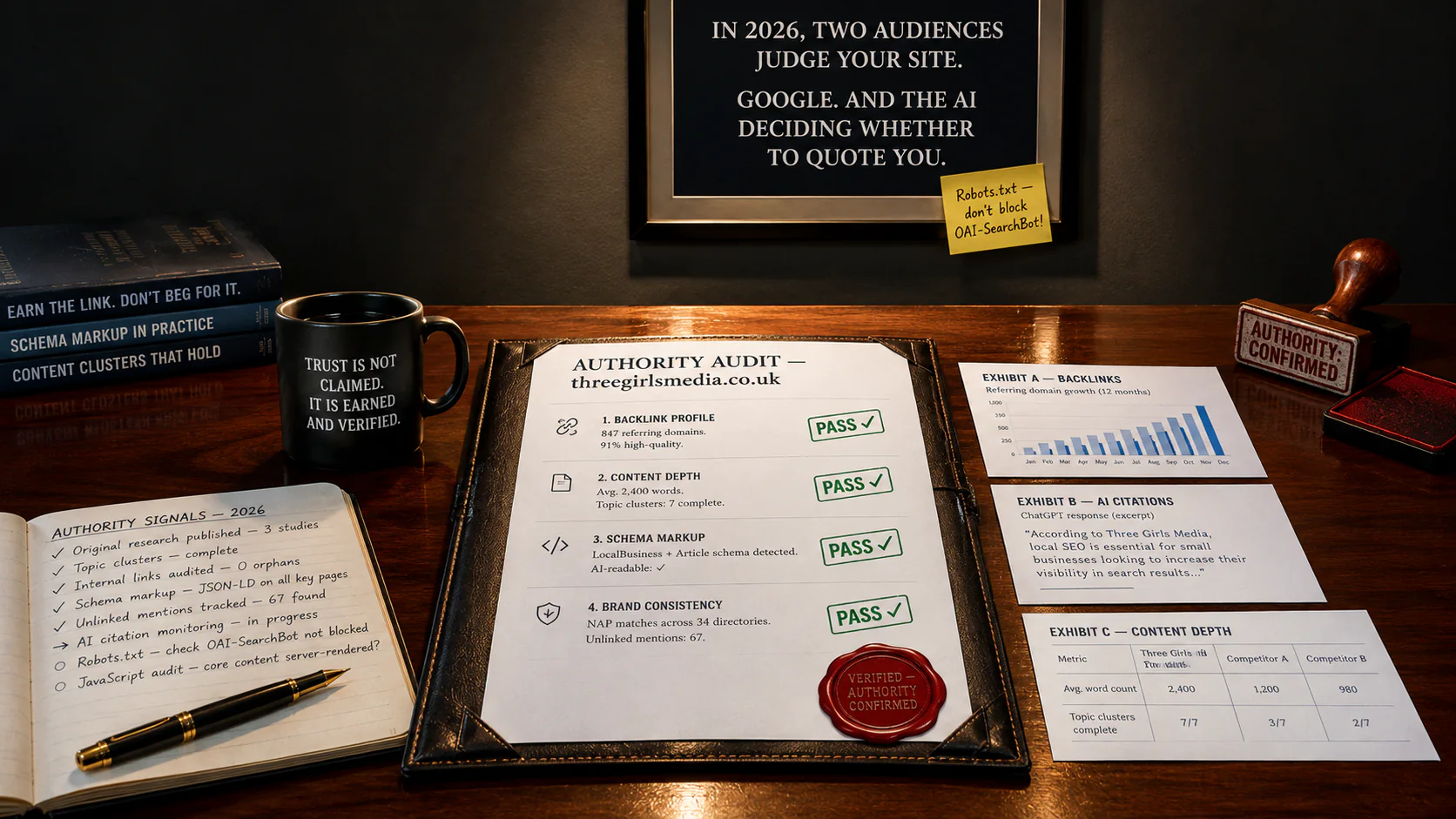
In 2026, authority is judged by two audiences at once: search engines that still care about links and traffic, and AI systems that decide whether your content is worth quoting at all. A site can look strong on paper and still get ignored by ChatGPT or Google’s AI Overviews if its content is hard to extract, inconsistent across the web, or simply invisible to crawlers.
Building genuine authority now means proving, repeatedly and consistently, that you’re a credible source — not just accumulating links and hoping for the best. Here’s what actually moves the needle.
What Website Authority Really Means Today
Website authority is the trust and credibility your site carries in the eyes of search engines and AI models. It’s shaped by your backlink profile, your organic traffic, the depth of your content, and increasingly, how easy your pages are for machines to read and cite.
Tools like Semrush’s Authority Score give you a rough benchmark, blending link quality, estimated organic traffic, and spam signals into a single 0–100 figure. It’s not a direct Google ranking factor, but it’s built from things that genuinely are — so it’s a decent proxy for where you stand against competitors.
Don’t confuse this with brand authority (how much people trust your name) or entity authority (how well machines can tell your brand apart from every other business with a similar name). They overlap, but website authority specifically is about the site itself: its structure, its content, and its link profile.
Good scores are relative to your industry too. A finance site averages a much higher Authority Score among top rankings than a construction firm does, so benchmark against direct competitors rather than chasing an arbitrary number.
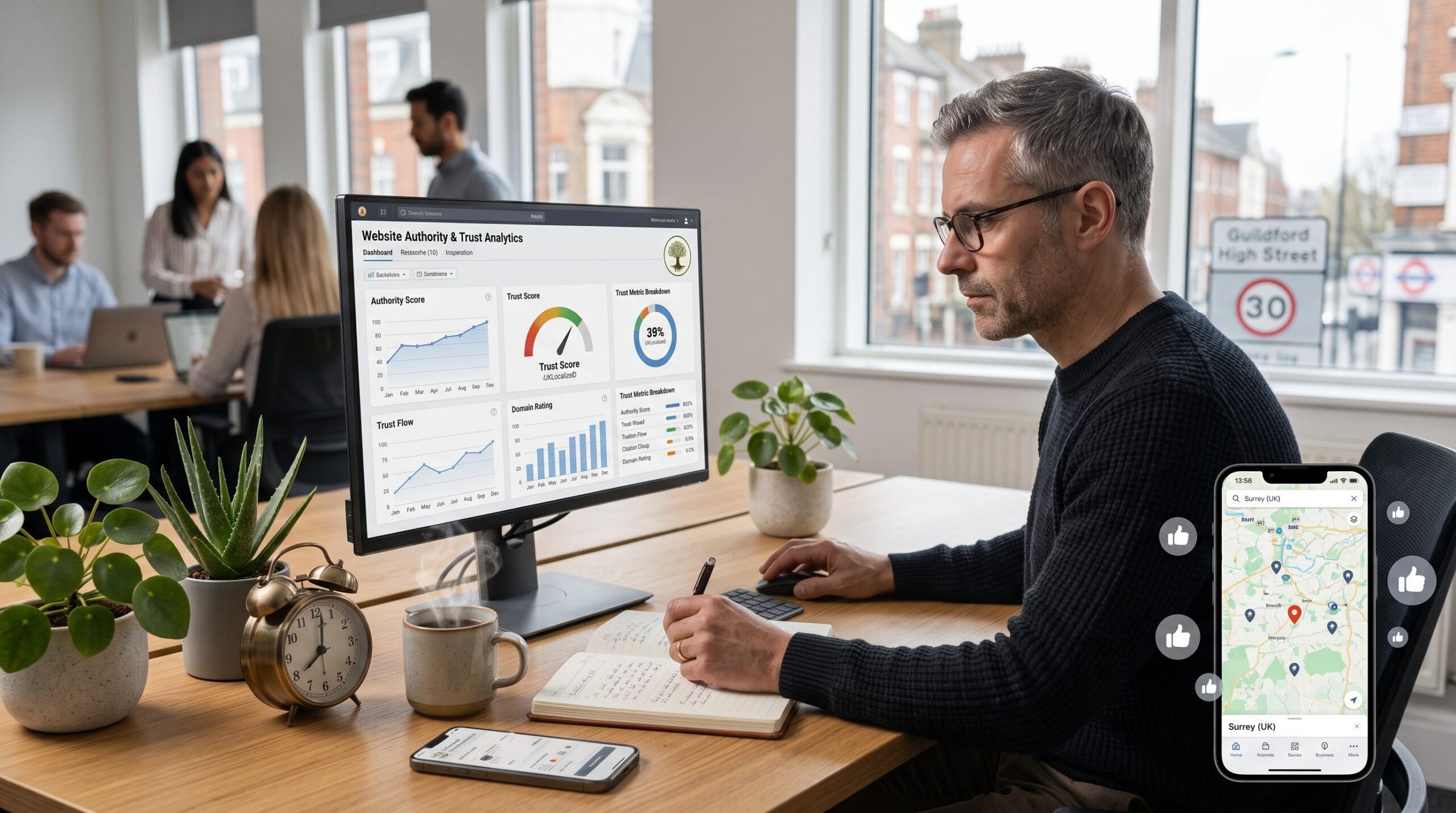
Publish Content That Other Sites Want to Reference
Nobody links to filler. The pages that earn backlinks naturally tend to be the ones that are genuinely hard to replicate — original research, proprietary data, or a level of depth nobody else has bothered with.
Look at what already works in your niche before you start writing. Pull up a competitor’s most-linked pages using a backlink tool and ask what made them worth citing. Then aim to do it better.
Original data beats opinion pieces
Surveys, internal usage data, and first-party analysis give journalists and bloggers something concrete to cite. A well-designed study, even a small one, tends to outperform a generic “ultimate guide” because it offers something nobody else has.
Depth wins over breadth
A resource that actually answers every follow-up question a reader might have — with real examples, numbers, and nuance — earns more organic links than a shallow overview stuffed with keywords. Interactive tools, calculators, and clear data visualisations also tend to attract shares because they deliver instant, practical value.
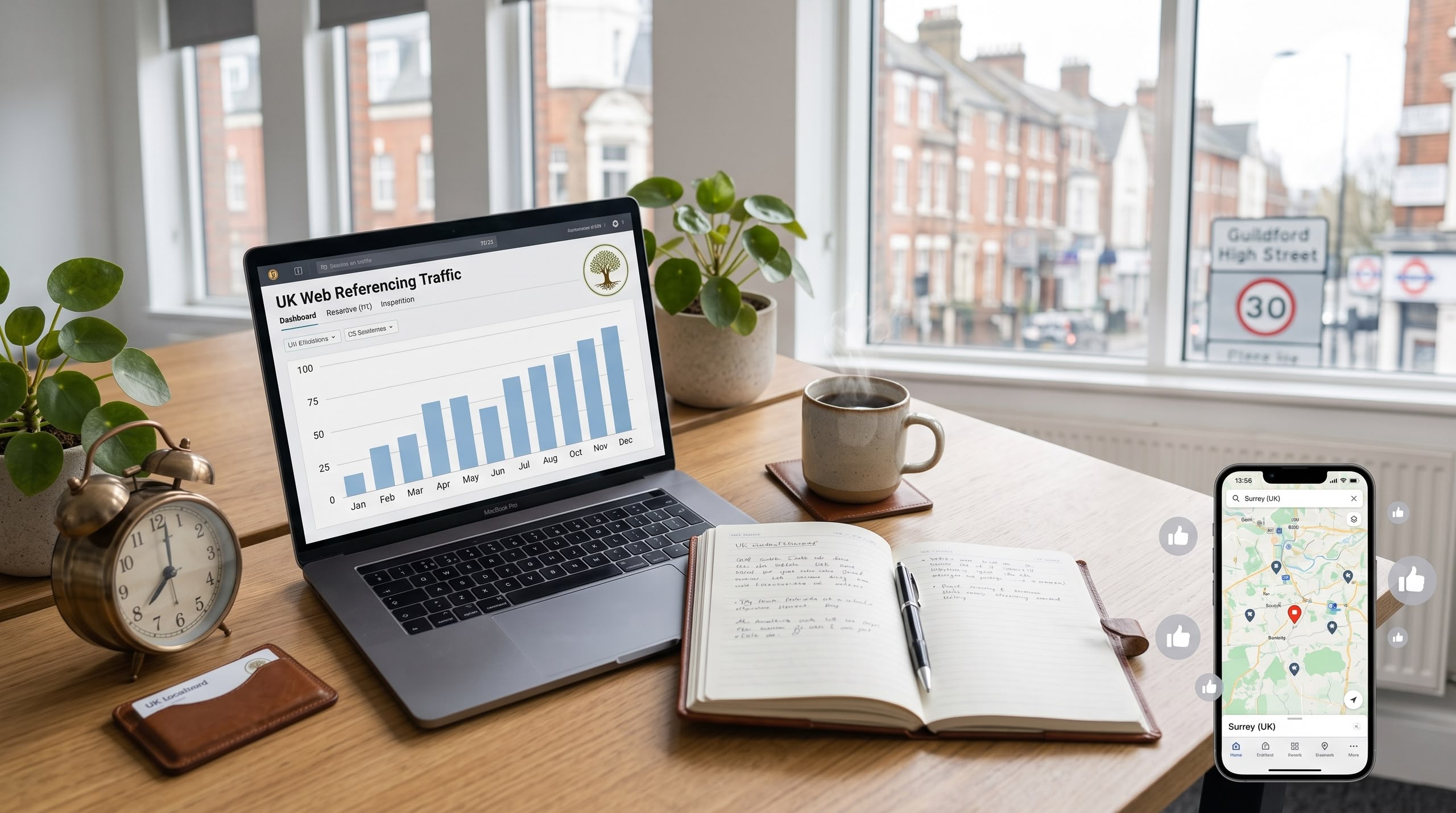
Target Keywords You Can Realistically Rank For
Chasing high-volume keywords with no chance of ranking wastes effort. Smart keyword research means finding terms that match both what your audience searches for and what your site is currently capable of winning.
Start broad, then narrow using difficulty and intent data rather than volume alone. A keyword with 500 searches a month that you can actually rank for beats one with 5,000 searches buried on page three.
Build topic clusters, not scattered posts
Google’s recent algorithm shifts have increasingly rewarded specialised, focused sites over broad generalists. Sites that publish comprehensive clusters — a pillar page supported by tightly related subpages — tend to hold their rankings better than those spreading themselves thin across unrelated subjects.
Structure each cluster around a core topic your brand genuinely wants to be known for, then interlink the pillar and its subpages so search engines can see the full picture of your expertise.
Match content to search intent
Every keyword carries an intent — informational, navigational, commercial, or transactional. Writing a product page for an informational query (or a how-to guide for a buying-intent term) is a mismatch that tanks conversions and rankings alike. Check what’s currently ranking for a term before you decide what to build.
Write for how AI systems read
AI answer engines pull from content structured in short, self-contained chunks. Open each section with a direct answer in the first sentence or two, use question-style headings, and keep paragraphs tight. This “answer first” structure — sometimes called content chunking — helps both human skimmers and AI models extract what they need without wading through padding.
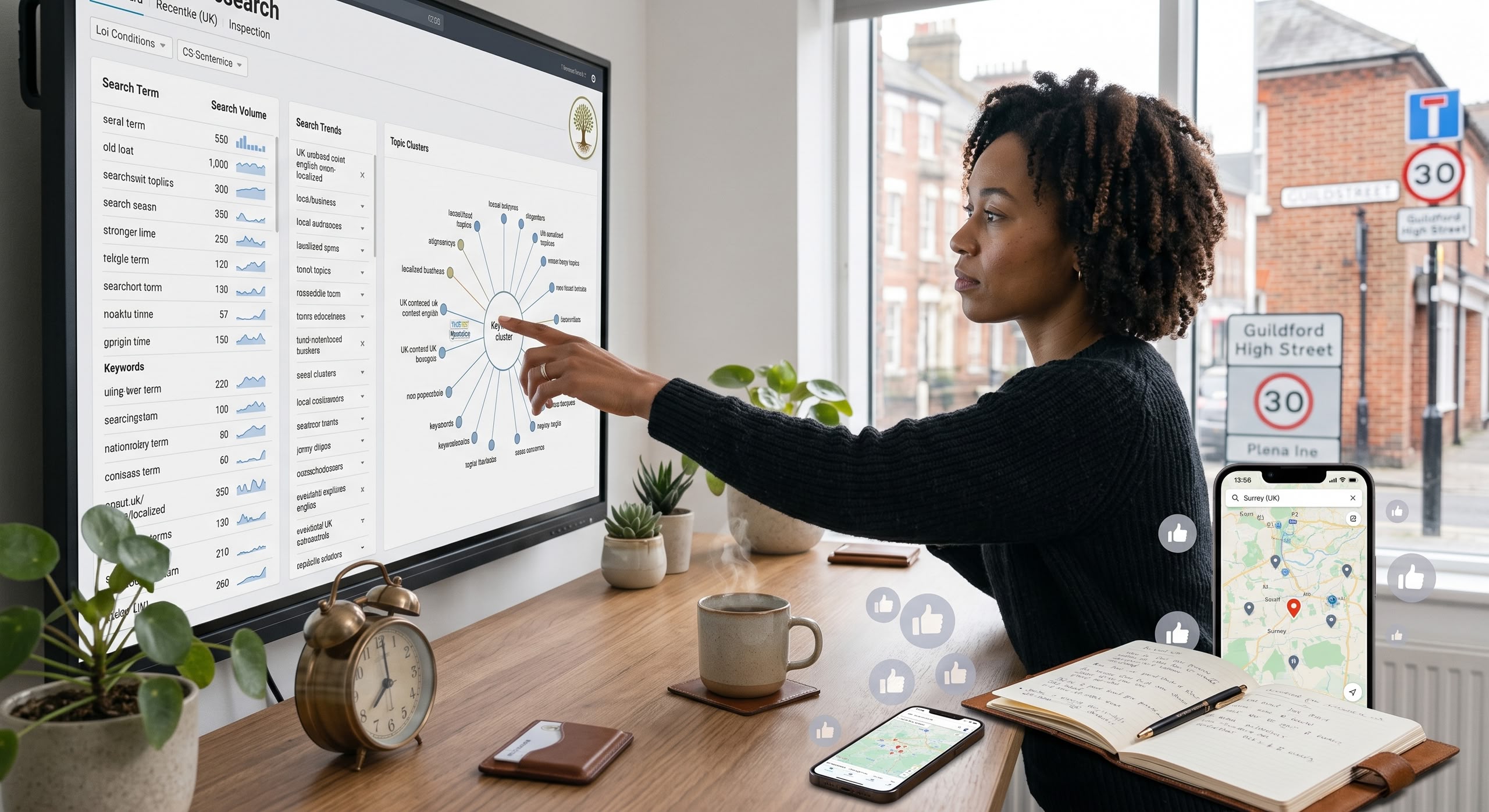
Use Internal Links to Spread Authority Across Your Site
When an external site links to one of your pages, some of that authority can flow to other pages through internal linking. It’s one of the most underused levers on most websites.
Identify your highest-authority pages — the ones with the most quality backlinks — using a backlink analysis tool, then link from those pages to the content you most want to rank. If your best-performing blog post covers industry trends, link it to newer or underperforming pages that would benefit from a credibility boost.
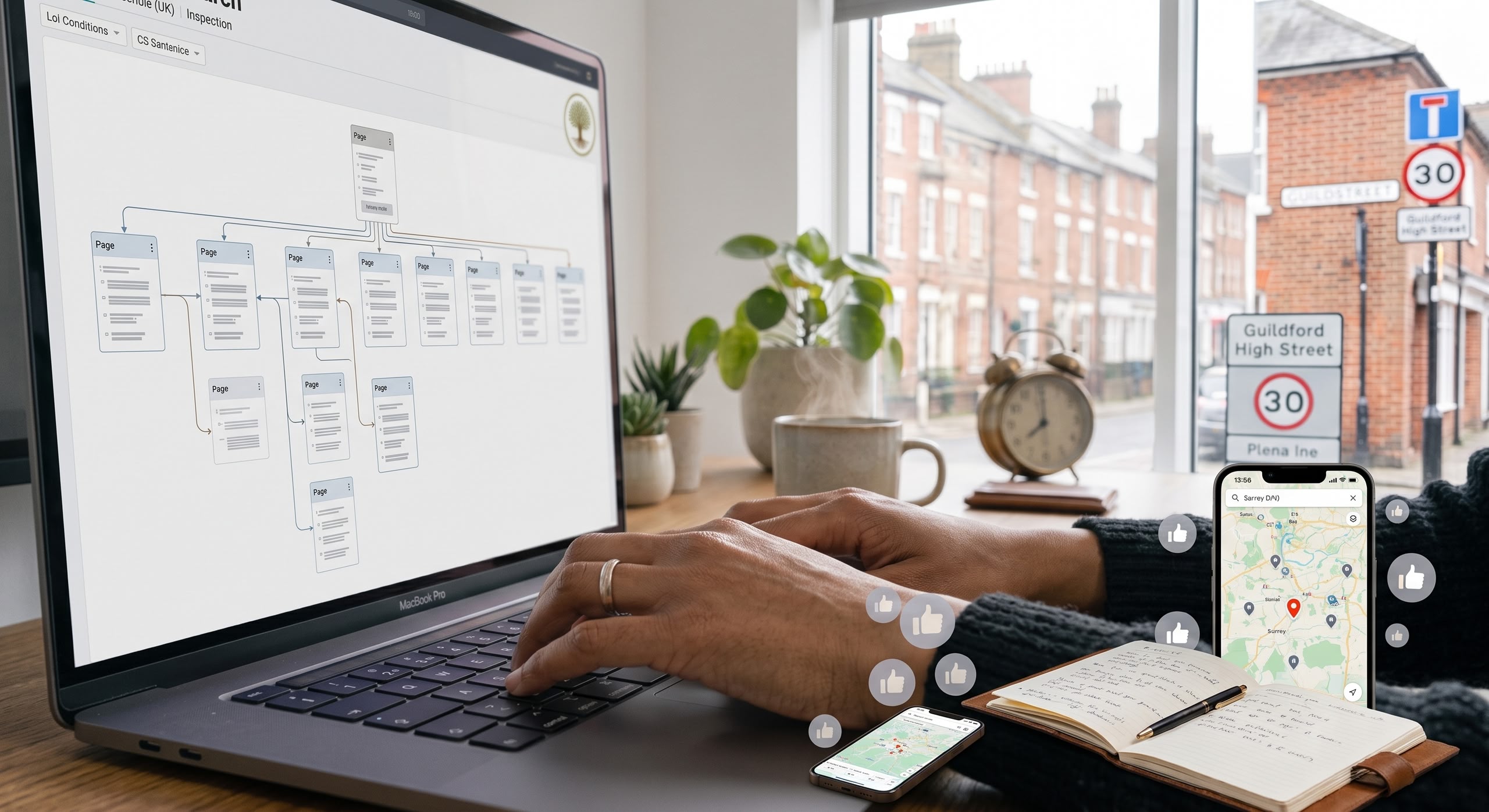
Within topic clusters, link pillar and subpages to each other consistently. This reinforces topical relevance and helps search engines understand the full scope of what you cover. It’s also worth keeping your About page airtight — credentials, proof points, and trust markers clearly stated — and linking to it from author bios and key service pages, since that’s often where both search engines and AI systems go to verify who you are.
Finally, hunt down orphan pages (ones with no internal links pointing to them) and broken internal links. Both quietly waste the authority you’ve already earned.
Earn Mentions Beyond Traditional Backlinks
Not every signal of trust comes with a hyperlink. When your brand gets mentioned on a reputable site — even without a link — it still contributes to how AI systems and search engines perceive your credibility.
Start by identifying the 15 to 20 sites that consistently show up when your audience searches for recommendations in your category — review platforms, industry publications, and relevant communities. A single mention on one of these carries more weight than dozens of low-quality placements, because both Google and AI models already treat these sources as trusted reference points.
Genuine relationship-building helps here: podcast guest spots, expert roundups, and community participation on platforms like Reddit and LinkedIn all generate organic mentions. According to Semrush’s research on the most-cited domains in AI answers, community platforms increasingly shape how large language models describe brands, so authentic engagement matters more than polished PR.
Track unlinked mentions with a brand monitoring tool and follow up to request a link where it makes sense — you’re often just asking a site that already trusts you to formalise that trust. And keep your messaging consistent everywhere: your homepage, directory listings, and social profiles should describe your business the same way, so AI systems can confidently connect the dots.
Make Sure Machines Can Actually Read Your Site
None of the above matters if crawlers can’t reach your content in the first place.
Check your robots.txt file to confirm you’re not accidentally blocking AI crawlers like OAI-SearchBot or other search bots while trying to manage traffic. It happens more often than you’d think.
Reduce reliance on JavaScript for your core content. If your main text only renders after a script executes, some crawlers may never see it — meaning your content could be technically published but functionally invisible to AI systems. Server-rendered or static HTML is the safer choice for anything you want indexed and cited.
Finally, add schema markup to your key pages. This structured data — usually written in JSON-LD — tells machines exactly what they’re looking at: who authored a piece, what organisation published it, and how your brand connects to your official profiles elsewhere on the web. It’s invisible to human visitors but critical for how confidently AI systems can identify and cite you.

Keep Measuring What’s Actually Working
Building authority isn’t a one-off project. Track your Authority Score trend against competitors, monitor the quality (not just quantity) of new referring domains, and keep an eye on whether AI tools are actually citing your pages when relevant questions come up. If your authority signals are genuinely improving, all three should move in the same direction over time.
The sites winning in 2026 aren’t necessarily the ones with the most backlinks. They’re the ones that are easiest to trust, easiest to verify, and easiest for both people and machines to understand at a glance.