Ask ten founders what a startup needs first and you’ll hear ten different answers. Some pour weeks into a perfect logo. Others vanish into website builders. A few skip both and start posting on social media without a clear idea of who they’re talking to.
The short answer is that a marketing plan comes first, a simple logo second, and a website third. That order isn’t about importance, since you’ll need all three. It’s about sequence. Each one is far easier, cheaper and more effective when it builds on the one before. Here’s why, and how to do each properly without overspending.
Why a Marketing Plan Comes First
Know Exactly Who You’re Trying to Reach
A logo and a website both depend on decisions you haven’t made yet if you skip planning. Who are your ideal customers? What problem do they have? Where do they spend their time, and what makes them choose one business over another?
Start with a clear picture of your target audience, including their age, location, budget, habits and frustrations. Look at competitors to see what they offer, how they price and where there’s a gap you can fill. This research feeds directly into your design, your copy and your choice of marketing channels. Without it, you’re guessing.
Define Your Message and Position
Customers need to understand in seconds what you do and why it matters. A marketing plan forces you to turn your idea into a clear value proposition: who you help, what you offer, and why you’re different. Everything else, from your logo style to your homepage headline, grows from that statement.
This also stops you copying competitors by accident. When you know your position, you can choose a tone, colour palette and website structure that reflect it, rather than picking whatever looks nice.
Set Goals, Channels and a Realistic Budget
A startup marketing plan doesn’t need to be a 40-page document. A few focused pages will do. Set clear goals, such as a number of enquiries or sales in your first three months. Choose two or three channels that suit your audience, such as local search, social media, email, networking or partnerships. Then decide how much time and money you can realistically commit.
Budget matters most. If you know your marketing budget, you’ll know how much you can sensibly spend on branding and a website. Government-backed support, such as Start Up Loans and the guidance on Enterprise Nation, can help you think through the numbers and plan sensibly, whether you’re a sole trader or a limited company.
Your Logo Comes Second, and It Doesn’t Need to Be Perfect
Aim for Clear, Not Clever
A logo is your business’s visual signature, but it’s not the engine of growth many people imagine. Most startups spend far too long on it. What matters is that it’s legible, memorable and suits your audience, and that it works at small sizes on a phone screen, a social media profile picture or an invoice.
Keep it simple. Avoid fine detail, trendy effects and too many colours. A clean wordmark or a straightforward symbol is often enough. As your business evolves, you can refine it, and plenty of successful companies have done exactly that.
Build a Basic Brand Kit Around It
Your logo is only one part of how people recognise you. Alongside it, choose a small set of brand colours, one or two fonts and a consistent tone of voice. Write down a few simple rules for how you use them. This keeps everything looking coherent, from your social posts to your quotes and email signature, and makes your startup appear more established than it is.
Consistency builds trust. Customers rarely notice a polished logo, but they definitely notice when your materials look scattered.
Check Your Name and Protect Your Brand
Before you invest in branding, make sure your business name is usable. Search Companies House rules if you’re incorporating, and check the UK’s trade mark register to avoid choosing a name or logo that’s too close to an existing mark. It’s a small step that can save you from an expensive rebrand later.
If your name or logo is central to your business, consider registering a trade mark once you’re sure of your branding. It’s not essential on day one, but it’s worth thinking about as you grow.
Your Website Comes Third, and It Should Launch Lean
Build It Around Your Plan
With a plan and a basic brand in place, your website becomes much easier to design. You already know who it’s for, what it needs to say and what action you want visitors to take, whether that’s booking, buying or calling. It stops being a blank page and becomes a tool.
A website is your business’s home base. It’s where your social media posts, search results, emails and referrals all lead, so it deserves proper attention. But for a startup, version one doesn’t need dozens of pages. Start with the essentials and expand as you learn what customers want.
Include the Essentials
A good startup website is clear, fast and easy to use on a phone. At a minimum, it should have a homepage that explains what you do in a sentence or two, pages for your main products or services, an About page that introduces you, and a clear way to contact or buy from you. Place a visible call to action on every page, such as “Book a call” or “Request a quote”.
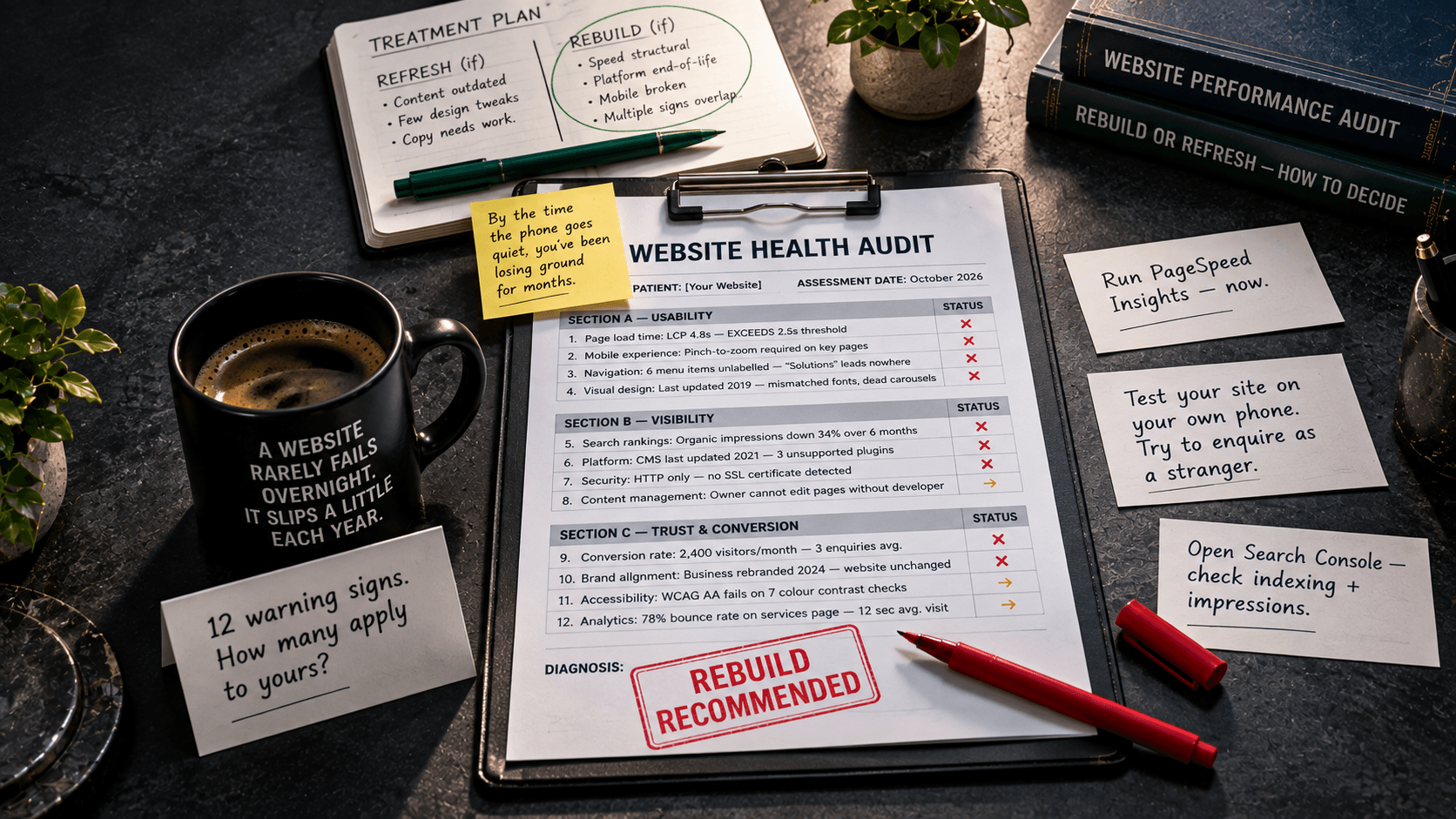
Pay attention to speed and mobile performance, since slow, awkward sites lose visitors quickly. Check your pages using PageSpeed Insights to spot problems early. Add customer testimonials as soon as you have them, because they’re one of the fastest ways to build credibility.
Set Up the Basics for Being Found
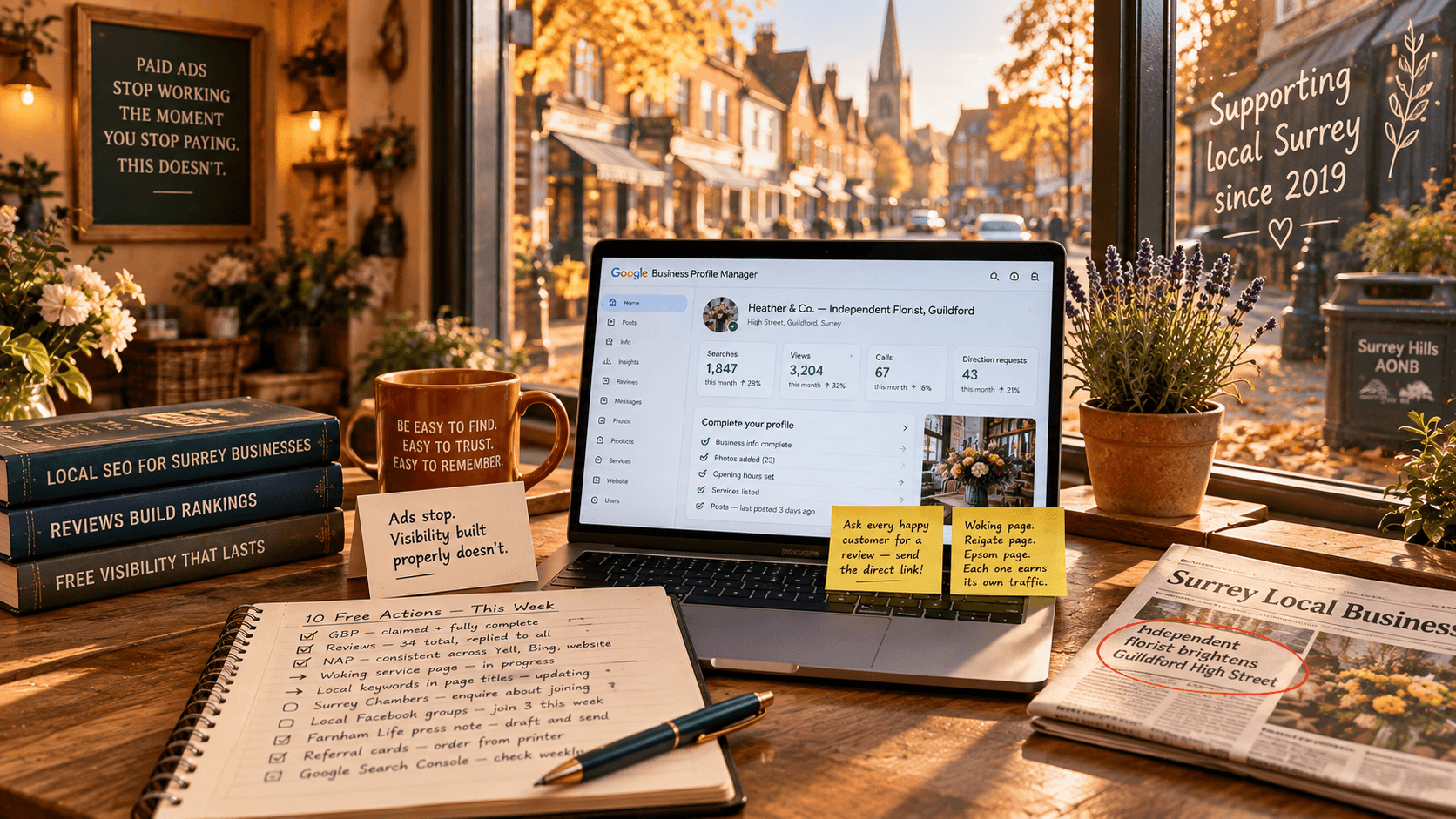
A website doesn’t bring in visitors by itself. Set up a free Google Business Profile if you serve a local area, and connect Google Search Console so you can see how people find you. Use clear page titles and headings that reflect what customers actually search for, and write helpful copy in plain English.
Over time, add useful content that answers your customers’ questions. This builds search visibility and shows that you know your subject, without needing a large advertising budget.
Cover the Legal Basics
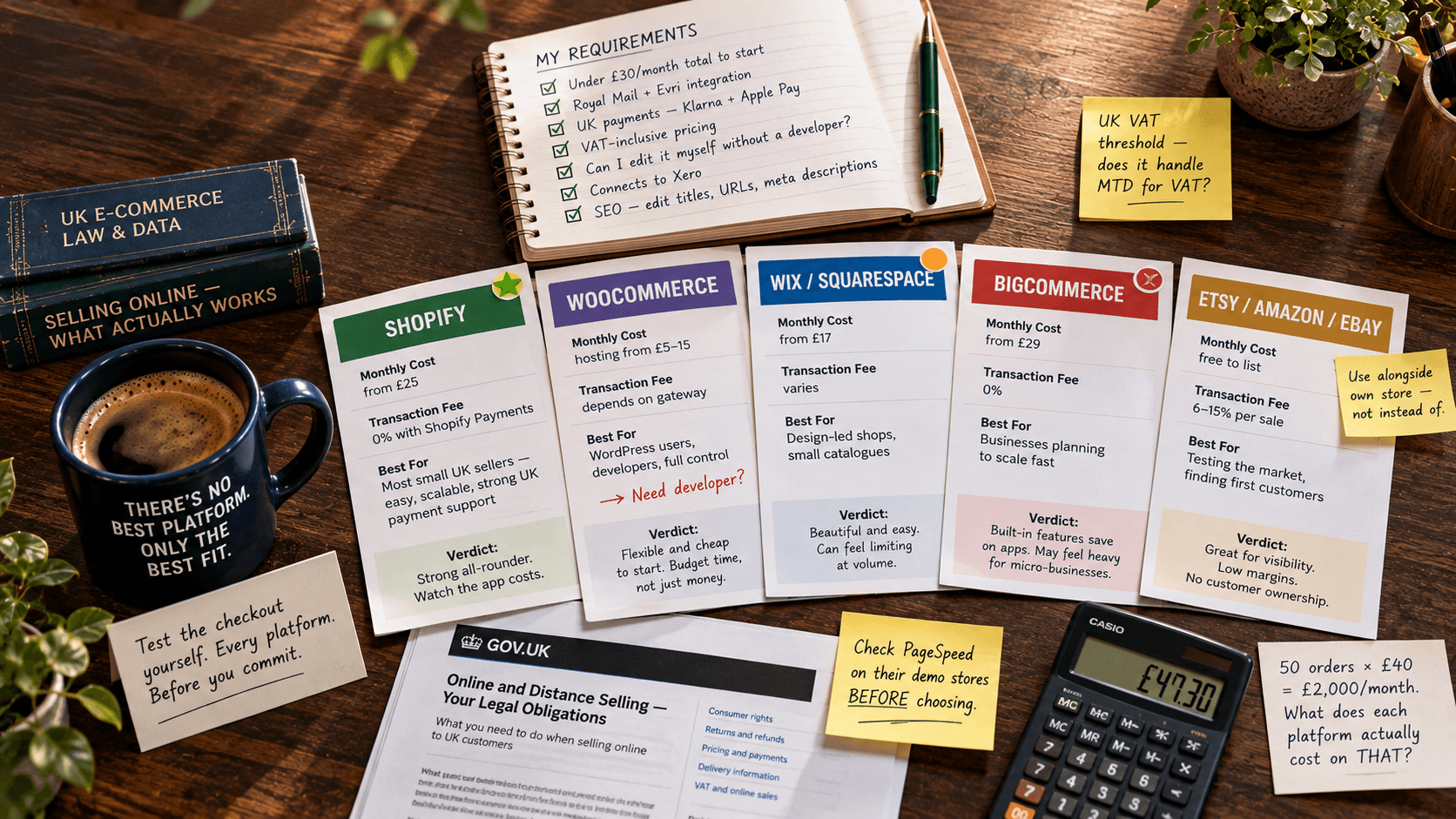
A UK business website needs certain information. Include your business name, contact details, and, if you’re a limited company, your registered company details. If you collect personal data through forms, mailing lists or analytics, you’ll need a privacy policy and may need to pay the data protection fee to the ICO. Add a cookie notice if you use non-essential cookies. If you sell online, you’ll also need clear terms, pricing and returns information.
A Simple Order of Play
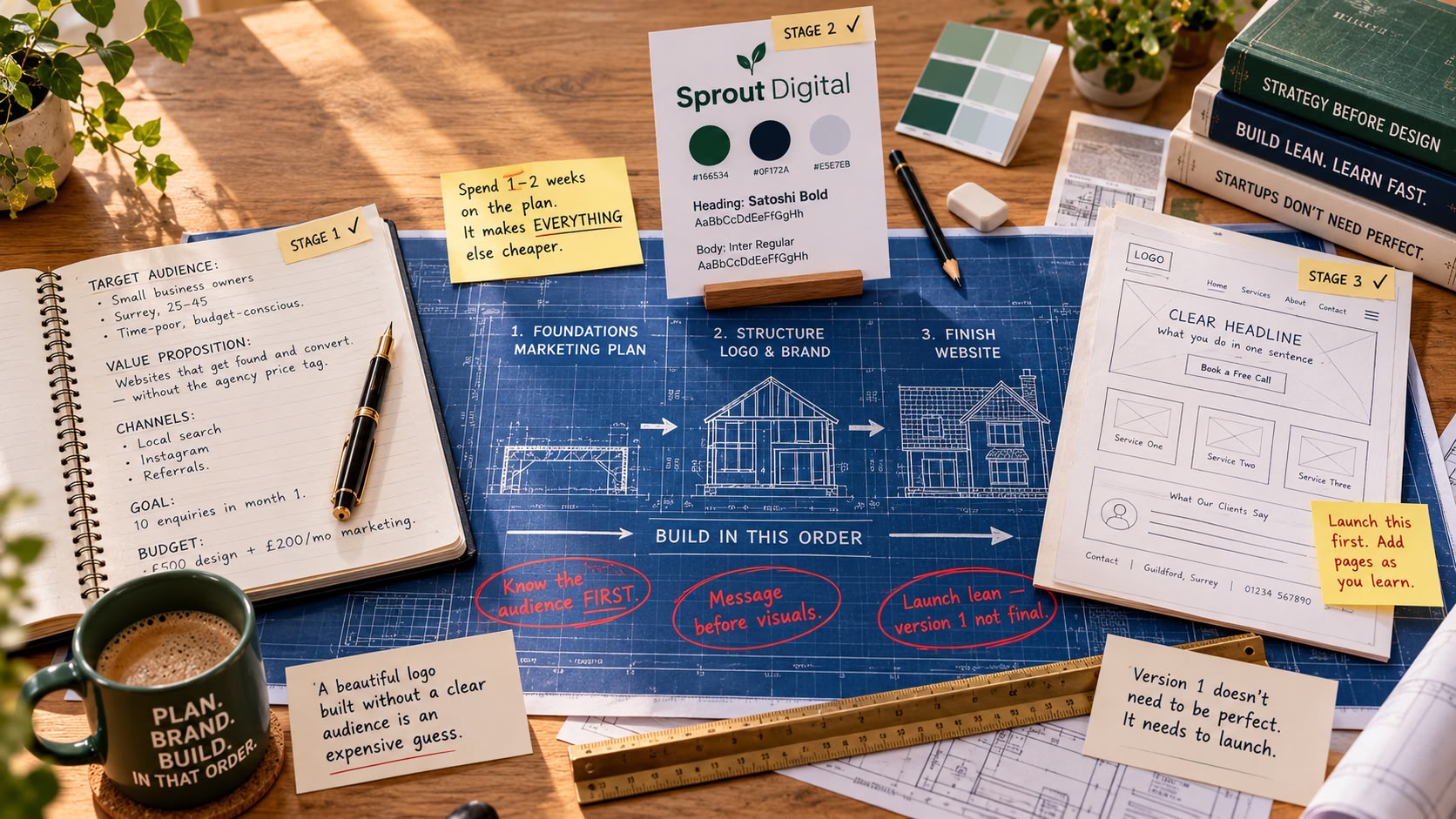
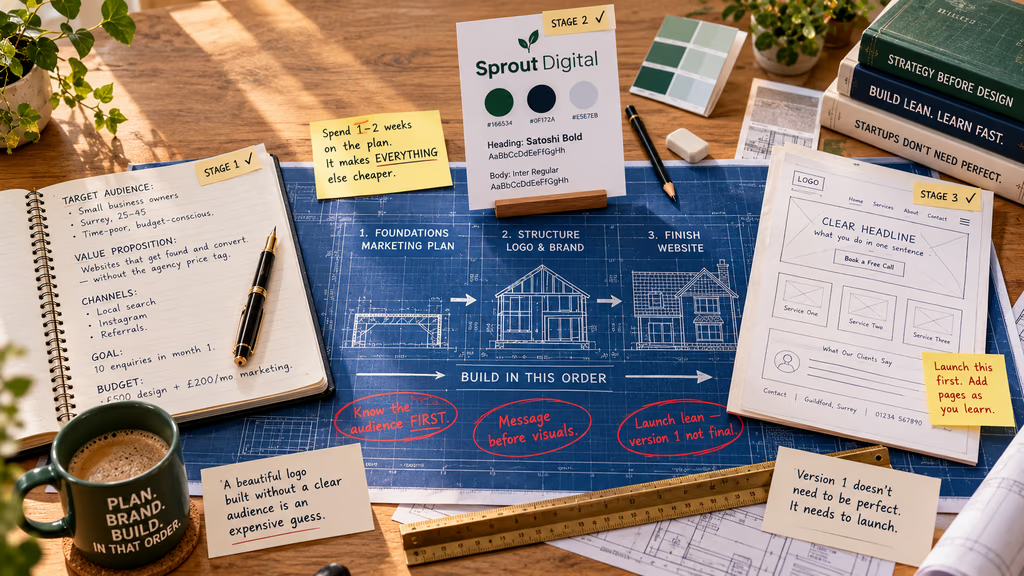
If you want a practical sequence, think of it in stages. First, spend a week or two on research and planning: your audience, competitors, message, goals and budget. Next, create a simple brand with a clean logo, colours and fonts. Then build a lean website that explains what you do and makes it easy to take action.
Once you’re live, focus your energy on the channels you identified in your plan, and use the early feedback to improve. Treat each part as a first version, not a finished masterpiece. Startups learn quickly, and your branding and website should evolve as you do.
Common Mistakes to Avoid
The biggest mistake is putting design before strategy. A beautiful logo and website built without a clear audience or message often look impressive but convert poorly. The second is overspending early, particularly on custom design or complex features you don’t need yet. A solid, simple website will do more for you than a fancy one nobody visits.
Another common trap is launching without a way to measure results. Even basic tracking of enquiries, sales and traffic sources tells you what’s working, so you can invest in the right places. And finally, don’t wait for perfection. A good-enough launch beats a perfect one that never arrives.
Plan First, Then Build
So, what does a startup need first: a logo, a website or a marketing plan? Start with the plan. It gives you a clear audience, a sharp message and a realistic budget, which makes every later decision easier. Follow it with a simple, professional logo and basic brand kit, then build a lean website that supports your goals and gives customers an obvious next step.
You don’t have to do everything at once, and none of it has to be perfect. Get the foundations right, launch, learn from real customers and improve as you go. Do it in that order, and your logo and website will work as part of a strategy, not as expensive guesses.