September is the make-or-break moment of the nursery year. Older children move on to school, room ratios shift, and the vacancies you’re carrying on paper suddenly become a hole in your monthly income. Parents tend to start looking in the spring and summer, which means your window for filling places is shorter than it feels.
The good news is that filling nursery places is rarely about shouting louder. It’s about knowing exactly which spaces you need to fill, making sure local parents can find you, and turning curious enquiries into booked visits. Here’s a plan you can work through, whether you’ve got three months or three weeks.
Start With Your Numbers, Not Your Adverts
Map Your September Gaps
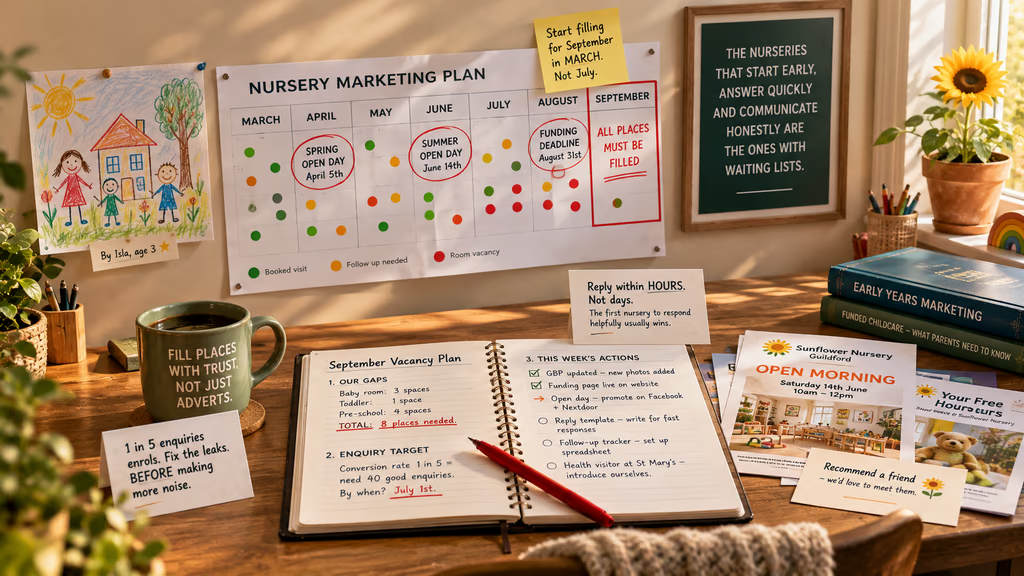
Before you spend a penny on promotion, work out precisely where the vacancies will be. Look at which children are leaving for school, who’s moving up a room, and which age groups will have spare capacity. A gap in your baby room needs a very different message from a gap in pre-school.
Once you know where the spaces are, your marketing can speak directly to the right parents. Famly’s guide to September planning in early years makes the same point: understanding how your age groups will change helps you target promotions and open days far more effectively.
Work Backwards From Enquiries
Take your vacancy count and your usual conversion rate, meaning the percentage of enquiries that end in a booking. If one in five enquiries typically enrols and you need ten children, you’ll need around fifty good-quality enquiries. That simple sum tells you how much activity you need and how early to begin.
It also exposes a common mistake. Many nurseries pour energy into generating enquiries while losing half of them through slow replies or a weak follow-up. Fixing leaks often fills places faster than creating more demand.
Make Your Nursery Easy to Find Online
Claim and Polish Your Google Business Profile
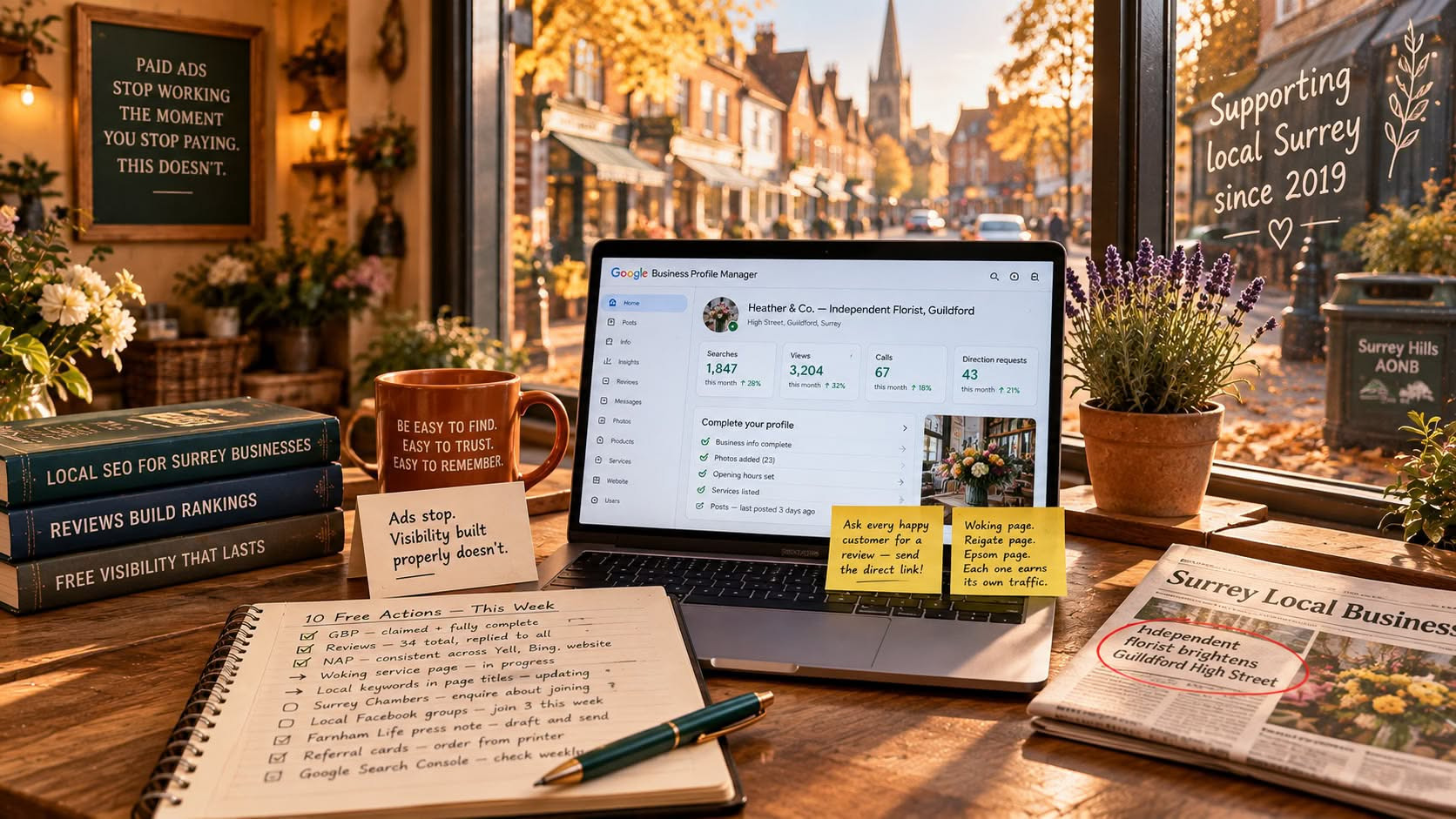
When a parent types “nursery near me”, the map listings at the top of Google do most of the work. Your free Google Business Profile decides whether you appear there. Check that your address, opening hours, phone number and website are accurate, choose the right categories, and upload bright, recent photos of your rooms, garden and staff, with the necessary permissions in place.
Add regular updates and answer questions in the Q&A section. A complete, active profile signals that you’re open for business, and it costs nothing.
Build a Website That Turns Visitors Into Visits
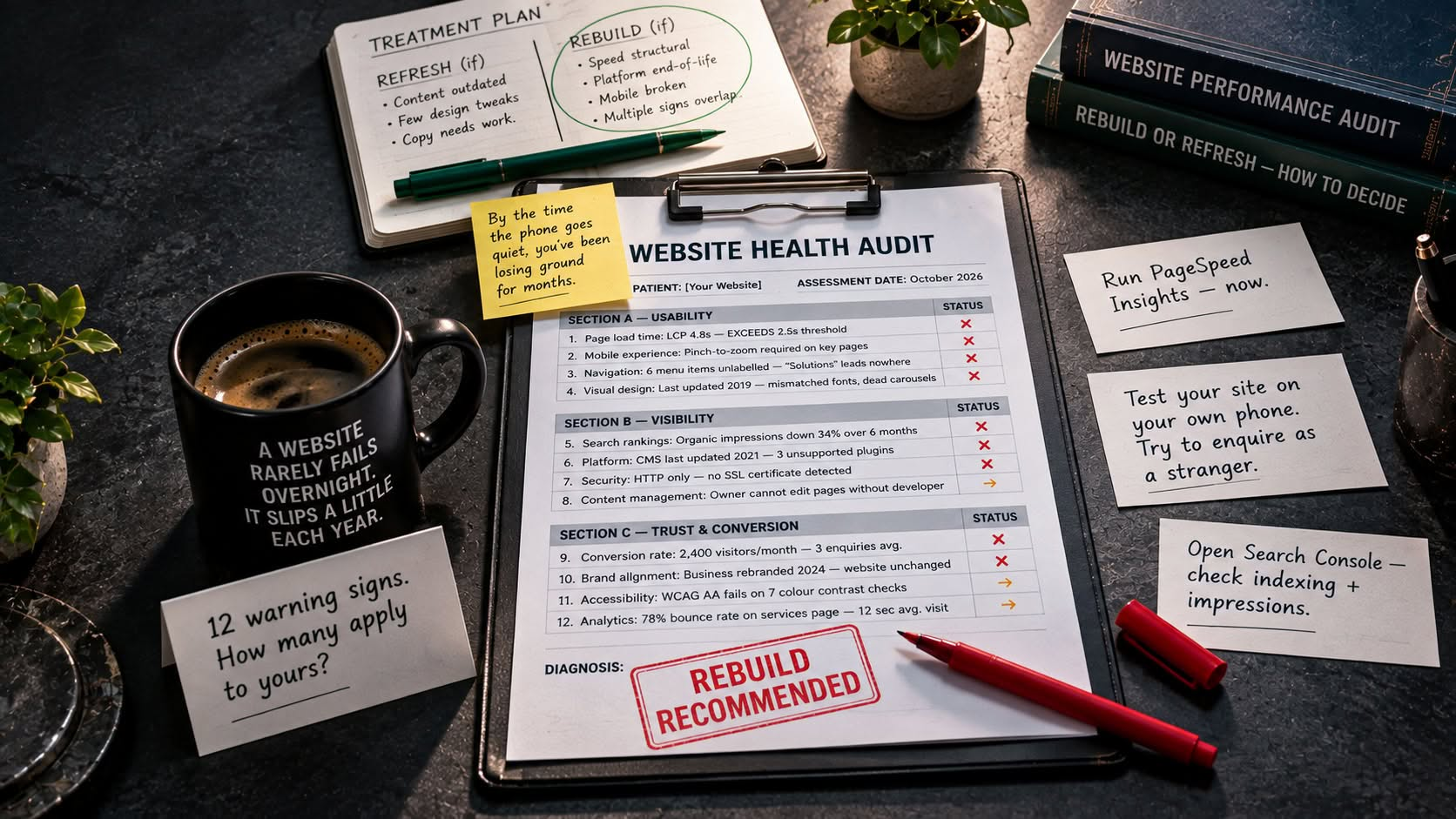
Your website is your most important sales tool, because parents will almost always check it before they pick up the phone. It should load quickly on mobile, state your location and age range clearly, and make it obvious how to book a visit. Prominent buttons and a short enquiry form work far better than a buried “contact us” page.
Be upfront about fees, session options and funded hours. Parents comparing several nurseries will often move on if they can’t find basic information. Add a short page for each age group, a clear section on your approach and routines, and a few strong photos or a short video tour.
If you want to improve how you show up in local searches, include your town and surrounding areas naturally in your page titles and copy, for example “nursery in [your town]” and “baby room in [your area]”.
Put Your Reviews and Ofsted Rating to Work
Trust is the deciding factor for most parents. Ask happy families for a Google review, ideally at a natural moment like a settling-in milestone or a leaving party. Share the best feedback on your website and social channels, and respond politely to every review, including the awkward ones.
Don’t hide your inspection outcome either. Link to your latest report on the Ofsted reports website and highlight the positive comments about care, learning and leadership. If your grade is a few years old, say what’s improved since.
Use Funded Childcare as a Selling Point
Explain the Funding Clearly
Government-funded hours have changed what many families can afford, and confusion about them is one of the biggest barriers to enquiries. Eligible working parents can now access up to 30 funded hours a week from the term after their child turns nine months old, as set out on GOV.UK. Parents apply through Childcare Choices, then give you their eligibility code.
Create a simple funding page or downloadable guide that explains how you offer funded places, whether you stretch hours across the year, what extras may be chargeable and how Tax-Free Childcare works alongside it. Be transparent and accurate, and remind parents that applications have deadlines, typically before the start of the term they want funding to begin. A parent who finds your answers clear will feel reassured, and one who can’t will usually look elsewhere.
Turn Enquiries Into Visits and Bookings
Reply Fast, Every Time
A parent searching for a place is usually contacting several nurseries at once. The first to respond helpfully often wins. Aim to reply to every call, message and web form within hours, not days. If no one can answer the phone during the day, use a call-back message or text-back service so you don’t lose families to voicemail.
When you reply, don’t just send a price list. Ask about the child’s age, their preferred start date and what matters most to the family, then invite them to visit.
Make Open Days and Tours Count
A visit is where most places are won. Offer regular open mornings alongside one-to-one tours, and include evening or weekend slots for working parents. Keep rooms calm and tidy, let staff chat naturally, and encourage parents to see the children in action.
Spring and early summer events work especially well, as families begin thinking about September. Promote them on your website, social media, local community groups and through your existing parents.
Follow Up Without Being Pushy
Many parents say they’ll “think about it” and then go quiet. A friendly follow-up within a couple of days, and another a week later, often makes the difference. Send a short, warm message thanking them for visiting, mentioning something specific about their child, and offering a settling-in session or a place hold.
Keep a simple enquiry tracker so you know who has visited, who’s waiting for a reply and who needs a nudge. A spreadsheet is enough.
Reach Local Parents Beyond Search
Run Targeted Social Media Ads
Facebook and Instagram let you show adverts to parents within a few miles of your nursery. Tailor each campaign to the room you’re filling: a baby room message should speak to parents returning to work, while a pre-school message can focus on school readiness. Use authentic photos, a clear offer such as an open day or a free taster session, and a simple booking link.
Start with a modest budget, keep the targeting tight, and pause anything that isn’t generating enquiries. Google Ads can also work well for high-intent searches, though it’s worth setting a firm limit.
Build Local Partnerships
Some of your best enquiries will come from people who already see local parents every week. Introduce yourself to health visitors, baby and toddler groups, children’s centres, antenatal classes, local employers and community pages. A simple flyer or information card, plus an invitation to visit, keeps you front of mind.
Employers can be a particularly good source. Many businesses want to help staff find childcare, and a short conversation with HR may lead to a steady stream of enquiries.
Let Your Current Families Spread the Word
Word of mouth remains the most trusted form of marketing in childcare. Make it easy for happy parents to recommend you with a referral card, a simple thank-you for introducing a friend, or a share-worthy moment on your social media. Sibling places and waiting lists also help: if families know you’re filling up, it adds a healthy sense of urgency.
Keep Your Marketing Compliant
Nurseries handle sensitive information about children and families, so it’s important to get permissions right. Always have clear consent before using photos or videos of children in marketing, and store enquiry details securely. If you email or text parents, follow the ICO’s guidance on direct marketing, including getting appropriate consent and offering an easy way to opt out.
Start Early and Keep It Simple
Filling nursery places before September doesn’t require a huge budget or a complicated campaign. It requires a clear picture of the spaces you need to fill, a strong online presence that makes parents feel confident, and a responsive enquiry process that turns interest into visits.
Begin by pinpointing your gaps and setting an enquiry target. Tidy up your Google profile and website, gather fresh reviews, explain your funded places clearly, and run open days that show off what makes your nursery special. Support that with targeted ads, local partnerships and gentle follow-up, and you’ll give families every reason to choose you.
The nurseries that start early, answer quickly and communicate honestly are usually the ones with waiting lists in September. Make that you.