If you’ve just invested in SEO, the question that keeps nagging is simple: when will it start paying off? Unfortunately, anyone promising page-one rankings in a fortnight is either guessing or selling something.
The honest answer is that SEO usually takes several months to show meaningful results, and often closer to a year for competitive searches. That’s not a flaw. It’s the nature of earning trust from search engines and customers. But the timeline isn’t fixed, and a small business can influence it more than you might think. Here’s what to expect, why it takes that long, and what you can do to help it along.
The Realistic SEO Timeline
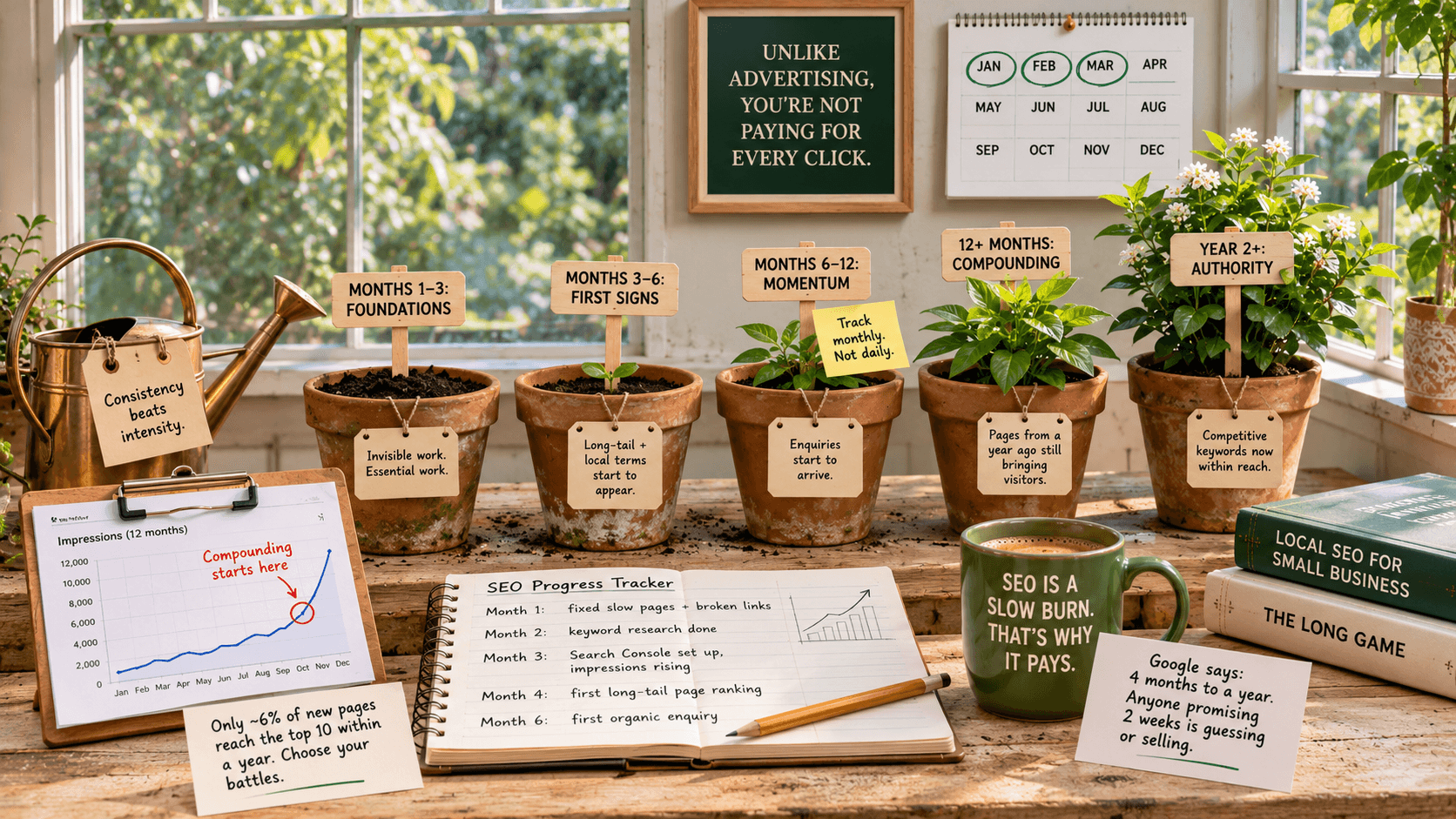
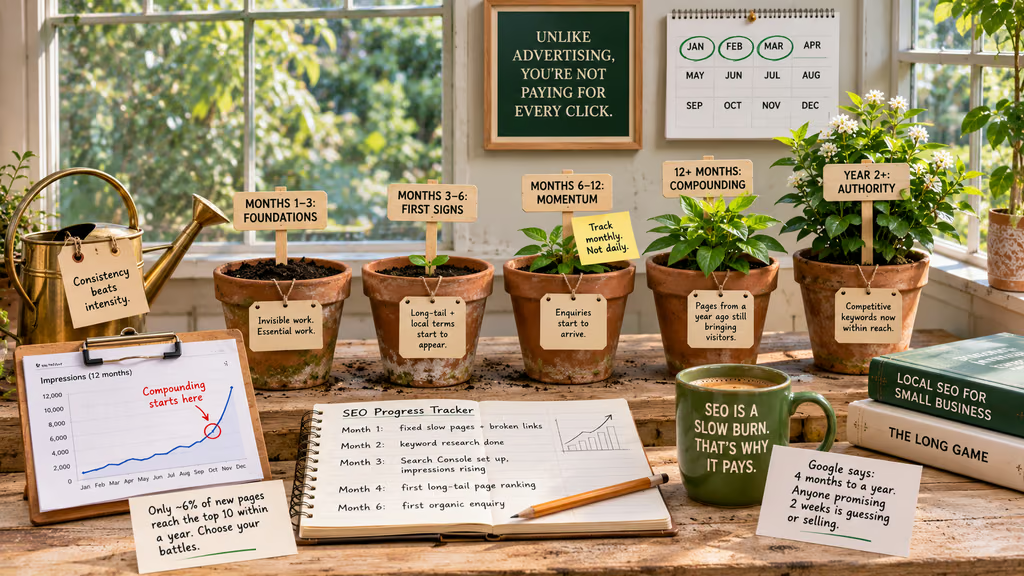
Google’s own guidance on whether you need an SEO says to expect it to take time, typically four months to a year from when you begin making changes until you start seeing the benefits. Most small businesses fall somewhere inside that window, depending on their starting point. It helps to think of it in stages.
Months One to Three: Laying the Foundations
The first few months are about getting your house in order. That means fixing technical problems such as slow pages, broken links or poor mobile layouts, researching the keywords your customers actually use, tidying page titles and headings, and setting up tools like Google Search Console to monitor progress.
Don’t expect a flood of new customers yet. You may see pages being indexed, impressions creeping up and a few low-competition terms starting to appear. It’s quiet but important work, because everything later depends on it.
Months Three to Six: The First Real Signs
Around the three to six month mark, many businesses start to see early movement. Pages begin ranking for long-tail and local searches, such as “emergency plumber in Reading” or “family solicitor near Guildford”. Traffic edges up, and you might get the occasional enquiry that clearly came from search.
This is often where patience wears thin, because the numbers still look modest. But it’s a healthy sign. The groundwork is being recognised, and search engines are starting to understand who you are and what you offer.
Months Six to Twelve: Momentum Builds
With consistent effort, the six to twelve month period is typically when SEO begins to show up in your enquiries and sales. Rankings improve for more valuable terms, new content starts to attract visitors, and reviews and links strengthen your authority. Many small businesses reach the point where search becomes a dependable source of leads.
Beyond Twelve Months: Compounding Results
SEO builds on itself. Pages you published a year ago continue to attract visitors, authority grows with every link and review, and competitive keywords gradually become reachable. This is where the long-term payoff lies, because unlike advertising, you’re not paying for every click.
Why SEO Takes So Long
Google Needs to Trust You
Search engines want to recommend businesses that are reliable, relevant and well regarded. They gather evidence over time from your content, your site’s performance, the links pointing to it and how people interact with your pages. A brand-new or neglected website simply hasn’t built that track record yet.
This is also why shortcuts don’t work. Buying links, stuffing keywords or publishing thin content might seem tempting, but they carry real risk and can leave you worse off than before.
You’re Competing With Established Businesses
Other companies have been working on their search visibility for years. Their websites have older content, more links and plenty of reviews. Overtaking them takes a sustained effort, particularly for broad, high-demand searches.
Research from Ahrefs found that only around 6% of newly published pages reach the top ten on Google within a year. That doesn’t mean your site is doomed. It means you need to choose your battles sensibly and focus on searches you can realistically win.
What Speeds SEO Up or Slows It Down
Your Website’s Age and History
An established site with a clean record has a head start over a brand-new domain. If your website has been neglected, penalised or rebuilt without proper redirects, you may be starting from behind. A well-planned relaunch that keeps your existing rankings can save months of recovery.
Keyword Competition
Searches vary hugely in difficulty. Specific, long-tail phrases and location-based terms usually respond faster than broad, national ones. A small business targeting “wedding photographer in Farnham” can see results far sooner than one chasing “wedding photographer”. Choosing the right targets is one of the biggest factors in how quickly SEO works.
Technical Health
A slow, clumsy or poorly structured website holds everything back. Fast loading, mobile-friendly design and clean site architecture make it easier for search engines to crawl your pages and for visitors to stay. Check your pages with PageSpeed Insights and fix the obvious issues first. Sometimes a single technical fault, like a page accidentally blocked from search, causes dramatic improvements once it’s corrected.
Content Quality and Consistency
Helpful, accurate content that answers real customer questions is the backbone of SEO. Publishing a handful of strong pages that match what people search for beats a pile of generic posts. Equally, content needs regular care. Updating older pages, adding fresh information and expanding on popular topics helps maintain momentum.
Links, Reviews and Reputation
Mentions and links from reputable local sites, trade bodies and publications tell search engines that others vouch for you. Positive customer reviews do the same for your local visibility. These signals take time to build, so start collecting them early and keep going.
Time and Budget
Your resources matter. A small business that can invest steadily in content, technical fixes and reputation will usually move faster than one that dabbles occasionally. That doesn’t mean you need an enormous budget. It means consistency counts for more than short, intense bursts.
Local Businesses Can Often Move Faster
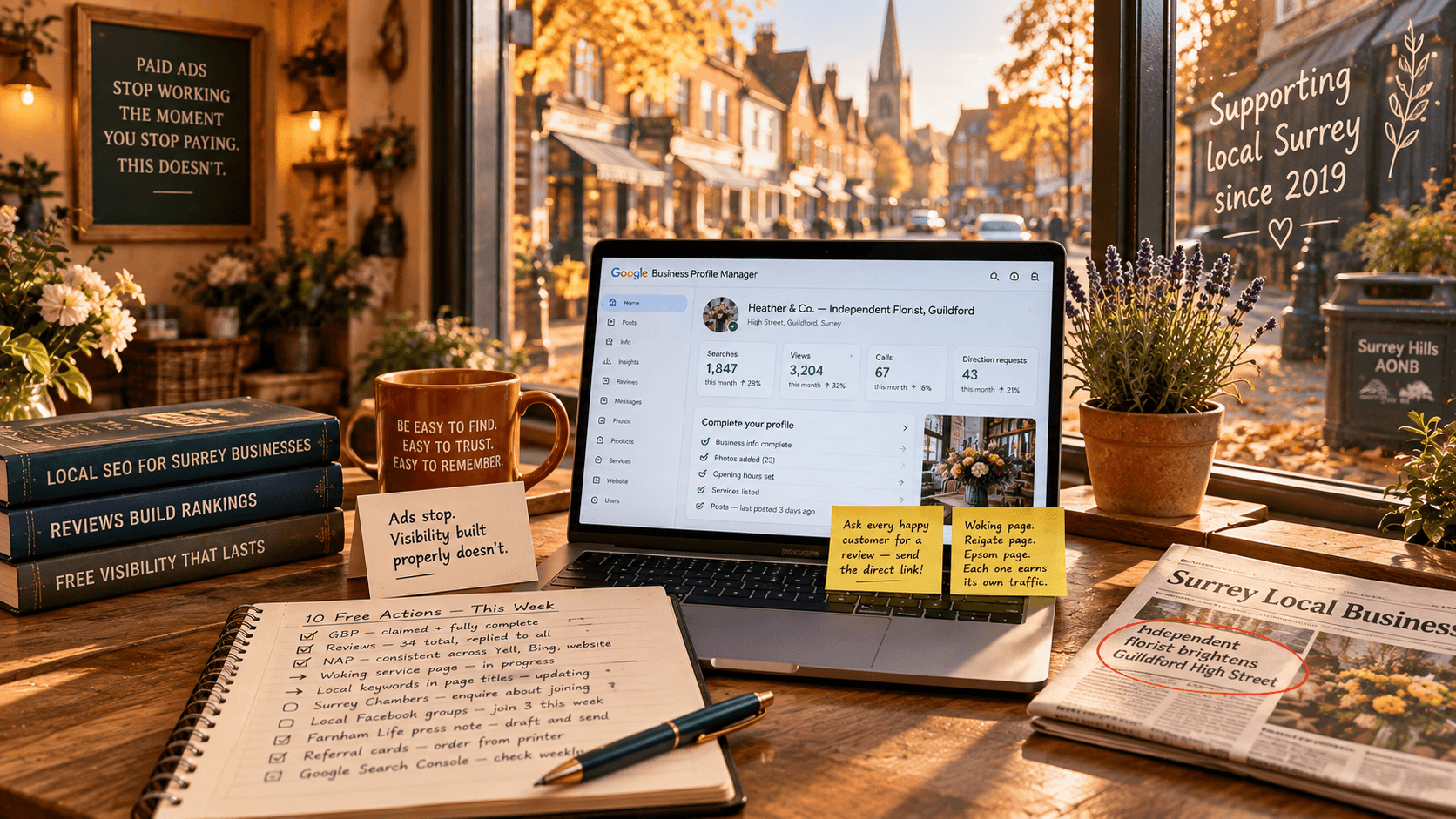
If you serve a specific area, local SEO can deliver quicker wins than national campaigns. A complete, active Google Business Profile, consistent business details across directories, local service pages and a steady flow of genuine reviews can improve your visibility in map results within weeks or a few months.
Local searches also tend to have clearer buying intent. Someone searching for “boiler repair near me” usually wants to act quickly, so even modest improvements in local visibility can translate into real enquiries.
How to Tell Whether SEO Is Working
Rankings alone don’t tell the whole story, particularly in the early months. Look at a wider set of signals. Are more pages being indexed? Are impressions and clicks rising in Search Console? Is traffic from organic search growing? Are you getting more calls, form submissions or direction requests from your Business Profile?
Track these monthly, not daily. SEO moves in trends, and short-term fluctuations are normal. What you want to see is a steady upward direction over a few months, followed by more enquiries and sales.
Can You Speed It Up?
You can’t force Google to rank you faster, but you can avoid delays. Fix technical problems early, target realistic keywords before attempting competitive ones, and make sure every important page has a clear purpose and a clear next step for the visitor. Claim and optimise your local listings straight away, ask happy customers for reviews, and publish genuinely useful content on a regular basis.
Be cautious of anyone who guarantees first-page rankings or instant results. Reputable SEO providers will explain realistic timeframes, show what they’re doing and report on progress in plain English.
It’s also worth keeping other marketing running while SEO builds. Social media, email, networking and, if your budget allows, paid ads can bring in customers during the months while organic results develop.
Be Patient, but Stay Strategic
So, how long does SEO take to work for a small business? Plan on three to four months for early signs, six to twelve for meaningful results, and longer for highly competitive terms. Local businesses targeting specific areas and services often see progress sooner, particularly when they build a strong Google Business Profile, gather reviews and publish helpful local content.
What matters most is steady, sensible effort. Fix your technical foundations, focus on searches you can realistically win, create content your customers actually want, and track progress with the right measures. SEO rewards the businesses that stick with it, and unlike a short-lived advert, the results keep working for you long after the work is done.