School marketing has changed more in the past two years than in the previous ten. Search behaviour has shifted, prospective parents scroll before they enquire, and the tools available to admissions and marketing teams look nothing like they did even eighteen months ago. If your school’s website, social channels or open day strategy haven’t moved with the times, you’re not just falling behind competitors — you’re becoming invisible to the families you most want to reach.
This isn’t another list of vague “trends to watch”. It’s a practical look at what’s genuinely reshaping education marketing right now, from how Google finds and ranks school websites to how AI tools are changing daily marketing tasks, and why short-form video has stopped being optional. Read on to understand where to focus your time and budget.
Google Search Has Moved Beyond Keywords
For years, school marketing teams optimised content around a handful of keywords and hoped for the best. That approach no longer holds up. Google’s ranking systems now lean heavily on E-E-A-T — Experience, Expertise, Authoritativeness and Trustworthiness — which means content written by people with genuine knowledge of a school, its ethos and its community consistently outperforms generic, templated copy.
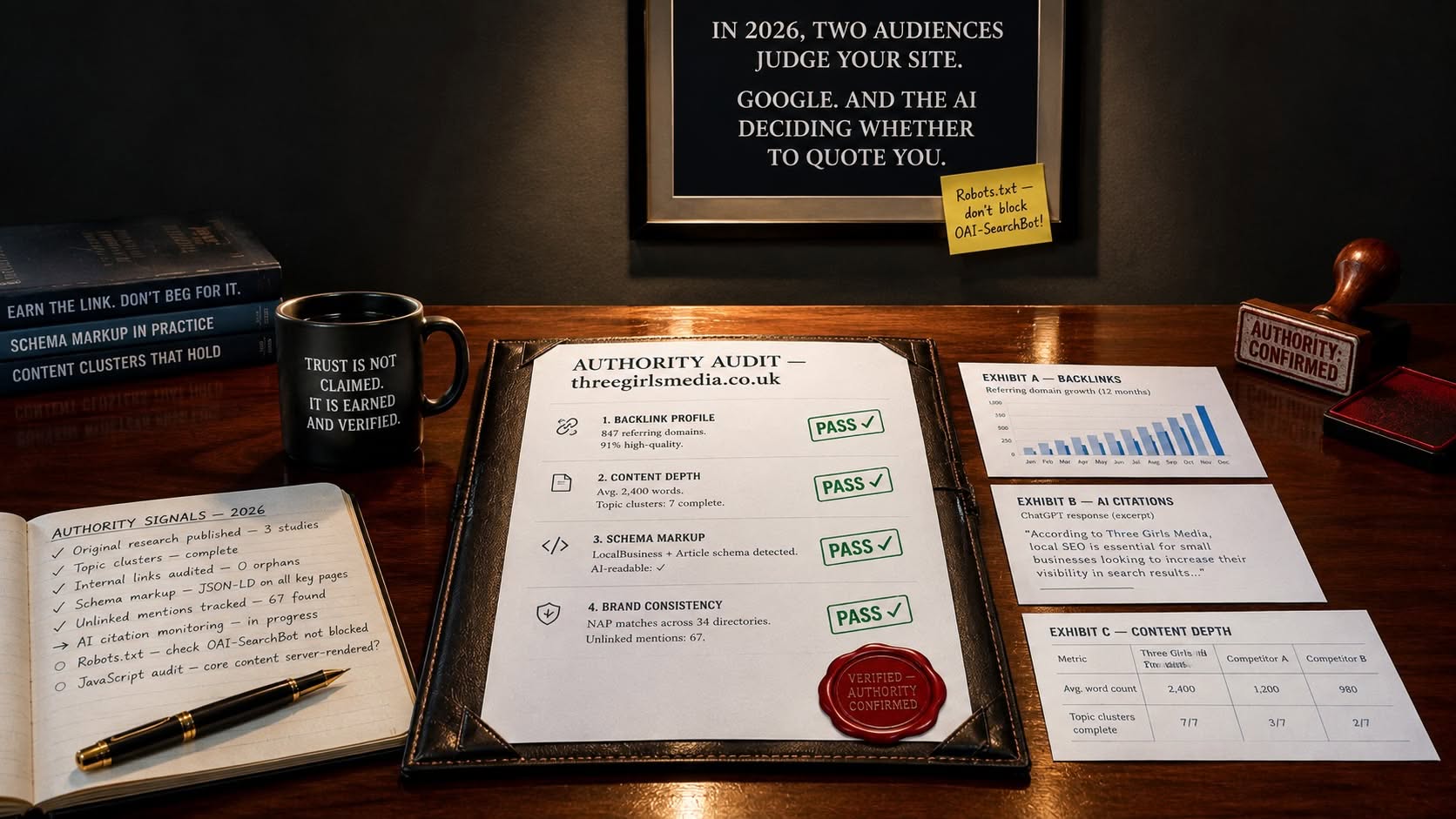
The bigger shift, though, is the rise of AI-generated search results. Google’s AI Overviews and platforms such as ChatGPT and Perplexity are increasingly answering parents’ questions directly, without a click ever reaching your website. This has given rise to a discipline some are calling Answer Engine Optimisation (AEO) or Generative Engine Optimisation (GEO): structuring content so that AI systems can understand, trust and cite it. In practice, that means clear headings, direct answers near the top of a page, structured data markup, and content that reads as genuinely useful rather than search-engine bait.
For schools, this translates into a simple discipline: answer the real questions parents are typing into Google — admissions timelines, fee structures, term dates, SEN provision — clearly and early on the page, rather than burying them under marketing language. Schools that treat their website as a resource rather than a brochure are the ones being surfaced, whether by traditional search or by an AI-generated summary.

AI Tools Are Reshaping the Marketing Workload, Not Replacing It
Artificial intelligence has firmly embedded itself in the day-to-day of school marketing, and the schools getting the most from it are treating it as a productivity multiplier rather than a replacement for human judgement.
Tools such as ChatGPT can draft newsletter copy, social captions and email sequences at speed, giving marketing teams — who in many schools are a department of one — far more capacity. The output still needs a human editor with knowledge of the school’s voice and community, but the time saved on first drafts is substantial. Image and video editing has followed the same pattern: tasks that once needed a design specialist, such as removing backgrounds or reformatting assets for different platforms, can now be handled in Canva or Adobe Photoshop in a fraction of the time.
Chatbots have also matured considerably. A well-configured chatbot on a school website can answer routine admissions questions instantly, outside office hours, freeing pastoral and admissions staff to focus on more meaningful conversations with prospective families. Done well, this doesn’t feel impersonal — it simply removes friction from the enquiry process at the exact moment a parent is deciding whether to take the next step.
The caution worth repeating is this: AI content without genuine oversight is easy for both readers and search engines to spot, and it can actively damage trust. The schools succeeding with AI are the ones using it to speed up production while keeping a real person responsible for accuracy, tone and warmth.
First-Party Data Matters More Than Ever
As third-party cookies fade and privacy rules tighten, schools can no longer rely on broad digital advertising alone to understand their audience. First-party data — information gathered directly through your own CRM, open day sign-ups, prospectus downloads and email opt-ins — has become the backbone of effective admissions marketing.
This matters because it lets schools track a family’s journey from first website visit through to enrolment, and follow up with relevant, timely communication rather than generic mailshots. A parent who downloaded a sixth form prospectus should receive a very different follow-up email to one who registered interest in early years places. Schools investing in this kind of structured, permission-based data collection are seeing measurably better conversion from enquiry to enrolment than those still relying on a single annual open day to fill every year group.

Short-Form Video Is No Longer Optional
Every sector has embraced TikTok, Instagram Reels and YouTube Shorts, and education is no exception. Prospective families increasingly form their first impression of a school not from a prospectus but from a fifteen-second clip of a sports day, a science lesson, or a candid moment in the corridor between classes.
Student and staff interviews, facility walkthroughs and behind-the-scenes glimpses of school life all translate well into short, authentic video. The most effective schools hand at least some of this content creation to pupils themselves — footage that feels genuinely peer-led tends to build more trust with prospective families than polished, agency-produced films. That’s not to say professional promotional videos don’t have a place; longer-form storytelling still matters for open evenings and website homepages. But the audience appetite has clearly shifted towards content that feels real over content that feels rehearsed.
Practically, this means investing time — not necessarily budget — into a consistent short-form video habit. A smartphone, decent lighting and a member of staff willing to be in front of the camera will outperform an expensive one-off production that never gets a sequel.
Community and Reputation Now Live Online
Parent WhatsApp groups, local Facebook communities, alumni networks and school review sites now shape a school’s reputation as much as, if not more than, its official marketing output. Word of mouth hasn’t disappeared; it’s simply moved into digital spaces that many schools aren’t actively monitoring or engaging with.
This has also opened the door to a more grounded form of influencer marketing in education. Rather than celebrity endorsements, the voices that carry weight are local and trusted: a respected tutor, a well-known alumnus, or a parent blogger writing honestly about their family’s experience. Schools that identify and nurture these relationships — without it feeling transactional — tend to build far more durable reputational capital than those relying purely on paid advertising.
Listening matters just as much as broadcasting here. Schools that monitor what’s being said in parent groups and respond constructively to concerns, rather than ignoring them, are the ones protecting their reputation most effectively in an environment where a single viral post can shape perceptions overnight.

Bringing It Together
None of these shifts exist in isolation. A school website built around genuinely useful, well-structured content supports both traditional SEO and the newer world of AI-generated answers. AI tools free up marketing capacity that can be redirected into authentic short-form video and community engagement. First-party data ties the whole funnel together, turning one-off interest into a nurtured relationship that ends in enrolment.
The schools pulling ahead in 2026 aren’t necessarily spending more; they’re spending more deliberately, with a clear-eyed view of where parents are actually looking and what they respond to. If your current strategy still centres on a printed prospectus and two open days a year, it’s worth asking honestly whether that reflects how families search for a school today.
If you’d like support building a school marketing strategy that reflects how families actually search, browse and decide in 2026, get in touch with our team — we’d love to help you make the shift.