| Key Insight | Explanation |
|---|---|
| Not all agencies are equal | A website design company can range from a solo freelancer to a full-service agency. The right fit depends on your goals, budget, and need for ongoing support. |
| UX drives conversions | User experience (UX), the way visitors navigate and interact with your site, directly affects how many enquiries or sales your website generates. |
| Post-launch support matters | Many businesses get left stranded after a website goes live. Choosing an agency that offers hosting and ongoing maintenance protects your investment. |
| SEO should be built in | Search engine optimisation (SEO) built into the design phase is far more effective than bolting it on later. Ask any agency how they handle this upfront. |
| Industry experience counts | Agencies with direct experience in your sector, whether healthcare, education, or ecommerce, will design with your audience’s actual behaviour in mind. |
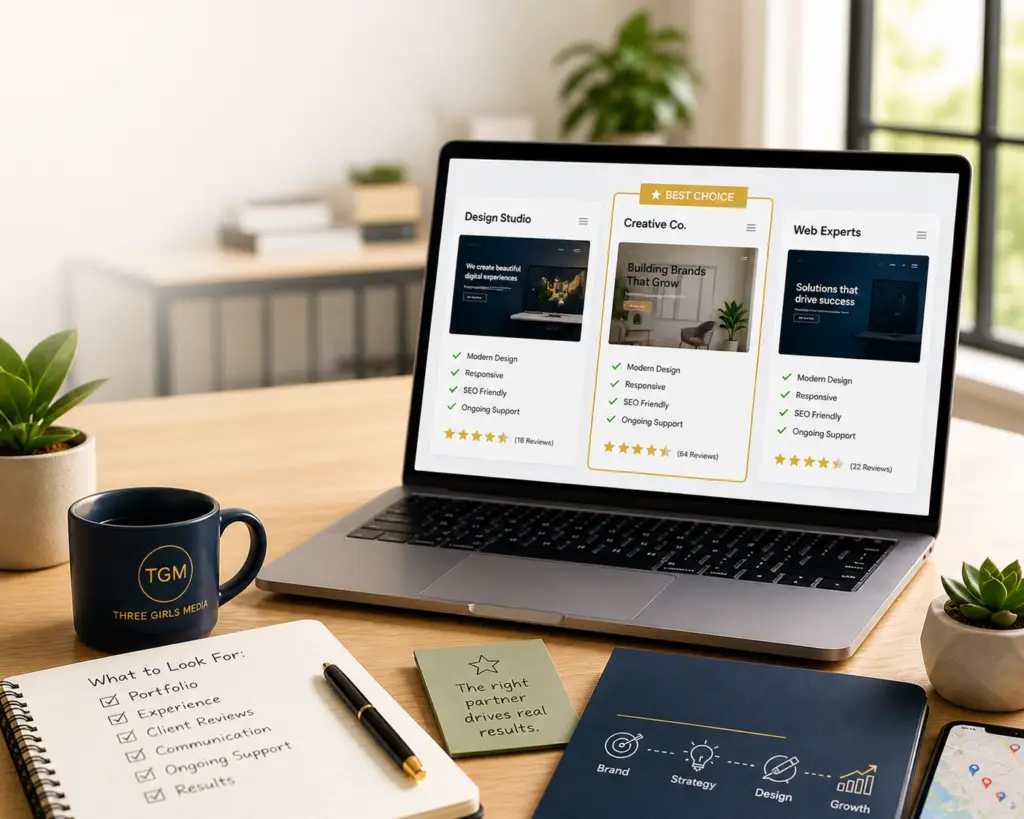
| Portfolio evidence is non-negotiable | Always review live examples of an agency’s previous work. Screenshots are easy to fake; live URLs tell you everything about quality and performance. |
Choosing the right website design company is one of the most consequential decisions a small business owner will make. Your website is your most visible sales tool, and the agency behind it will shape how potential customers see you before they ever pick up the phone. Get it right, and you have a site that wins enquiries around the clock. Get it wrong, and you’re stuck with an expensive, underperforming page that quietly costs you customers every week.
This guide covers everything you need to know: what a web design company actually does, the different types of agencies available as of 2026, the services you should expect, and the questions that separate good agencies from great ones. Whether you run a healthcare practice in Surrey, a nursery in South London, or an independent retail business anywhere in the country, the criteria here apply.

What Is a Website Design Company?
A website design company is a professional agency or studio that plans, designs, builds, and often maintains websites for businesses and organisations. The scope of work varies widely, from simple brochure sites to complex ecommerce platforms, but the core goal is always the same: create a digital presence that serves the client’s business objectives.
More Than Just Aesthetics
A common misconception is that web design is purely visual. In practice, the best agencies combine graphic design with UX (user experience, meaning how easy and intuitive a site is to use), technical development, and strategic thinking about how visitors behave.
Industry analysts consistently highlight that design quality and usability are inseparable. According to research cited by Orbit Media Studios, websites that prioritise user experience see measurably higher engagement and lower bounce rates (the percentage of visitors who leave after viewing just one page) [1].
A professional website design company will typically handle:
- Discovery and strategy (understanding your business goals and target audience)
- Information architecture (planning how pages and content are organised)
- Visual design (colours, typography, imagery, and branding)
- Front-end and back-end development (the code that makes everything work)
- Content management system (CMS) setup so you can update your own site
- Testing and quality assurance before launch
- Post-launch support and maintenance
What Separates a Good Agency From a Basic One
The difference between a strong website design company and a mediocre one often comes down to process. Good agencies ask hard questions before they open a design tool. They want to know who your customers are, what action you want visitors to take, and what your competitors are doing. That strategic grounding is what turns a good-looking website into one that actually generates business.
At Three Girls Media, we’ve found that clients who come to us having been burned before almost always describe the same experience: the previous agency focused entirely on how the site looked and never asked how it would perform.
What to Look For in a Website Design Company in 2026
The best website design company for your business will demonstrate a clear portfolio, transparent process, proven SEO knowledge, and reliable post-launch support. As of 2026, several additional factors have become essential criteria.
Portfolio and Proven Results
Always ask for live examples of completed work, not just screenshots. A live URL lets you test page speed, check mobile responsiveness, and judge the real quality of the finished product. Clutch’s April 2026 rankings of top web design agencies consistently highlight portfolio strength and verified client reviews as the two most reliable quality signals [2].
Look for:
- Work in your industry or a closely related sector
- Sites that load quickly on mobile devices
- Clear calls to action (prompts that tell visitors what to do next) on every page
- Consistent visual quality that reflects the agency’s design standards
- Client testimonials that speak to outcomes, not just appearance
SEO Integration From Day One
SEO (search engine optimisation, the practice of making your site rank higher in Google searches) shouldn’t be an add-on. It needs to be baked into the design and development process. That means clean code structure, fast loading times, mobile-first design, and properly structured headings from the very start.
Ask any prospective agency directly: “How do you handle SEO during the build?” If they suggest you deal with it after launch, that’s a warning sign. Coalition Technologies, rated among the top web design and development agencies in 2026, notes that technical SEO foundations laid during development are significantly harder and more expensive to retrofit later [3].
Pro Tip: Before signing with any web design agency, Google three of their recent client sites. If none of them appear on page one for their core local search terms, ask why — and listen carefully to the answer.
Types of Web Design Agencies: Which Is Right for You?
Website design companies fall into several distinct categories, each with different strengths, price points, and suitability depending on your business size and goals.

The Four Main Agency Types
| Agency Type | Best For | Typical Strengths | Watch Out For |
|---|---|---|---|
| Full-service agency | SMBs wanting design + SEO + PPC under one roof | Integrated strategy, single point of contact | Higher cost; ensure they don’t outsource core work |
| Boutique studio | Businesses wanting close collaboration and local knowledge | Personal service, niche expertise | Capacity limits; check availability for support |
| Freelancer | Very small budgets or simple sites | Low cost, flexible | No continuity; risk of going dark post-launch [4] |
| DIY platform (Wix, Squarespace) | Sole traders testing an idea | Cheapest entry point | No strategy, weak SEO depth, template limitations |
For most established small businesses, a full-service or boutique agency delivers the best return. The integrated approach means your website, SEO, and paid advertising (PPC, or pay-per-click advertising, where you pay for each visitor who clicks your ad) all work from the same strategic foundation.
Why Local Knowledge Still Matters
National and international agencies can build technically excellent sites. But a local website design company understands your market, your competitors, and the search behaviour of your specific customer base. For a nursery in Caterham or a physio practice in Coulsdon, that local context translates directly into better keyword targeting and more relevant content strategy.
Platforms like Upwork offer access to freelance designers globally, but the absence of a strategic relationship and local accountability is a real limitation for businesses that need a long-term digital partner rather than a one-off job [4].
For businesses that also want to showcase their brand story visually, pairing web design with professional video content can be a powerful combination. The Company Films from Upficient is one example of how businesses are using brand film to complement their online presence and deepen trust with prospective customers.
Key Services to Expect From a Professional Web Design Agency
A professional website design company should offer a clear set of core services that cover the full lifecycle of your website, from initial strategy through to ongoing performance management.
Core Services Checklist
When evaluating any agency, confirm they offer the following:
- Custom website design and development: Bespoke layouts built around your brand, not generic templates dropped into a builder tool
- Ecommerce web design: If you sell online, the agency should have direct experience building and optimising online stores, including product pages, checkout flows, and payment integration
- SEO (search engine optimisation): On-page and technical SEO built into the development process, not added as an afterthought
- PPC advertising management: Planning and running paid search campaigns (Google Ads, for example) to drive targeted traffic while organic rankings build
- Website hosting and support: Reliable hosting, security updates, and a clear support process for when things go wrong after launch
- Content management system (CMS) training: You should be able to update your own content without calling the agency every time
From experience, the post-launch support piece is where many agencies fall short. A common mistake is signing with a company that treats launch day as the finish line. In reality, your website needs ongoing attention: security patches, performance monitoring, and content updates that keep it relevant for both visitors and search engines.
Ecommerce Expertise: A Specialist Skill
Ecommerce web design is a genuinely different discipline from building a brochure site. Conversion rate optimisation (CRO, the process of improving the percentage of visitors who complete a purchase) requires understanding how shoppers behave, where they drop off, and what reassures them enough to buy.
Agencies that have operated their own ecommerce businesses bring a different level of insight to this work. They’ve felt the pressure of a slow checkout page or a confusing product filter, not just read about it in a case study. Americaneagle.com, a global digital agency, emphasises that ecommerce success depends on the intersection of design, performance, and strategic merchandising working together [5].
Pro Tip: If you’re building an ecommerce site, ask your prospective agency whether they’ve personally run an online store. First-hand trading experience produces fundamentally better ecommerce design decisions than theoretical knowledge alone.
Top Questions to Ask Before You Sign
Asking the right questions before committing to a website design company will save you time, money, and frustration. These questions reveal an agency’s real capabilities and working style far more reliably than a polished sales pitch.
Questions That Reveal Process and Accountability
- Can I see three live examples of sites you’ve built in the last 12 months? Live URLs only. This tests recency and real-world quality.
- Who will actually build my website? Some agencies win the work and outsource the build. Know who’s doing the hands-on work.
- How do you handle SEO during the design and build phase? Listen for specific answers about site speed, mobile-first design, and heading structure — not vague reassurances.
- What does post-launch support look like? Get the specifics: response times, what’s included, and what costs extra.
- How do you measure success? A good agency will talk about enquiry volume, conversion rates, and organic traffic growth, not just how the site looks.
- What do I own at the end of the project? You should own your domain, your hosting account, and your website files outright.
- What’s your typical timeline from brief to launch? Realistic timelines vary by project size, but any agency that can’t give you a clear estimate hasn’t done this enough.
Red Flags to Watch For
- No clear contract or project scope document before work begins
- Vague answers about who owns the finished website
- Pressure to decide quickly or accept a “limited time” discount
- Portfolio full of screenshots rather than live URLs
- No mention of SEO, performance, or mobile design in their pitch
According to DesignRush’s directory of top website design companies, client reviews that mention poor communication and missed deadlines are the most consistent indicators of an agency to avoid [6].
Pro Tip: Ask to speak with one of the agency’s current clients directly, not just read a written testimonial. A confident, reputable agency will always say yes to this request.

How to Choose a Website Design Company: Decision Framework
Choosing the right website design company comes down to matching your specific business needs, budget, and long-term goals to an agency’s genuine capabilities and working style. Use this framework to make a structured, confident decision.
A Step-by-Step Selection Process
- Define your goals first. Do you need more enquiries, online sales, local visibility, or all three? Your goals determine which agency type and services you actually need.
- Set a realistic budget range. A professional custom website from a reputable agency typically starts from £2,000–£5,000 for an SMB site in the UK, with ecommerce builds often higher. Anything significantly below this range warrants careful scrutiny.
- Shortlist three to five agencies. Use directories like Clutch and DesignRush to find agencies with verified reviews and relevant portfolios [2][6].
- Review live portfolio work. Test the sites on mobile. Check page speed. Judge the quality of copywriting and calls to action, not just the visuals.
- Ask the seven questions above in a discovery call with each shortlisted agency.
- Compare proposals on outcomes, not just price. The cheapest quote rarely delivers the best return. Focus on what results the agency is committing to and how they’ll measure them.
- Check for integrated services. If you’ll eventually need SEO, PPC, or hosting support, an agency that offers all of these will serve you better than one that only builds websites.
Matching Agency Type to Business Stage
- Just starting out: A boutique agency or experienced local studio offers the best balance of quality and cost
- Established business, outdated site: A full-service agency that can redesign and build an SEO strategy simultaneously is your strongest option
- Growing ecommerce business: Prioritise agencies with direct ecommerce trading experience, not just ecommerce build experience
- Healthcare, education, or childcare sector: Look for sector-specific portfolio examples, as these audiences have distinct trust signals and compliance considerations
Our team at Three Girls Media recommends always requesting a written project scope before any work begins. Scope creep (where a project expands beyond the original brief without agreed cost adjustments) is one of the most common sources of frustration in web design engagements, and a clear document protects both parties.
Sources & References
- Clutch, “Top Web Design Agencies in the United States — Apr 2026 Rankings”, 2026
- Upwork, “Best Freelance Web Designers for Hire (Apr 2026)”, 2026
- Americaneagle.com, “Web Design Company and Digital Marketing”, 2026
Frequently Asked Questions
1. How much does a website design company typically charge?
Pricing varies significantly by scope and agency type. A professional custom website from a reputable website design company in the UK typically ranges from £2,000 to £10,000 or more for an SMB site, with ecommerce builds often starting higher. Freelancers via platforms like Fiverr or Upwork may quote less, but often without the strategic input, SEO integration, or post-launch support that a dedicated agency provides. Always compare what’s included, not just the headline price.
2. How long does it take to build a website?
A straightforward brochure website typically takes four to eight weeks from brief to launch. Ecommerce sites or those with complex functionality can take three to six months. Timelines depend on how quickly you can provide content (text, images, and brand assets) and how many revision rounds are needed. A good website design company will give you a clear project timeline with milestones at the start of the engagement.
3. What’s the difference between a web designer and a web developer?
A web designer focuses on the visual and UX (user experience) side: layouts, colours, typography, and how easy the site is to use. A web developer writes the code that makes the design function. Many agencies employ both, or individuals who combine both skills. When evaluating a this, ask whether both disciplines are covered in-house or whether development is outsourced.
4. Do I need SEO as well as web design?
Yes, in almost every case. A beautifully designed website that nobody can find on Google won’t generate enquiries. SEO (search engine optimisation) determines whether your site appears when potential customers search for your services. The best it will integrate SEO from the very start of the build, covering page speed, mobile design, URL structure, and on-page content, rather than treating it as a separate afterthought.
5. Should I choose a local website design company or a national agency?
Both can deliver excellent results, but local agencies bring specific advantages for businesses targeting a regional customer base. They understand local search behaviour, know your competitive landscape, and are easier to meet face to face. For businesses in areas like Surrey and South London, a local this method with proven regional experience will typically outperform a large national agency that doesn’t know your market.
6. What should I prepare before approaching a web design agency?
Come prepared with a clear sense of your goals (more enquiries, online sales, better Google rankings), your target audience, examples of websites you like, and a realistic budget range. The more clearly you can articulate what success looks like, the better any agency can scope the project accurately. Also gather your existing brand assets: logo files, brand colours, and any existing content you want to keep.
7. What happens to my website after it launches?
A good this strategy doesn’t disappear after launch day. Expect ongoing needs including security updates, performance monitoring, content changes, and SEO refinements as search algorithms evolve. Ask any prospective agency about their hosting and support packages before you commit. Having a reliable support relationship in place means you’re never left with a broken or outdated site and no one to call.
8. Can a website design company also run my digital marketing?
Many full-service agencies offer integrated digital marketing alongside web design, including SEO, PPC (pay-per-click advertising), social media, and content marketing. Choosing a single agency for both your website and your ongoing marketing creates a more coherent strategy, since the team that built your site already understands your audience, your goals, and your brand. This integrated approach typically delivers better results than managing multiple separate suppliers.
Conclusion
Picking the right this approach is about far more than finding someone who can make your site look attractive. The best agencies combine design quality with strategic thinking, technical SEO knowledge, and a genuine commitment to your results long after launch day.
The criteria covered in this guide — portfolio quality, SEO integration, post-launch support, ecommerce expertise, and the right questions to ask — give you a practical framework for making a confident, well-informed decision. Results will vary depending on your sector, budget, and how clearly you define your goals, but the fundamentals hold across every type of business.
At Three Girls Media, we’ve spent over 10 years building websites for small businesses, healthcare practitioners, nurseries, and ecommerce brands across Surrey and South London. Our approach is grounded in UX-led design, integrated digital marketing, and the kind of post-launch support that means you’re never left stranded. If you’re ready to invest in a website that genuinely works as hard as you do, contact us for a free quote today.
Recommended Articles
Explore more from our content library: