Search engine optimisation has transformed from a nice-to-have into an absolute business necessity. If your website isn’t appearing when potential customers search for what you offer, you’re essentially invisible online. This guide breaks down everything you need to understand about SEO and provides actionable strategies to improve your rankings.
Understanding Search Engine Optimisation
Search engine optimisation is the practice of improving your website’s visibility in organic search results. When someone searches for information, products, or services related to your business, proper SEO ensures your site appears prominently in those results.
The mechanics are straightforward: search engines like Google use automated programs called crawlers to discover web pages, analyse their content, and determine which pages best answer specific queries. When your site aligns with what searchers want and follows technical best practices, you rank higher.
Higher rankings translate directly into more visitors. Research consistently shows that the top three organic results capture the majority of clicks, while pages beyond the first page receive minimal traffic.

The Strategic Value of Organic Search
Investing in SEO delivers sustainable advantages that paid advertising simply cannot match. Once you achieve strong rankings, you receive consistent traffic month after month without ongoing advertising costs.
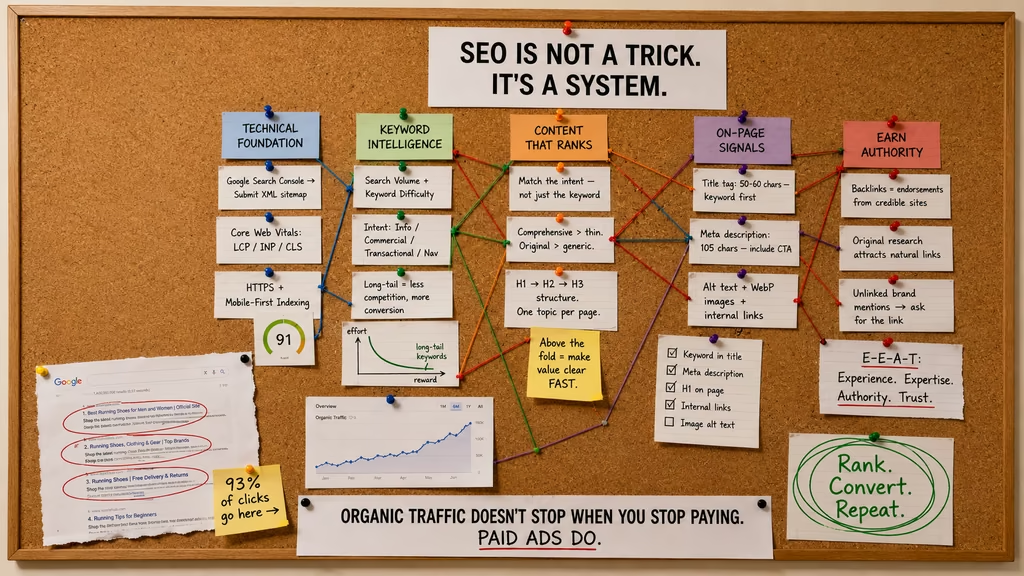
Consider the difference: a paid search campaign requires continuous budget allocation. The moment you stop paying, your traffic disappears. Organic rankings, while requiring initial effort to establish, continue generating visits long after the work is complete.
Additionally, organic search traffic carries inherent credibility. Users understand that ads are purchased placements, but earning a top organic position signals that search engines consider your content genuinely valuable and authoritative.
Ensuring Search Engine Accessibility
Before optimising for rankings, confirm that search engines can actually find and process your content.
Setting Up Google Search Console
Google Search Console provides direct insight into how Google views your site. This free tool alerts you to indexing problems, security issues, and other technical concerns that could prevent your pages from appearing in search results.
After creating your account, generate an XML sitemap—essentially a directory listing all important pages on your site. Most modern website platforms create these automatically.
Submit your sitemap through Search Console by navigating to the Sitemaps section and entering your sitemap URL. A “Success” status confirms that Google has received and will use your sitemap for crawling.
Monitoring Indexation Status
Navigate to the Pages report under Indexing to identify any URLs that Google hasn’t added to its index. While some unindexed pages are normal, you should investigate any important pages that aren’t indexed.
Common indexation issues include incorrect robots.txt directives, noindex tags left in place after site launches, or technical problems that prevent crawlers from accessing certain pages.

Foundational SEO Elements
Keyword Intelligence
Keyword research reveals the exact phrases your target audience uses when searching for solutions you provide. This intelligence shapes your entire content strategy.
Effective keyword research goes beyond finding high-volume terms. You need to understand the intent behind searches—whether users want information, are comparing options, or are ready to make a purchase.
Tools like Keyword Magic Tool help identify relevant keywords along with critical metrics. Search volume indicates how many people search for a term monthly, while keyword difficulty scores estimate how challenging it will be to rank in the top positions.
Strategic Keyword Selection
Prioritise relevance above all else. Ranking for irrelevant high-volume keywords wastes effort and attracts visitors who won’t convert.
For newer sites, target less competitive keywords initially. As your site builds authority through consistent content creation and link acquisition, progressively target more competitive terms.
Creating Content That Ranks and Converts
Satisfying Search Intent
Understanding what users truly want when they enter a query—their search intent—is critical for ranking success. Google’s algorithms increasingly prioritise content that thoroughly addresses the underlying need behind searches.
The most reliable method for determining intent is analysing current top-ranking pages. If “how to make cold brew coffee” returns primarily step-by-step tutorials and video guides, your content should follow a similar format to compete effectively.
Intent typically falls into four categories: informational (learning), commercial (comparing options), navigational (finding a specific site), and transactional (making a purchase).
Quality Content Standards
High-quality content comprehensively covers topics while remaining accessible and engaging. It demonstrates expertise, provides accurate information, and genuinely helps users accomplish their goals.
Superior content includes thorough topic coverage without unnecessary fluff, logical organisation with clear headings, current and accurate information, original insights or unique perspectives, relevant visual elements, professional writing free of errors, and formatting that works well on mobile devices.
Optimising Introductory Content
The content users see immediately upon landing—”above the fold”—determines whether they stay or leave. Strong openings quickly establish value and relevance.
Effective above-the-fold content includes your primary keyword naturally in the opening sentences, immediately clarifies what users will gain from the page, uses clear and direct language, and avoids intrusive pop-ups or elements that obscure content.

On-Page Optimisation Elements
Title Tag Optimisation
Title tags serve dual purposes: helping search engines understand your content and convincing users to click your result over competitors.
Keep titles between 50-60 characters to avoid truncation in search results. Include your target keyword naturally, preferably towards the beginning. Make titles descriptive and specific enough that users understand exactly what they’ll find.
Meta Description Strategy
While meta descriptions don’t directly influence rankings, they significantly impact click-through rates from search results.
Effective meta descriptions stay within 105 characters, incorporate target keywords naturally, highlight the specific value or solution your page provides, include a subtle call-to-action, and remain unique for each page.
Heading Structure
HTML heading tags organise content hierarchically and help search engines understand your page structure. Use one H1 tag per page, then organise content with H2 tags for main sections and H3-H6 tags for subsections as needed.
Include relevant keywords in headings where natural, but prioritise clarity and usefulness.
URL Architecture
Clean, descriptive URLs help both users and search engines understand page content. Optimise URLs by keeping them concise but descriptive, including your primary keyword, using hyphens to separate words, and removing unnecessary filler words.
Image Optimisation
Images enhance engagement but require proper optimisation for search visibility. Use descriptive file names before uploading. Add meaningful alt text that describes image content—this helps visually impaired users and provides context to search engines.
Compress images to improve page loading speed using tools like TinyPNG. Choose appropriate file formats: WebP offers the best compression for most use cases.
Internal Linking
Internal links connect pages on your site, helping search engines discover content and understand relationships between topics. They also distribute authority throughout your site and guide users to relevant additional content.
Use descriptive anchor text that indicates what users will find when clicking. Link from high-authority pages to newer or underperforming content to help boost their visibility.
Technical SEO Foundations
Robots.txt Configuration
Your robots.txt file provides instructions to search engine crawlers about which areas of your site they should and shouldn’t access.
Be extremely careful when modifying this file—accidentally blocking important sections can devastate your search visibility. Use Google’s robots.txt testing tool to verify your configuration.
Core Web Vitals Optimisation
Google’s Core Web Vitals measure essential aspects of user experience: loading performance, interactivity, and visual stability. These metrics directly influence rankings.
Check your Core Web Vitals performance through Google Search Console’s Core Web Vitals report. For pages flagged as needing improvement, run them through PageSpeed Insights for specific optimisation recommendations.
HTTPS Implementation
HTTPS encrypts data transmitted between users and your server, protecting sensitive information. Google confirmed HTTPS as a ranking factor, making it essential for SEO.
Most web hosts now offer free SSL certificates. After installation, implement 301 redirects from all HTTP versions of your pages to their HTTPS equivalents.
Mobile Optimisation
Google’s mobile-first indexing means the mobile version of your site determines your rankings, even for desktop searches.
Ensure your site uses responsive design that adapts to any screen size. Prioritise fast loading on mobile connections. Avoid intrusive interstitials that cover content. Make buttons and links large enough to tap easily.

Building Authority Through Links
Backlinks—links from other websites to yours—remain one of the strongest ranking signals. They function as endorsements, indicating that others find your content valuable enough to reference.
Leveraging Business Relationships
Your existing business connections represent immediate link opportunities. Suppliers, partners, industry associations, and chambers of commerce often maintain partner directories or member listings.
Strategic Directory Submissions
While many general directories provide minimal SEO value, industry-specific directories can deliver targeted traffic and relevant links. Focus on directories where your actual customers might search.
Earning Media Coverage
Press mentions and media coverage generate powerful links from high-authority news sites. Build relationships with journalists covering your industry. Create original research, surveys, or data studies that publications want to reference.
Creating Link-Worthy Content
Content that naturally attracts links includes original research, comprehensive guides, visual resources like infographics, and timely commentary on industry developments.
User Experience Optimisation
Effective Calls-to-Action
Strong CTAs guide users towards desired actions while adding value to their experience. Create specific, benefit-focused CTAs like “Download your free SEO checklist” rather than generic “click here” prompts.
Enhancing Readability
Most users scan rather than read every word. Break long paragraphs into shorter chunks of 2-4 sentences. Add white space between sections. Include relevant images every 200-300 words. Use bullet points and numbered lists for sequential information.

Measuring SEO Performance
Organic Traffic Growth
Organic search traffic is the primary success metric for SEO. Monitor this through Google Analytics by navigating to Reports > Acquisition > Traffic Acquisition.
Track organic traffic monthly to identify trends. Sudden drops may indicate technical issues or algorithm updates requiring investigation.
Keyword Ranking Progress
Keyword rankings indicate your visibility for target terms. Google Search Console provides ranking data for up to 1,000 keywords.
Engagement Metrics
Engagement time reveals whether content satisfies user intent. In Google Analytics 4, check the Pages and Screens report under Engagement.
Conversion Tracking
Conversions—newsletter sign-ups, demo requests, purchases—determine whether traffic translates into business results. Track conversions as “key events” in Google Analytics 4.
Building Your SEO Foundation
Mastering SEO requires consistent effort over time. Begin with fundamentals: ensure your site is technically sound, conduct keyword research, optimise existing high-priority pages, and create valuable content targeting important keywords.
Each optimisation builds on previous work, creating compounding improvements to your search visibility. The investment in SEO delivers sustainable results that continue generating value long after the initial work is complete.