Introduction
Did you know that Facebook Groups have over 1.8 billion active users every month? More importantly, a huge chunk of those users are in local community groups — the kind where your ideal customers are asking for recommendations, sharing events, and looking for exactly what you offer.
If you’re a small business owner who’s been pouring time into paid ads or posting into the void on your business page, local Facebook groups for business might be the low-cost, high-trust strategy you’ve been missing.
In this post, we’ll cover why local Facebook groups are worth your attention, how to find and join the right ones, what to post (and what not to post), and how to turn engagement into real customers — without spending a penny.
The Real Benefits of Local Facebook Groups for Small Businesses
Local Facebook groups are built around geography and shared interests — a neighbourhood, a town, a community. That means the people inside them are already close to you, care about local businesses, and are far more likely to become customers than a random social media follower.
They Put You in Front of Warm, Local Audiences
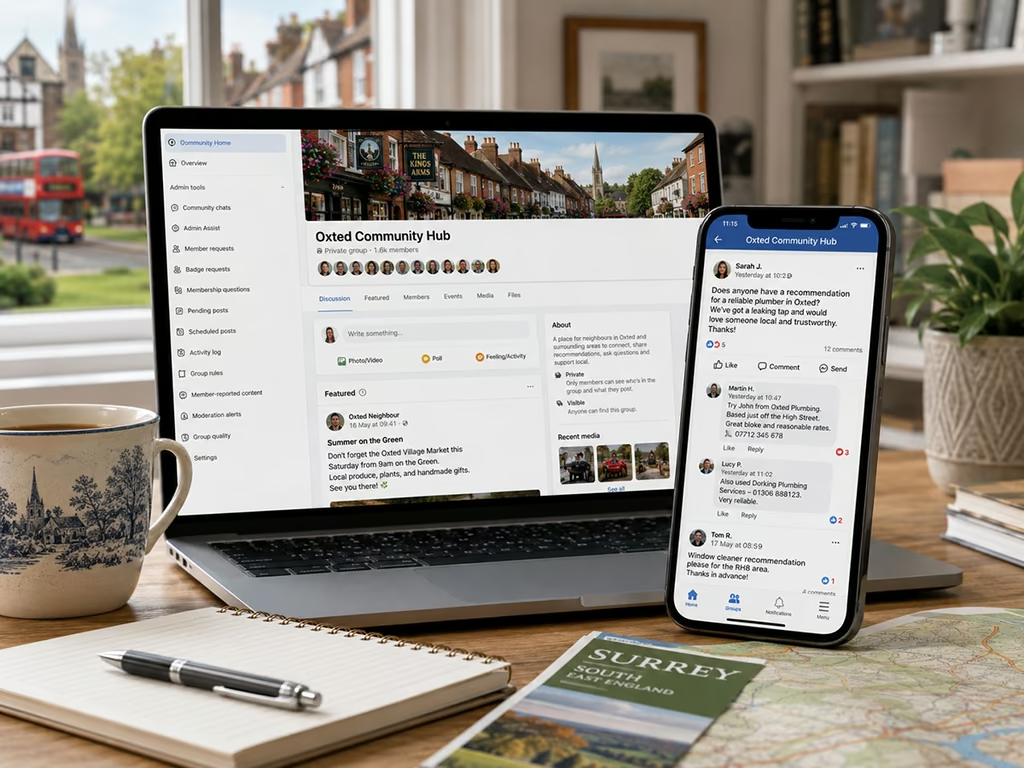
Unlike broad social media advertising, posting in local groups reaches people who already have a reason to care about your business. When someone in a “What’s on in [Your Town]” group asks for a recommendation, and your name comes up — or you’re already a familiar, helpful presence in that community — you win the referral without paying for it.
They Build Trust Faster Than Ads
People buy from people they know and trust. Being consistently present in a local group — answering questions, sharing useful tips, celebrating local news — builds that trust organically. Paid ads tell people you exist. Community presence shows them who you are.
They’re Completely Free
Facebook group marketing costs you nothing but time. For small businesses with tight budgets, that’s significant. Even a few minutes a day of genuine participation can generate enquiries, referrals, and word-of-mouth that money can’t always buy.
How to Find and Join the Right Local Facebook Groups
Not all groups are created equal. Jumping into the wrong ones — or joining too many to manage — can waste your time and damage your reputation. Here’s how to be strategic.
Search by Location and Interest
Use Facebook’s search bar and filter by Groups. Try terms like “[Your Town] community”, “[Your Town] recommendations”, “[Your Town] business owners”, or “[Your Town] mums/parents”. Also look for groups tied to your industry — a local tradesperson might find value in a home improvement group, for example.
Check Group Rules Before You Post
Many community groups have strict rules about self-promotion. Read the pinned posts and group description before doing anything. Violating rules — even accidentally — can get you removed and damage your local reputation. Some groups have dedicated days for business posts (e.g., “Monday Business Shoutout”), so use them.
Start with Two or Three Groups
It’s tempting to join every local group you can find, but consistency beats quantity. Pick two or three active, well-moderated groups and commit to being genuinely useful in them. You can always expand later.
| Group Type | Best For |
| Local community / neighbourhood | General brand awareness, recommendations |
| Local buy/sell/swap | Product-based businesses |
| Local parents/families | Child-friendly services, family businesses |
| Local business networking | B2B connections, partnerships |
What to Post in Local Facebook Groups (And What to Avoid)
The fastest way to get ignored — or banned — is to treat local groups like a free ad board. The members aren’t there to be sold to; they’re there for community. Here’s how to add value instead.
Posts That Work Well
- Answer questions genuinely. If someone asks “does anyone know a reliable plumber?”, and you are a plumber, respond helpfully and professionally. Don’t just drop your number — show personality.
- Share local knowledge. Post about events, local news relevant to your industry, or tips that genuinely help the community. A local estate agent sharing advice on local school catchment areas, for example, builds credibility fast.
- Celebrate milestones. Opened a new location? Reached a business anniversary? People love supporting local businesses and celebrating with them.
- Post behind-the-scenes content. A photo of your team at work, your shop decorated for the season, or a peek at a new product feels authentic and human.
Posts to Avoid
- Spammy, repetitive promotional posts
- Copying and pasting the same message into multiple groups
- Tagging random people who didn’t ask
- Ignoring replies or comments on your posts
The golden rule: be a neighbour, not a billboard.
Turning Facebook Group Engagement Into Real Customers
Participation is great, but conversion is the goal. Here’s how to move people from “interested” to “enquiring”.
Make Your Profile Work for You
When people click your name in a group, they’ll see your personal or business profile. Make sure it’s complete: a clear photo, a bio that mentions your business, and a link to your website or booking page. This is your free shop window.
Follow Up in the Right Way
If someone comments positively on your post or recommends you, respond promptly and warmly. A quick “Thanks so much! Feel free to DM me if you’d like to chat” is natural and low-pressure. Don’t hard-sell in the comments.
Track What’s Working
It’s easy to lose track of where enquiries come from. Ask new customers how they heard about you — if “Facebook group” starts appearing regularly, you’ll know it’s worth doubling down. Even a simple spreadsheet tracking referral sources can reveal what’s driving growth.
Conclusion
Local Facebook groups are one of the most underused tools in a small business owner’s marketing toolkit. They’re free, they build genuine trust, and they put you directly in front of people who are already in your community and ready to buy local.
The key is to show up consistently, add real value, and resist the urge to sell before you’ve built relationships. When you do that, the sales follow naturally.
Ready to give it a go? Start by searching for two or three active local groups in your area today. Spend a week just listening and engaging — then see what happens when you introduce yourself.
Have you had success (or a horror story) with local Facebook groups? Drop a comment below — we’d love to hear from you.
FAQ
Is it okay to promote my business in local Facebook groups? Self-promotion is allowed in many groups, but always check the rules first. Most groups welcome genuine participation and occasional business mentions — just avoid spammy or repetitive posting.
How often should I post in local Facebook groups? Quality beats frequency. Aim to engage a few times a week — answering questions, sharing useful posts — rather than posting promotional content every day.
Do local Facebook groups actually drive sales for small businesses? Yes, especially for service-based and product businesses with a local customer base. Word-of-mouth referrals in community groups can be extremely powerful and cost nothing.
What types of businesses benefit most from local Facebook group marketing? Trades, food businesses, childcare, beauty, fitness, retail, and local services all perform well. Essentially, any business with a local customer base can benefit from Facebook group marketing.
What should I do if I accidentally break a group’s rules? Apologise promptly and politely to the admin, remove the post if asked, and take time to re-read the group guidelines. Most admins appreciate a genuine apology.
Related reading: Mastering Local SEO: A Comprehensive Guide for Small Businesses, SEO for Small Businesses: A Practical Guide to Boosting Online Visibility.