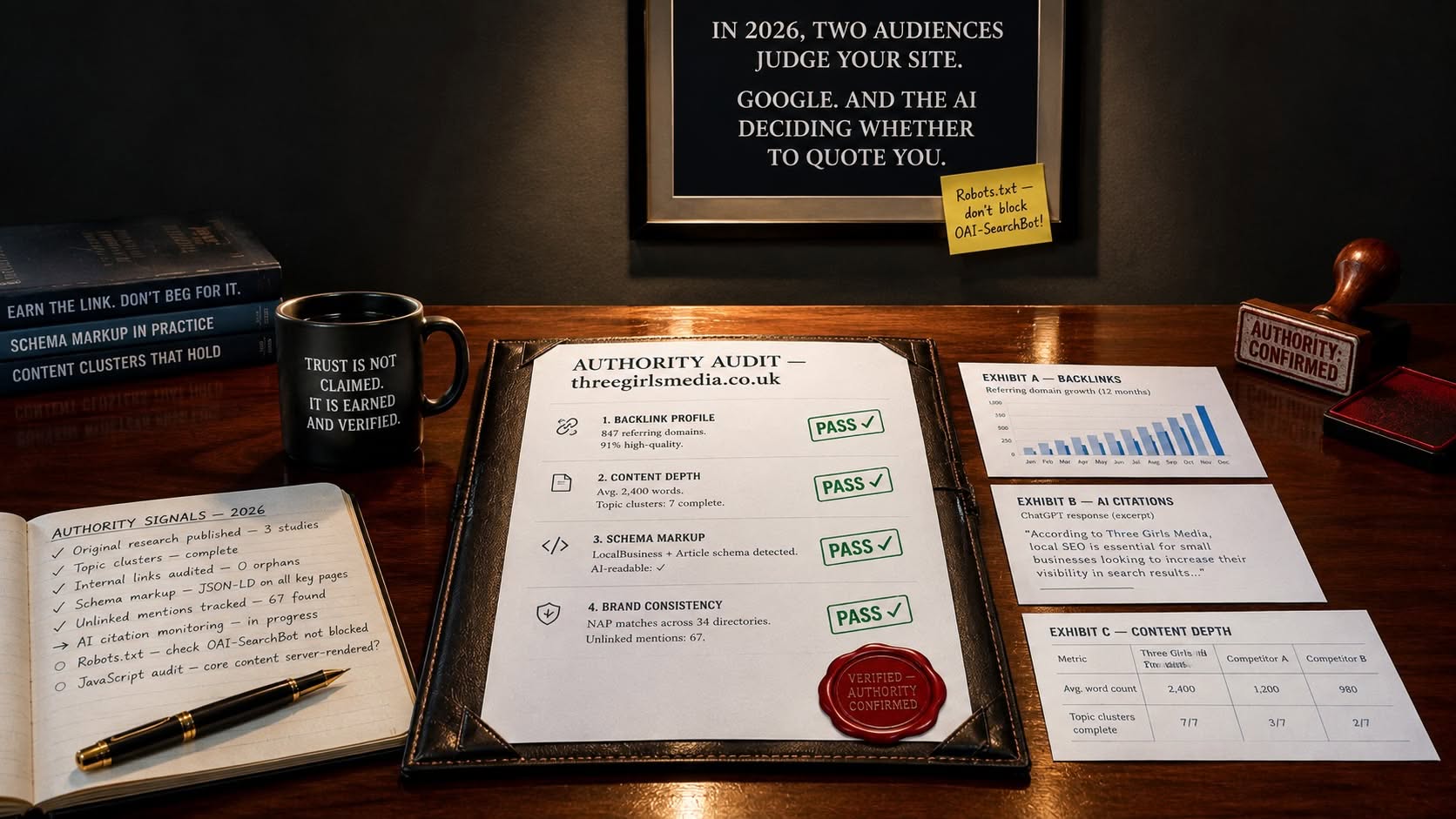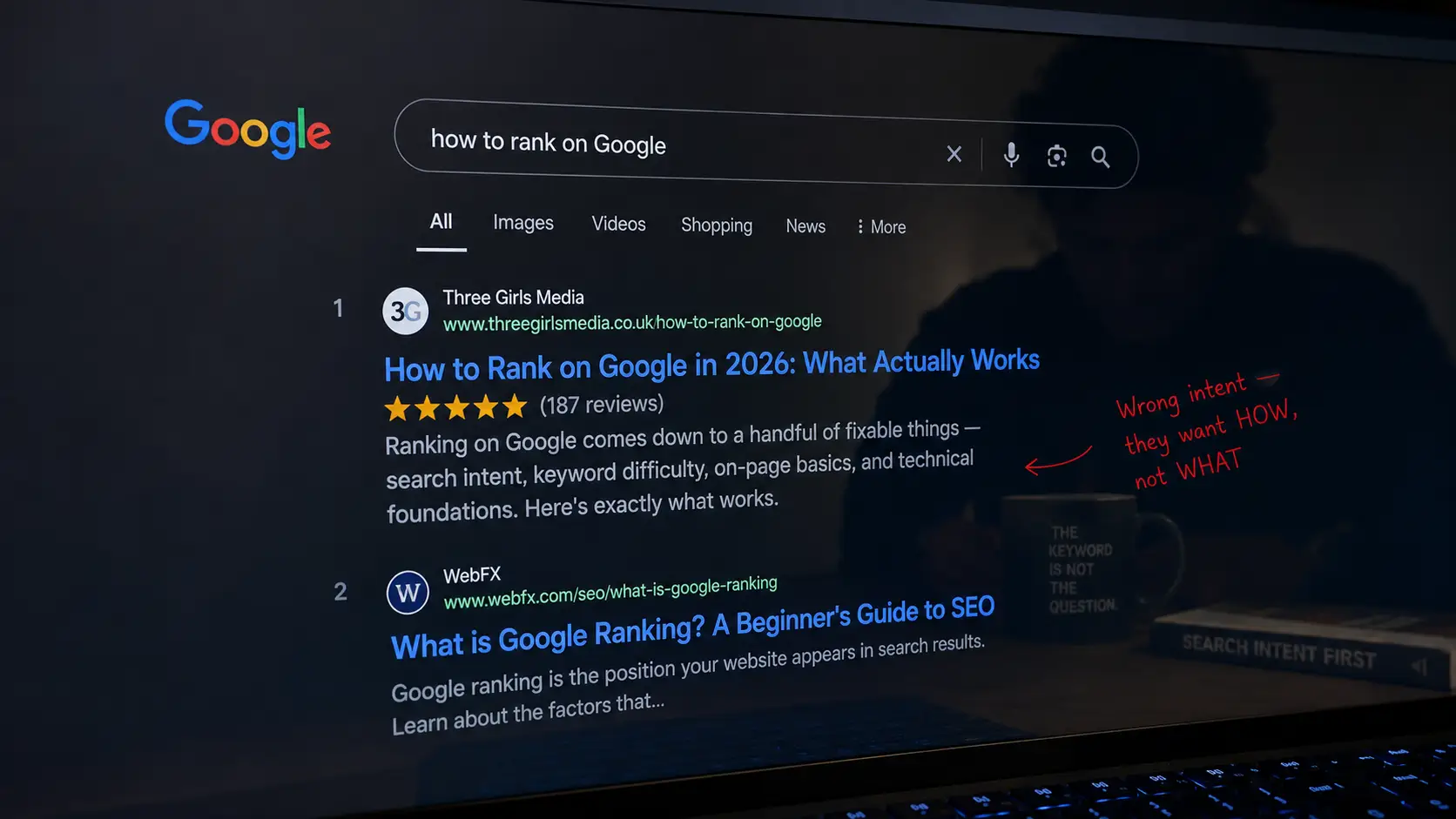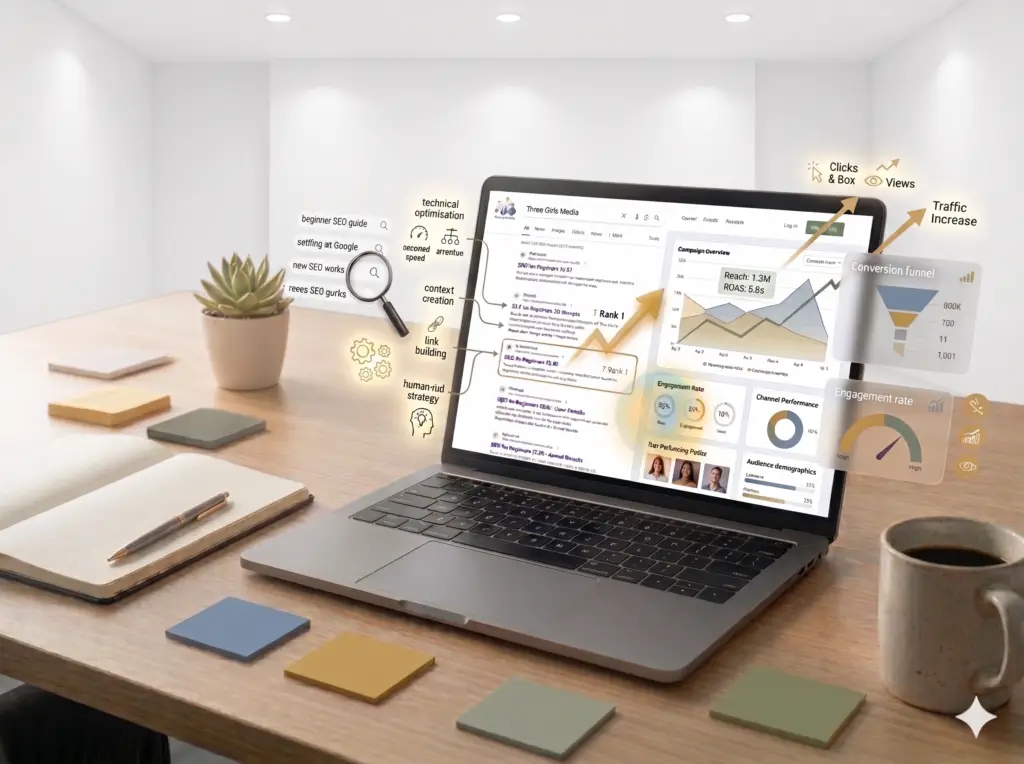
| Key Insight | Explanation |
|---|---|
| SEO is the foundation | Optimising your site for search engines drives consistent, free organic traffic over time without ongoing ad spend. |
| Content quality beats content volume | Publishing fewer, genuinely helpful articles outperforms churning out thin posts that don’t answer real user questions. |
| Technical performance matters | Page speed, mobile-friendliness, and Core Web Vitals directly affect how Google ranks your site and how long visitors stay. |
| Multiple channels compound results | Combining SEO, social media, email marketing, and paid ads produces far greater traffic growth than any single channel alone. |
| Local SEO is often overlooked | For small businesses, ranking in local search results can deliver highly qualified visitors who are ready to buy or enquire. |
| Measurement drives improvement | You can’t improve what you don’t track. Monitoring traffic sources and user behaviour reveals what’s working and what needs fixing. |
Introduction
Every business owner with a website has asked the same question at some point: Why isn’t anyone visiting? Understanding how to improve website traffic is one of the most practical skills you can develop in 2026, whether you run a nursery in Surrey, a healthcare clinic in South London, or an independent retail shop anywhere in between. More visitors means more enquiries, more sales, and a stronger local reputation online.
This guide covers the strategies that actually move the needle, from search engine optimisation (SEO, the process of making your site easier for Google to find and rank) to content marketing, social media, paid advertising, and technical site performance. We’ve drawn on verified research, real-world experience, and the latest thinking for 2026 to give you a clear, actionable plan. This is particularly relevant for improving website traffic.
One important note: this article focuses on ethical, sustainable traffic-building methods. It does not cover traffic bots or artificial inflation techniques, which violate Google’s guidelines and can result in your site being penalised or removed from search results entirely.
 1. Build Strong SEO Foundations
SEO (search engine optimisation) is the single most important long-term strategy for improving website traffic. Done well, it delivers a steady stream of visitors who are actively searching for what you offer, without paying for every click.
Keyword Research and On-Page Optimisation
Start with keyword research. This means identifying the specific phrases your potential customers type into Google. Tools like Google Search Console (free) and Google Keyword Planner help you find terms with real search volume. According to Michigan Technological University’s guidance on SEO, publishing relevant, authoritative content built around the right keywords is one of the most reliable ways to improve organic rankings [1].
Once you have your keywords, use them in the right places:
- The page title and meta description
- The main H1 heading on each page
- The first paragraph of your content
- Image alt text (a short description that tells Google what an image shows)
- The URL slug (the part after your domain name, e.g., /web-design-surrey)
Link Building and Domain Authority
Backlinks (links from other websites pointing to yours) are one of Google’s strongest ranking signals. The more credible sites that link to you, the more Google trusts your content. Practical ways to earn backlinks include:
- Writing guest posts for industry blogs or local publications
- Getting listed in reputable business directories
- Creating genuinely useful content that others naturally want to reference
- Reaching out to local news sites with a genuine story or data point
WordStream’s research highlights that link-building remains one of the top drivers of organic traffic growth, particularly for newer or smaller sites competing against established players [2].
Pro Tip: Don’t chase quantity with backlinks. One link from a trusted local news site or a relevant industry association is worth far more than fifty links from low-quality directories. Quality signals credibility to Google; volume alone does not.
A common mistake we see is businesses optimising their homepage but leaving all other pages completely bare. Every page on your site is a potential entry point for search traffic. Service pages, blog posts, and even your About page should all be optimised with relevant keywords and clear, helpful content.
2. Use Content Marketing to Attract and Retain Visitors
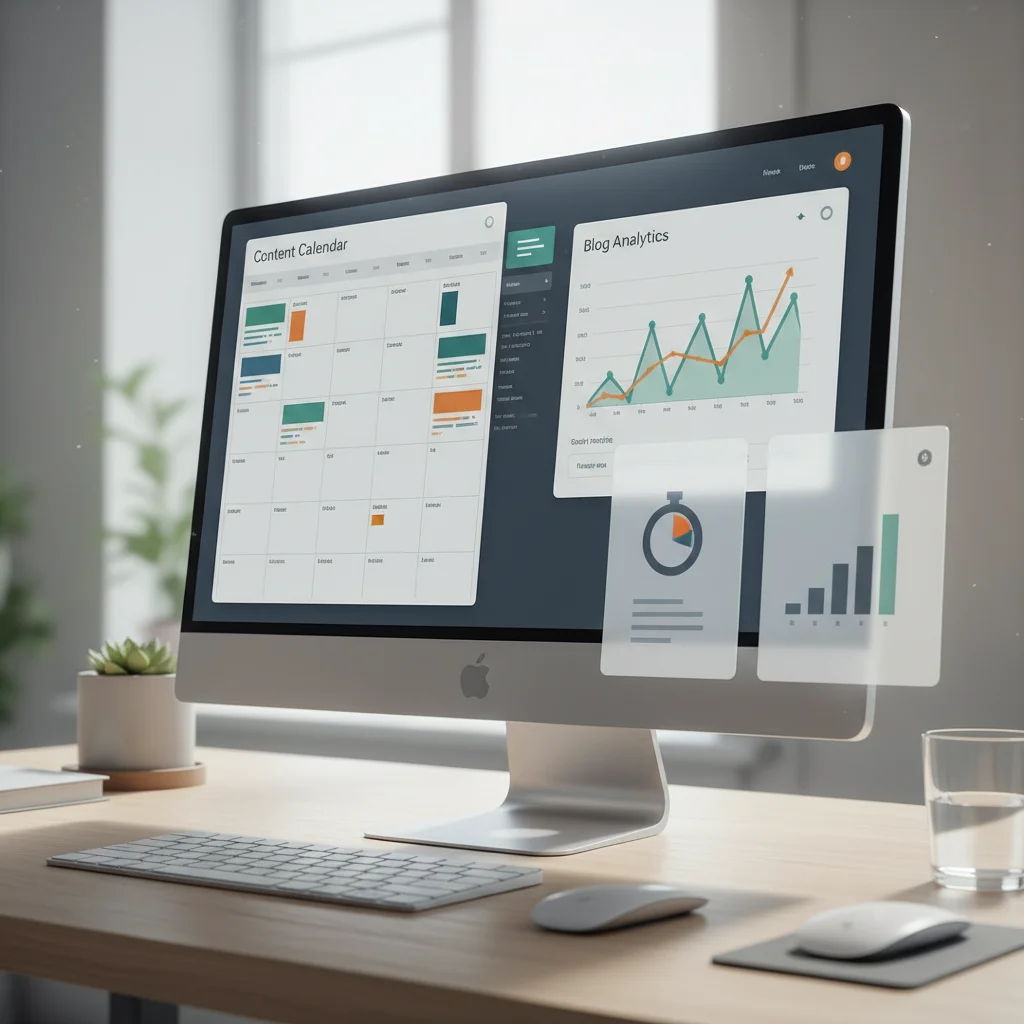
Content marketing means creating and publishing useful material (blog posts, guides, videos, infographics) that draws visitors to your site by answering questions they’re already asking online. When considering how to improve website traffic, this point stands out.
Why Blogging Still Works in 2026
Blogging remains one of the most cost-effective traffic strategies available to small businesses. Research shows that blogs are among the most effective tools for driving website traffic, yet many business owners overlook them entirely. A well-written blog post targeting a specific question can appear in Google search results for years, delivering traffic long after you’ve moved on to other tasks.
For a blog strategy to work, focus on:
- Answering specific questions your customers genuinely ask
- Writing at a level that’s accessible to a non-specialist reader
- Publishing consistently, even if that means just one post per month
- Updating older posts with fresh information to maintain their rankings
Grand Valley State University’s content resource guide confirms that high-quality content, which directly answers user questions, is the most important factor in driving organic search traffic.
Content Formats That Drive Traffic
Not all content performs equally. In 2026, the formats generating the most traffic for small business websites include:
- How-to guides and tutorials: These match high-intent search queries directly.
- Comparison posts: Visitors comparing options are often close to making a decision.
- Local resource pages: “Best nurseries in Caterham” or “Healthcare clinics in Warlingham” attract hyper-local traffic.
- Case studies and results posts: These build trust while also targeting search terms.
- FAQ pages: Structured Q&A content is increasingly surfaced by AI-powered search tools.
At Three Girls Media, we’ve found that local resource content consistently outperforms generic industry posts for small business clients, particularly in sectors such as childcare, healthcare, and professional services. Visitors who find you through a locally relevant post are far more likely to convert into enquiries.
Pro Tip: Before writing a new blog post, search for the target question in Google yourself. Look at what’s already ranking. Your goal is to write something more thorough, more specific, or more up-to-date than whatever is currently on the first page. Matching the existing results won’t help you outrank them.
3. Leverage Social Media and Email Marketing
Social media and email marketing work together to bring visitors back to your site repeatedly, building the kind of audience that compounds over time rather than requiring constant new acquisition.
Choosing the Right Social Channels
Not every platform suits every business. Google’s AdSense resource on growing website traffic recommends researching where your specific audience spends time before committing to any channel [5]. For most local service businesses in Surrey and South London, the highest-value platforms in 2026 are:
- Facebook: Still the dominant platform for local community engagement and event promotion
- Instagram: Excellent for visually driven businesses like nurseries, clinics, and retail
- LinkedIn: Most effective for B2B services and professional practices
- Google Business Profile: Often overlooked, but posts here appear directly in Google search results
The key is consistency. Posting three times a week on one platform beats posting sporadically across five. Each post should include a clear link back to relevant content on your website. For those exploring how to improve website traffic, this matters.
Email Marketing as a Traffic Engine
Email marketing has one of the highest returns on investment of any digital channel. Matomo’s research on website traffic growth identifies email newsletters as a highly reliable method for driving repeat visits, particularly because you own your email list and aren’t subject to algorithm changes [6].
A simple email strategy for small businesses:
- Add a newsletter sign-up form to your website’s homepage and blog
- Send a monthly email featuring your latest blog posts, news, or offers
- Include at least 2-3 links back to specific pages on your site
- Segment your list over time so different audiences receive relevant content
One pitfall to watch for: sending emails that have no clear reason to click through to your site. Every email should give the reader a reason to visit, whether that’s a new article, a seasonal offer, or a useful resource they can download.
4. Fix Technical Performance Issues
Technical SEO refers to the behind-the-scenes elements of your website that affect how easily search engines can crawl, index, and rank your pages. Poor technical performance is one of the most common and most damaging causes of low website traffic.
Page Speed and Core Web Vitals
Google’s Core Web Vitals (a set of performance metrics measuring loading speed, visual stability, and interactivity) are a confirmed ranking factor as of 2026. A slow site doesn’t just frustrate visitors; it actively suppresses your search rankings. Research from Yotpo indicates that improving page speed is one of the fastest ways to see measurable gains in both rankings and traffic [7].
The most impactful technical fixes for most small business websites include:
- Compressing and correctly sizing images before uploading them
- Enabling browser caching so repeat visitors load pages faster
- Using a reliable hosting provider with fast server response times
- Removing unused plugins or scripts that slow the page down
- Implementing HTTPS (the secure version of HTTP) if you haven’t already
Mobile Optimisation and Site Structure
As of 2026, Google uses mobile-first indexing, meaning it primarily assesses the mobile version of your site when deciding how to rank it. If your site looks broken or is hard to navigate on a phone, you’re losing both rankings and visitors.
A clear, logical site structure also helps. Think of it as a map that guides both visitors and search engine crawlers to the right pages. Good structure means: This directly impacts how to improve website traffic outcomes.
- A clear navigation menu with logical categories
- Internal links (links from one page on your site to another) connect related content
- An XML sitemap submitted to Google Search Console
- No broken links or 404 error pages left unresolved
| Technical Issue | Impact on Traffic | Difficulty to Fix |
|---|---|---|
| Slow page load speed | High — directly affects rankings and bounce rate | Medium |
| Not mobile-friendly | High — Google penalises non-mobile sites | Medium to High |
| Missing meta descriptions | Medium — reduces click-through rate from search results | Low |
| Broken internal links | Medium — disrupts crawling and user experience | Low |
| No HTTPS / SSL certificate | High — browsers warn users; Google penalises | Low |
| Duplicate content | Medium — dilutes ranking signals across pages | Medium |
5. Use Paid Advertising to Accelerate Growth
Pay-per-click (PPC) advertising, where you pay a fee each time someone clicks your ad, is the fastest way to drive targeted visitors to your website. Unlike SEO, which takes months to build momentum, a well-configured PPC campaign can deliver traffic within hours of going live.
Google Ads for Search Traffic
Google Ads (formerly Google AdWords) places your website at the top of search results for specific keywords you choose. This is particularly valuable for competitive industries or new websites that haven’t yet built organic rankings. Forbes recommends PPC as a complement to SEO rather than a replacement, noting that the two strategies work best when run together [8].
For a small business running Google Ads effectively:
- Focus on highly specific, local keywords rather than broad national terms
- Set a clear daily budget and monitor it weekly
- Write ad copy that matches exactly what the visitor is searching for
- Send ad traffic to a dedicated landing page, not your homepage
- Track conversions (phone calls, form submissions) not just clicks
Social Media Advertising
Facebook and Instagram ads allow you to target people by location, age, interests, and behaviour. For local businesses in areas like Coulsdon, Oxted, or Warlingham, geographic targeting means your budget reaches the people most likely to become customers rather than being wasted on irrelevant audiences.
In practice, the most effective approach is to run a small test budget across two or three different ad formats, measure which generates the most site visits and enquiries, then scale the winner. Results may vary significantly depending on your industry, audience, and offer, so testing before committing a large budget is always advisable.
6. Prioritise Local SEO for Community Visibility
Local SEO is the practice of optimizing your website and online presence so that people searching in your geographic area find you first. For small businesses, it’s often the highest-return traffic strategy available.
Google Business Profile Optimisation
Your Google Business Profile (the listing that appears in Google Maps and the local “pack” of results) is one of the most powerful free tools for driving local traffic. A fully completed, regularly updated profile consistently outperforms neglected ones in local search rankings.
Steps to optimise your Google Business Profile:
- Claim and verify your listing at business.google.com
- Add your complete business name, address, and phone number
- Select the most accurate primary and secondary categories
- Upload high-quality photos of your premises, team, or products
- Publish regular posts (weekly if possible) linking back to your website
- Respond to every review, positive or negative, within 48 hours
NAP Consistency and Local Citations
NAP stands for Name, Address, and Phone number. Search engines cross-reference your NAP details across dozens of directories and listing sites. Inconsistencies (different phone numbers, abbreviated addresses) confuse search engines and reduce your local rankings. Audit your listings on platforms like Yell, Yelp, Thomson Local, and relevant industry directories to ensure everything matches your website exactly.
7. How to Improve Website Traffic: Build a Strategy That Compounds
The most effective approach for improving website traffic isn’t any single tactic; it’s building multiple channels that reinforce each other over time. A blog post drives organic traffic, which builds your email list, which drives repeat visits, which improves your engagement metrics, which helps your SEO rankings improve.
Measuring What Matters
You can’t improve what you don’t measure. Google Analytics 4 (GA4) and Google Search Console are both free tools that show you where your traffic comes from, which pages perform best, and where visitors drop off. Key metrics to track monthly include:
- Organic sessions: Visits from unpaid search results
- Bounce rate: The percentage of visitors who leave after viewing just one page
- Average session duration: How long visitors spend on your site
- Top landing pages: Which pages attract the most first-time visitors
- Conversion rate: The percentage of visitors who take a desired action (call, form, purchase)
Imarticus research on traffic growth found that businesses that consistently track and respond to their analytics data achieve significantly faster traffic growth than those that publish content without measuring its impact [9].
A Realistic 90-Day Traffic Growth Plan
From experience working with local businesses across Surrey and South London, here’s a realistic sequence for building traffic from scratch or recovering from a plateau:
- Month 1: Fix technical issues, set up Google Search Console and GA4, optimise existing pages for target keywords
- Month 2: Publish 2-4 blog posts targeting specific local or industry questions, set up or refresh your Google Business Profile
- Month 3: Begin building backlinks through outreach, launch a simple email newsletter, and test a small PPC campaign to identify high-converting keywords
Our team at Three Girls Media recommends treating this as a minimum starting framework rather than a complete plan. Every business has different competitive pressures, audiences, and starting points, so results will vary. The principle that holds across all situations: consistent, quality and effort compound into meaningful traffic gains over a 6-12 month period.
Pro Tip: Set a recurring monthly calendar reminder to review your Google Search Console data. Look specifically at the “Queries” report, which shows exactly what people typed into Google before clicking through to your site. These real search terms are your most valuable source of new content ideas.
How to Choose the Right Approach for Your Business
Different businesses need different traffic strategies. The right mix depends on your budget, timeline, industry, and competitive landscape. Use this framework to prioritize:
| Business Situation | Best Starting Strategy | Expected Timeline |
|---|---|---|
| Brand new website, no traffic | PPC + Local SEO + Google Business Profile | Weeks for paid; 3-6 months for organic |
| Existing site with slow traffic growth | Technical SEO audit + content expansion | 2-4 months to see improvement |
| Local service business (clinic, nursery) | Local SEO + Google Business Profile + reviews | 3-6 months for strong local rankings |
| E-commerce store seeking sales | PPC + product page SEO + email marketing | Immediate for paid; 6-12 months for organic |
| Limited budget, time-rich | Blogging + social media + free SEO tools | 6-12 months for meaningful results |
A common mistake is jumping between strategies every few weeks without giving any of them time to work. SEO requires patience and should be considered a long-term investment rather than a short-term fix. At Three Gorl Media, we usually suggest PPC Advertising for rapid results, and SEO for longer-term, stable gains.
One limitation worth acknowledging: no traffic strategy guarantees specific results. Search algorithms change, competitors invest more, and market conditions shift. The goal is to build a resilient, multi-channel presence that doesn’t depend entirely on any single source of visitors. This is particularly relevant for improving website traffic.
Frequently Asked Questions
1. How long does it take to improve website traffic through SEO?
Most businesses see measurable improvements in organic traffic within 3-6 months of consistent SEO effort. Highly competitive industries or brand new websites may take 9-12 months to see significant gains. Paid advertising can deliver traffic immediately while your organic strategy builds momentum.
2. What is the fastest free method to increase website traffic?
Optimising your Google Business Profile and publishing a well-targeted blog post are among the fastest free methods. Sharing content on social media and engaging in relevant online communities can also drive quick bursts of traffic. None of these is instant, but they cost nothing except time and typically show results within weeks rather than months.
3. How do I improve website traffic without spending money on ads?
Knowing how to improve website traffic without a paid budget means focusing on SEO, content marketing, social media, and email marketing. Consistently publishing helpful blog content, building backlinks through outreach and guest posting, and keeping your Google Business Profile active are all proven organic strategies that don’t require ad spend.
4. How much website traffic is considered good for a small business?
There’s no universal benchmark. A local service business generating 500-1,000 monthly visitors from its target geographic area may perform far better commercially than a site with 10,000 visitors from irrelevant locations. Focus on the quality and intent of your visitors rather than raw numbers. Tracking enquiries and conversions matters more than session counts.
5. Does social media actually drive traffic to a website?
Yes, but results depend heavily on your audience and how you use each platform. Social media works best as a traffic driver when you consistently share links back to your website, post content that gives people a reason to click through, and engage actively with your followers. It’s rarely a primary traffic source for small businesses, but it’s a valuable supporting channel.
6. Can a poorly designed website hurt my traffic?
Absolutely. A slow, confusing, or visually outdated website increases your bounce rate (the percentage of visitors who leave without taking any action), which signals to Google that your site isn’t satisfying users. This can suppress your rankings over time. A well-designed, fast-loading site keeps visitors engaged longer, which supports both your SEO and your conversion rate.
7. What tools can I use to track and improve website traffic?
Google Analytics 4 and Google Search Console are both free and essential. GA4 shows you who visits your site, where they come from, and what they do. Search Console shows which search queries bring people to your site and highlights technical issues affecting your rankings. For more detailed keyword research, tools like Ubersuggest or Semrush offer useful free tiers alongside paid plans.
8. Is it worth hiring an agency to improve website traffic?
For many small businesses, yes. An experienced agency brings specialist knowledge, saves you significant time, and typically achieves results faster than a DIY approach. The key is choosing one with a track record in your industry and a transparent approach to reporting results. Look for an agency that explains what they’re doing in plain English and can show you concrete examples of past outcomes.
Conclusion
Building meaningful website traffic takes a combination of the right strategies, consistent effort, and a willingness to measure and adjust. The businesses that grow their online audiences most reliably in 2026 are those that treat SEO, content, social media, and technical performance as interconnected parts of one system rather than separate tasks to tick off a list. Knowing how to improve website traffic is genuinely valuable knowledge for any business owner who wants to compete effectively online.
Start with the fundamentals: fix your technical issues, optimize your existing pages, and publish content that answers real questions your customers are asking. Layer in local SEO and social media, and consider paid advertising to accelerate results while your organic presence builds. When considering how to improve website traffic, this point stands out.
If you’d rather not do this alone, Three Girls Media has spent over 10 years helping businesses across Surrey and South London build websites that attract the right visitors and turn them into enquiries. From SEO and content strategy to full website design and PPC management, we handle the technical side so you can focus on running your business. Contact us for a free quote and let’s talk about what’s possible for your site.
Recommended Articles
Explore more from our content library: