An empty slot in your diary isn’t just lost income. It’s a person with back pain, a stiff neck or a sports injury who went elsewhere because they couldn’t find you, or couldn’t tell whether you were the right fit.
Most new patients come from close to home. They search on their phone, glance at a few options, read a handful of reviews and book with the practice that feels credible and convenient. The osteopaths who keep full diaries tend to be the ones who make that decision easy. Here’s how to do it, step by step, without resorting to gimmicks.
Make It Easy for Local People to Find You
Treat Your Google Business Profile as Your Shop Window
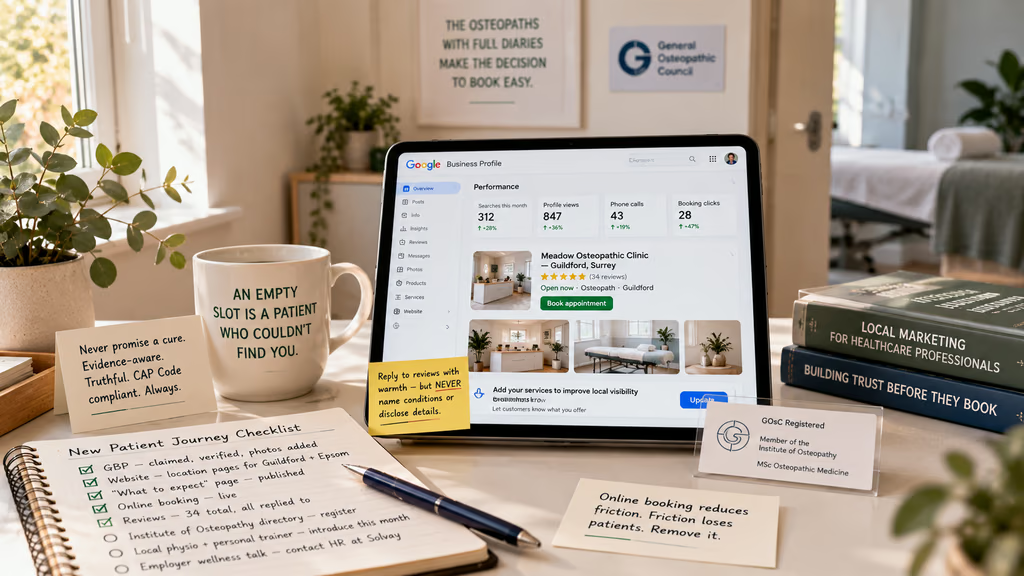
When someone searches “osteopath near me” or “back pain treatment in [your town]”, the map results at the top of Google often decide who gets the call. Your free Google Business Profile is what puts you there.
Claim and verify your listing, choose accurate categories, and make sure your address, phone number, website link and opening hours are correct. Add clear photos of your treatment room, reception area and, if you’re comfortable, yourself. Patients about to hand over their health concerns want to see who they’ll meet.
Keep the profile active. Update holiday hours, post occasional news, and answer questions promptly. A well-maintained profile signals a well-run practice, and it supports your visibility in local searches.
Build a Website That Ranks and Reassures
Your website needs to do two jobs: help Google understand where you work and what you offer, and help a nervous patient feel confident enough to book. Start with a clear homepage that states your location, services and how to book within a few seconds of landing.
Create separate pages for your main services and common reasons people visit, such as lower back pain, neck and shoulder tension, sciatica, sports injuries or joint stiffness. Mention your town and nearby areas naturally in page titles, headings and copy, using phrases like “osteopath in Guildford” or “sports injury treatment near Epsom”. Write for people first and avoid cramming in keywords.
A page about what to expect at the first appointment is also worth its weight in gold. Explain how long it lasts, what the consultation involves, what to wear and what it costs. Removing uncertainty removes hesitation.
Make Booking Effortless
Many people look for treatment when they’re in discomfort and short of patience. If booking means ringing during limited hours or filling out a long form, some will give up. Offer online booking where possible, keep your phone number tappable on mobile, and make sure pages load quickly.
If you can’t answer calls while treating, use a voicemail message that promises a prompt call back, or a text reply system. A quick response often decides who wins the appointment.
List Yourself in Trusted Directories
Register with relevant professional and local directories, and keep your details identical everywhere. The Institute of Osteopathy offers a way for patients to find members, and the General Osteopathic Council’s public register confirms that you’re legitimately registered. Adding local business directories can strengthen your online footprint too, but choose reputable ones and prioritise accuracy over quantity.
Build Trust Before Patients Walk Through the Door
Collect Reviews and Reply to Them
Few things influence a new patient more than the experiences of other local people. Ask satisfied patients to leave a Google review, ideally soon after a successful course of treatment, and make it simple by sharing a direct link.
Keep it ethical. Don’t offer incentives, and don’t pressure anyone. Reply to each review with a warm, professional response, taking care never to disclose confidential details. Patient confidentiality applies to your replies as much as your records, so keep responses general and thank people for their feedback.
Show Your Credentials and Personality
Patients want to know who’s treating them. Create a clear “About” page with your qualifications, GOsC registration, areas of interest, professional memberships and a short, human introduction. A friendly photo and a few lines about why you do the job help people feel they know you before they arrive.
Mention your approach to care and how you tailor treatment to the individual. Authenticity beats jargon, and warmth beats a wall of credentials.
Write Helpful Content That Answers Real Questions
Many local patients begin with a question: “Why does my lower back ache after sitting all day?” or “Should I see an osteopath or a physio?” Short, practical articles that answer these questions can bring in visitors who are already thinking about treatment.
Keep the advice general, evidence-aware and responsible. Explain what osteopathy involves, when to seek help and when to see a GP, without promising cures. Good content builds your authority and gives people a reason to trust you.
Grow Your Local Network
Build Relationships With Nearby Professionals
Referrals from other local professionals can be a steady source of new patients. Introduce yourself to physiotherapists, personal trainers, Pilates and yoga studios, sports clubs, massage therapists, podiatrists and gyms. Offer a short conversation about how you work and when you’d refer to them in return.
Two-way relationships work best. When you refer patients appropriately to other professionals, they’re far more likely to do the same for you.
Connect With Local Employers and Community Groups
Many workplaces want to support employees with back and neck issues, particularly in desk-based jobs. Offer to give a short talk on posture or movement, or provide information for staff wellbeing days. Local running clubs, cycling groups, walking groups and community events can also be good places to introduce yourself.
These activities build visibility in your area and put a face to your practice, which is exactly what makes a patient choose you over a faceless listing.
Make Word of Mouth Easy
Happy patients tell friends and family, but you can nudge them gently. Hand out simple appointment cards they can pass on, mention at the end of treatment that you welcome new patients, and thank anyone who recommends you. Keep it natural and never pushy.
Keep Your Existing Patients Coming Back
Encourage Rebooking and Follow-Up Care
A full diary isn’t only about new patients. It’s also about helping existing ones maintain progress. At the end of each appointment, discuss the next steps and, where appropriate, book the follow-up before they leave. Send a friendly reminder by text or email to cut missed appointments.
Be clear and honest about the treatment plan. Patients appreciate straight talk about how many sessions might be needed and why.
Stay in Touch Sensibly
A short, occasional email with seasonal tips, practice news or exercises can keep you front of mind. If you send marketing messages, follow the ICO’s guidance on direct marketing, including obtaining appropriate consent and offering a simple way to opt out. Handle patient data carefully and securely at all times.
Market Responsibly: Know the Advertising Rules
Osteopathy is a regulated profession, and your marketing is held to a high standard. The General Osteopathic Council expects your advertising, including website content and social media, to be legal, decent, honest and truthful, and in line with the CAP Code. You can read the GOsC’s advertising guidance and the ASA’s guidance on claims for pregnant women, children and babies to understand what you can and can’t claim.
The key principle is simple: don’t claim to treat conditions unless you can back that up with suitable evidence. Avoid promises of cures, and be careful with testimonials that imply results you can’t substantiate. The CAP team also offers free pre-publication advice if you’re unsure about particular wording. Responsible marketing protects patients, protects your registration and builds long-term trust.
A Fuller Diary Starts With Being Easy to Find and Easy to Trust
Filling an osteopathy diary with local clients comes down to a few reliable foundations. Make sure people searching nearby can find you through a strong Google Business Profile and a clear, location-aware website. Reduce friction with simple booking and honest information about what to expect. Build trust through genuine reviews, a warm professional presence and helpful content, then widen your reach through local relationships and referrals.
Finally, look after the patients you already have, and keep every claim you make accurate and compliant. Start with one or two changes this week, whether that’s refreshing your Google profile, adding a “what to expect” page or introducing yourself to a local gym. Small, steady steps will gradually turn quiet appointment slots into a diary that stays comfortably full.