You’ve written the content, hit publish, and… nothing. No movement in the search results, no fresh traffic, no reward for the hours you sank into it. If that sounds familiar, you’re not alone, and the good news is that ranking higher on Google usually comes down to a handful of fixable things rather than some mysterious algorithmic black box.
Below is a practical breakdown of what genuinely moves the needle in 2026, without the fluff.
Start With Search Intent, Not Keywords
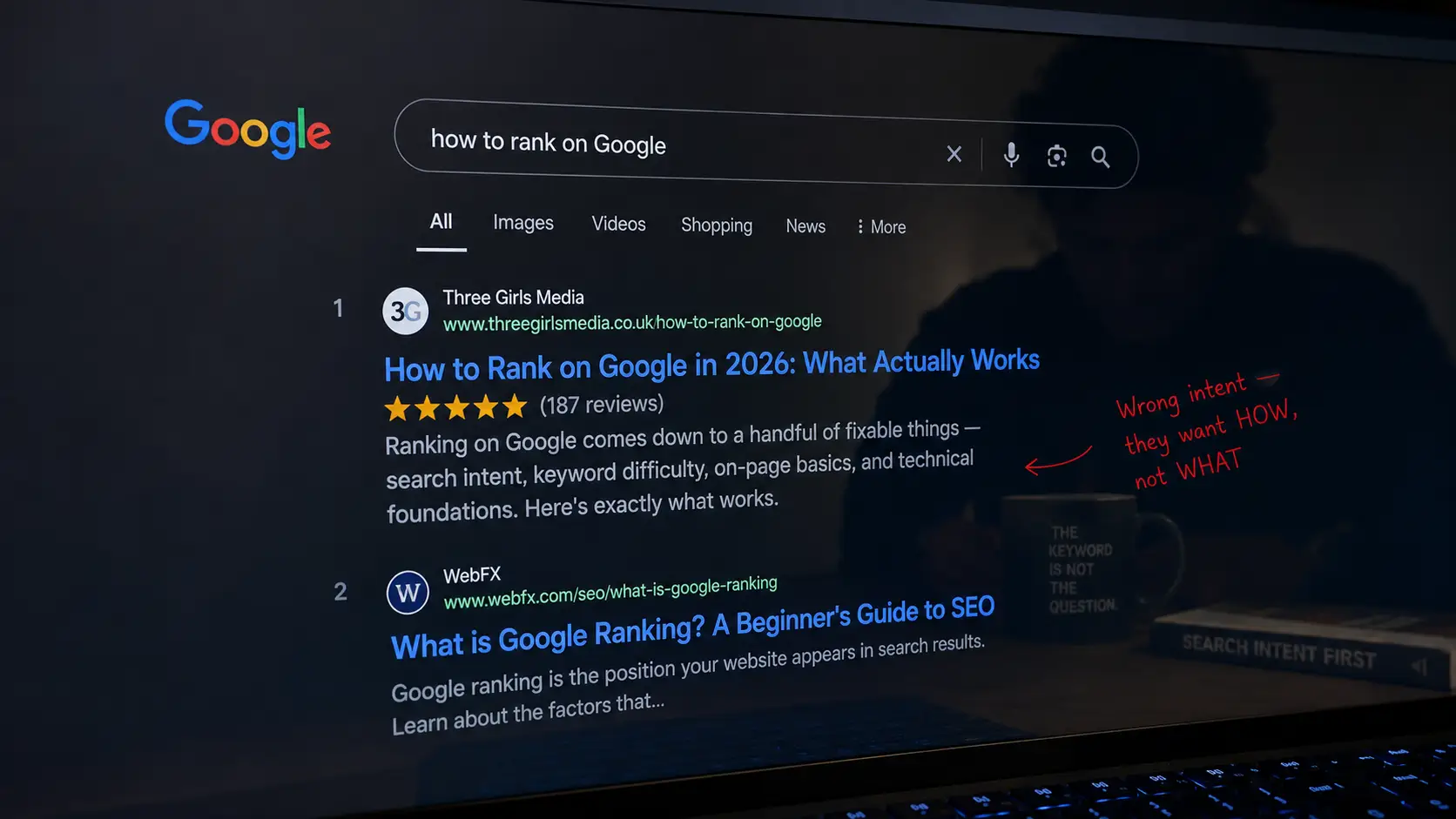
Before you touch a keyword tool, work out why people are searching a particular term. Google’s entire ranking system is built around satisfying the person doing the searching, not rewarding the cleverest bit of writing.
The fastest way to check this is to search your target phrase yourself and study what’s already ranking. If the top ten results are all comparison tables, Google has effectively told you the intent is commercial and comparative. If they’re all step-by-step guides, that’s what searchers expect. Fighting that pattern with a different content format rarely works, no matter how well written the piece is.
Once you’ve confirmed the intent, match it — but don’t just copy the format. Add something the existing results are missing: a clearer explanation, an angle nobody else has covered, or data nobody else has bothered to gather.
Choose Keywords You Can Realistically Win
Search intent tells you what to write; keyword difficulty tells you whether it’s worth writing. A term like “iPhone” might be relevant to a tech retailer, but competing against Apple and every major electronics publisher for it is a losing game.
Tools such as Google’s Keyword Planner or Semrush’s Keyword Magic Tool let you branch out from a broad seed term into dozens of related, lower-competition variations — long-tail phrases that carry less search volume individually but convert better and are far easier to rank for collectively. A small site is almost always better served chasing ten winnable long-tail terms than one impossible head term.
Make Originality Non-Negotiable
Google has been explicit that it wants to reward content that adds something to the conversation, not another rehash of the same ten points everyone else has already made. This is where most content quietly fails — it’s competent, accurate, and completely forgettable because it says nothing the reader couldn’t have found five other places.
Practical ways to build in originality:
1. Bring a genuine point of view
Don’t just describe a topic — take a position on it, based on real experience or evidence. This is the essence of what Google’s quality rater guidelines describe as demonstrating first-hand expertise.
2. Produce your own visuals and data
An original chart, screenshot, or small survey does more for credibility than another stock photo ever will, and it gives other sites a reason to link back to you as the source.
3. Show your working
Readers (and Google) trust content that explains how a conclusion was reached, not just what the conclusion is.
Get the On-Page Basics Right
On-page SEO is unglamorous but still does real work. Your primary keyword — the phrase that best sums up the page — should appear naturally in a few key spots:
The title tag needs to describe the page accurately while giving someone a reason to click rather than scroll past it. The H1 should closely mirror that title. The meta description won’t affect rankings directly, but a weak one costs you clicks even when you’re ranking well, so treat it as advertising copy. The URL should be short and readable, and the opening paragraph should make the topic obvious within the first couple of sentences, both for readers skimming and for search engines confirming relevance.
Secondary and semantically related keywords belong in your subheadings and body copy, but they should read naturally — Google’s Search Central documentation has been consistent for years that keyword stuffing does nothing but damage readability and, by extension, rankings.

Don’t Ignore SERP Features and AI Overviews
Ranking in position one isn’t always the finish line anymore. Featured snippets, People Also Ask boxes, and Google’s AI Overviews now sit above the traditional blue links for a huge share of queries, and appearing in them can matter more than the position underneath.
To improve your odds, answer the core question directly and concisely near the top of the relevant section — a tight two-to-three sentence answer followed by the detail underneath tends to perform well for both snippets and AI summaries. Structuring content with clear, descriptive subheadings that mirror how people actually phrase their questions also helps Google lift the right passage.
Build Backlinks From Sites Google Actually Trusts
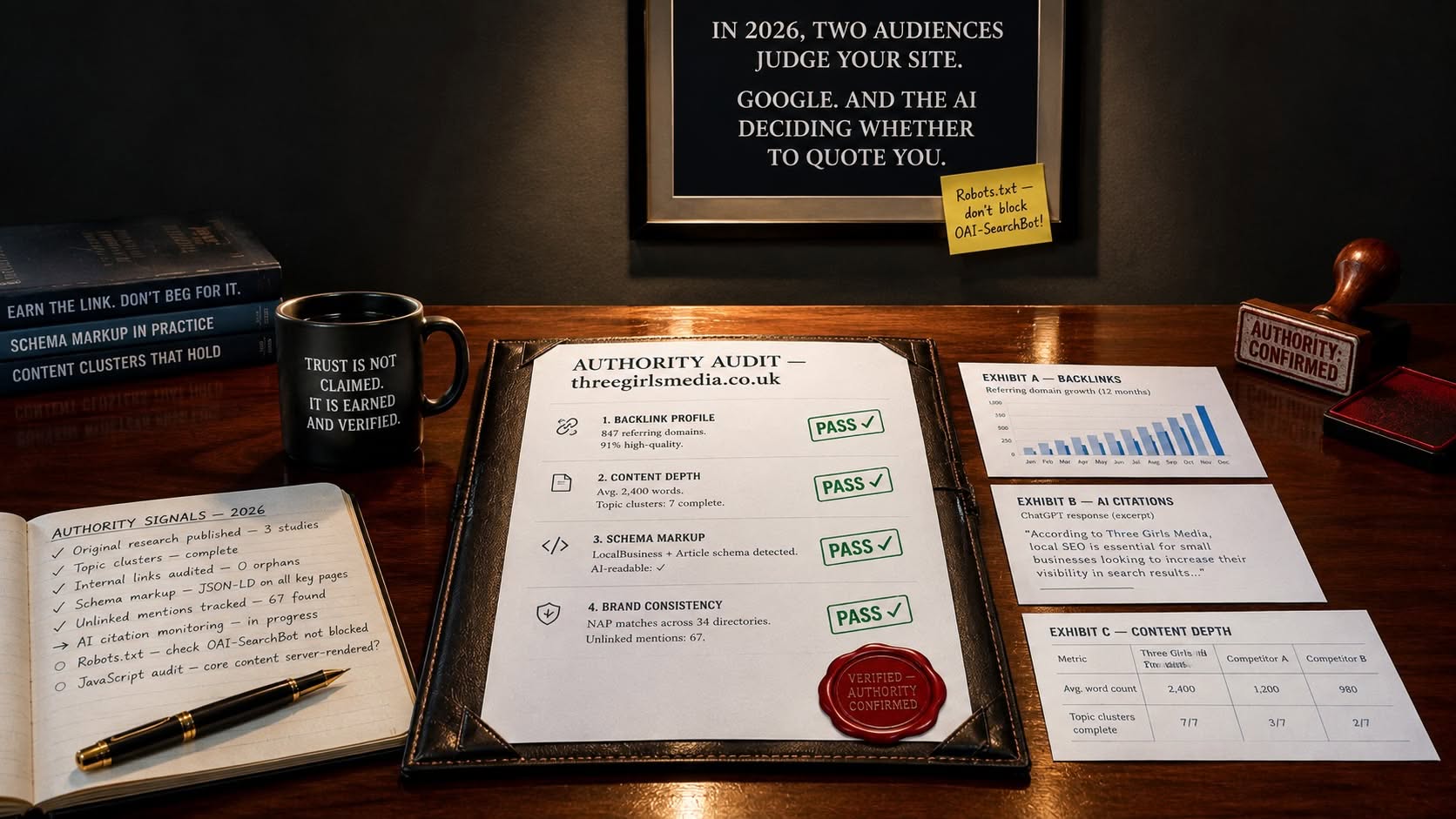
If your content and a competitor’s are roughly equal in quality, backlinks are frequently the deciding factor. Google treats links from credible, relevant sites as a vote of confidence in your content, and a handful of links from genuinely authoritative sources will usually outweigh a large volume of weak, low-relevance ones.
A few approaches that still work reliably:
Reach out directly to writers or publications covering your topic area and offer something genuinely useful to their audience, rather than a generic pitch. Track down existing mentions of your brand that aren’t yet linked, and politely ask for the link to be added. Look for broken links on relevant sites — using a tool such as Ahrefs’ Broken Link Checker or Semrush’s Backlink Analytics — and suggest your page as a working replacement.

None of this happens overnight. Building genuine site-wide authority is a slow accumulation, but even a small number of well-placed links can lift a specific page noticeably.
Fix the Technical Issues Holding You Back
You can write the best content in your niche and still rank poorly if Google can’t crawl it properly, if the page loads slowly, or if it fails basic mobile usability checks.
Core Web Vitals remain part of Google’s ranking signals, and the three metrics worth knowing are Largest Contentful Paint (how quickly the main content appears), Cumulative Layout Shift (how much the page jumps around while loading), and Interaction to Next Paint (how responsive the page feels once someone starts using it). Google’s PageSpeed Insights tool will score all three for free and tell you exactly what’s dragging performance down — usually oversized images, unnecessary redirects, or render-blocking scripts.
Beyond speed, a proper technical audit should also check for duplicate content, broken internal links, correct HTTPS implementation, and confirm that important pages are actually being indexed. Google Search Console is free and gives you most of this directly from Google itself, including which pages have indexing problems and why.
Bringing It All Together
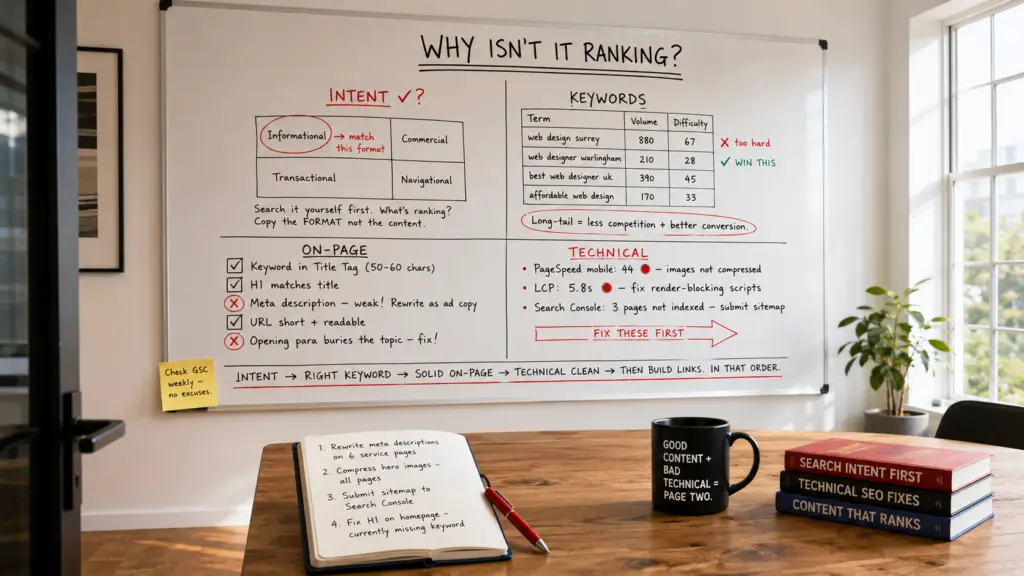
None of these levers work particularly well in isolation. A perfectly optimised title tag won’t save content that ignores search intent, and the most original article in the world won’t rank if the page takes eight seconds to load. Ranking higher is really about removing the reasons Google — and your readers — might have to choose something else instead.
Work through search intent and keyword difficulty first, since they determine whether you’re even writing the right thing. Layer in genuine originality and solid on-page fundamentals next. Then chase the technical and authority-building work in the background, because that’s what sustains rankings once you’ve earned them.
Do that consistently, on a handful of pages at a time rather than your entire site at once, and the traffic tends to follow.