Online reviews haven’t lost their grip on how people choose a business — if anything, that grip has tightened. New research from BrightLocal’s 2026 Local Consumer Review Survey shows that 97% of consumers still read reviews before making a decision, but the way they find, judge and act on that feedback has shifted noticeably over the past twelve months. Star ratings need to be higher. Reviews need to be fresher. And a growing number of shoppers are now asking AI tools, rather than a search engine, to point them in the right direction.
For anyone managing a local business’s reputation, that’s a lot to keep track of. Here’s what’s actually changed, and what it means for how you collect, respond to and lean on customer feedback this year.
Google still leads, but its grip on reviews is loosening
Consumers now check an average of six different platforms before settling on a business, and Google’s share of that attention has slipped from 83% to 71% in a single year. Meanwhile, Facebook, Apple Maps, Tripadvisor and Trustpilot have all picked up ground, and video-first platforms like TikTok and Instagram are becoming genuine discovery tools, not just entertainment.
Part of this is simple maths: a large proportion of small businesses still don’t have a claimed Google Business Profile, so customers hunting for reviews there come up empty and go elsewhere. Part of it is a broader appetite for variety — shoppers no longer trust a single source to give them the full picture. For businesses, the takeaway is straightforward: a glowing set of Google reviews is no longer enough on its own. Reputation now needs to be built and maintained across several channels at once.
AI recommendations have gone from niche to mainstream
Perhaps the most striking shift is how quickly generative AI has muscled into the review landscape. Tools like ChatGPT jumped from being used by just 6% of consumers for local recommendations last year to 45% this year, making AI the third most popular source of business suggestions, behind only Google and Facebook.
Trust is following close behind. Around 40% of consumers say they trust AI-generated recommendations, and 42% now rate that trust as being on par with traditional reviews. AI-written review summaries — the kind that appear above a list of reviews on platforms like Google — are read by 82% of consumers, and almost a quarter say they’d be happy to make a decision based on the summary alone, without reading a single full review.
This matters because AI tools don’t always pull from the same sources a person would browse manually. Keeping your website accurate, your listings consistent and your citations up to date isn’t just good practice for search engines anymore; it’s increasingly what feeds the AI models shoppers are turning to first.
Star ratings keep climbing, and old reviews are losing their power
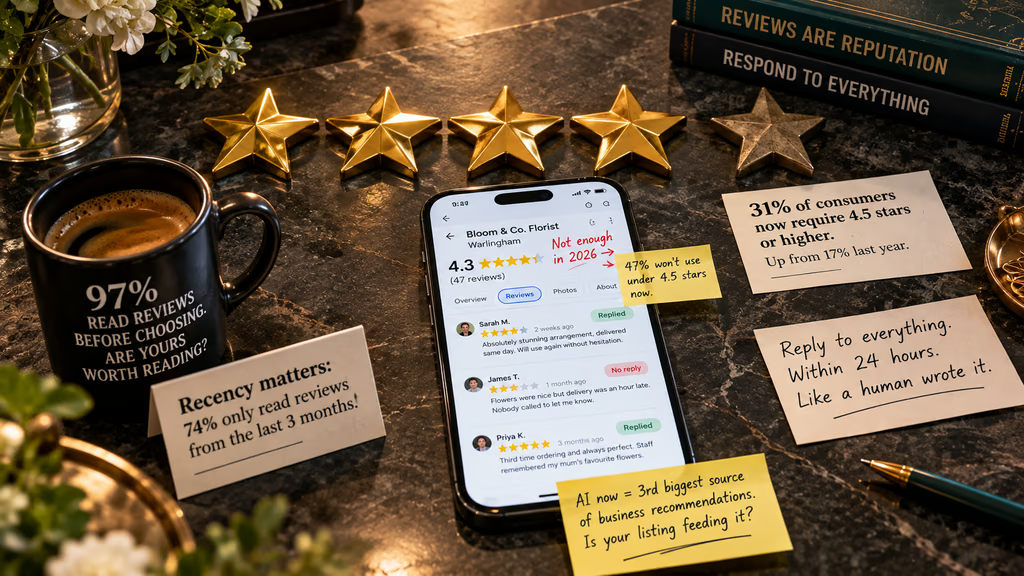
The bar for what counts as a “good enough” rating has risen sharply. In 2026, 31% of consumers say they’ll only use a business with 4.5 stars or higher, up from 17% the previous year, and 68% won’t consider anything under four stars. A rating that looked perfectly respectable twelve months ago might now be quietly costing you customers.
Recency matters just as much. Nearly three-quarters of shoppers only pay attention to reviews written in the past three months, and almost a third want to see feedback from within the last fortnight. Reviews also need company: 47% of consumers won’t use a business with fewer than 20 reviews, so a handful of five-star comments from years ago won’t cut it.
The practical implication is that review generation can’t be a one-off task ticked off after launch. It needs to be a continuous habit — built into every customer interaction, not just chased when numbers start to dip.
Silence is now read as a red flag
How a business responds to feedback is carrying more weight than ever. Eighty per cent of consumers say they’re more likely to use a business that replies to every review, while 42% actively avoid businesses that ignore feedback altogether. Generic, copy-paste replies aren’t much better — half of shoppers say templated responses put them off.
Speed matters too. Nineteen per cent of consumers now expect a reply on the same day, more than triple last year’s figure, and 81% expect to hear something within a week. Google’s own guidance on managing reviews encourages owners to keep replies genuine, specific and courteous rather than relying on stock phrases — advice that lines up neatly with what consumers say they actually want to see.
The lesson here isn’t complicated, even if it takes discipline to follow: reply to everything, personalise where you can, and don’t let feedback sit unanswered for more than a day or two.
Fake reviews are facing real consequences
Trust in reviews hasn’t come without scepticism. Nearly all consumers — 97% — believe businesses caught posting or buying fake reviews should face some form of punishment, whether that’s being banned from platforms, removed from search results, fined, or in more extreme views, facing criminal charges.
This isn’t just consumer sentiment; regulation has caught up. In the UK, the Competition and Markets Authority’s fake reviews guidance now requires any business publishing customer reviews to take reasonable steps to prevent, detect and remove fake or misleading feedback, with penalties that can reach a significant percentage of global turnover for serious breaches. The message from both regulators and consumers is the same: cutting corners on review authenticity is a reputational and legal risk that’s no longer worth taking.
Reviews push people towards research, not always straight to checkout
It’s tempting to assume a great review leads directly to a sale, but the data tells a more layered story. After reading a positive review, 66% of consumers go off to do more research rather than buy immediately — checking the business’s website, browsing more reviews, or looking at social media. Only about a third feel ready to purchase or book there and then.
That’s not a bad thing; it’s an opportunity. If your website, social profiles and listings are inconsistent or out of date, you risk losing exactly the customers who were interested enough to dig deeper. Reviews open the door, but everything a shopper finds afterwards decides whether they walk through it.
Building a review strategy that actually holds up in 2026
Putting all of this together, a handful of priorities stand out for any business serious about its online reputation this year:
Keep asking for reviews consistently, rather than in occasional bursts, so your profile always reflects recent, genuine experiences. Respond to every single review, positive or negative, with a reply that reads like it was actually written by a person who read the comment. Diversify beyond Google by building a presence on the platforms your customers already use, from Facebook and Apple Maps to niche, industry-specific sites. And keep your website and listings accurate, since that information is now feeding both human researchers and AI tools alike.
None of this is about chasing a perfect five-star average. It’s about staying visible, responsive and honest in a landscape where consumers are reading more carefully, checking more sources, and expecting more accountability than they did even a year ago. Businesses that treat reviews as an ongoing conversation, rather than a box to tick, are the ones set to come out ahead.