Every roofer knows the frustration. The phone rings, but the job is forty minutes outside your patch, or the caller wants a quote for a tiny repair on the far side of the county. Meanwhile, homeowners in the streets you’d love to work in are choosing someone else.
More enquiries are good. More enquiries from the right postcodes are better, because they mean shorter drives, better-value jobs and a schedule that actually makes money. Here’s how to steer your marketing so the work comes from where you want it.
Decide Which Postcodes You Really Want
Look at Where Your Best Jobs Come From
Before you change anything online, look back at your last year of work. Which postcode districts produced the most profitable jobs? Where did travel time eat into your margins? Which areas gave you repeat business or referrals?
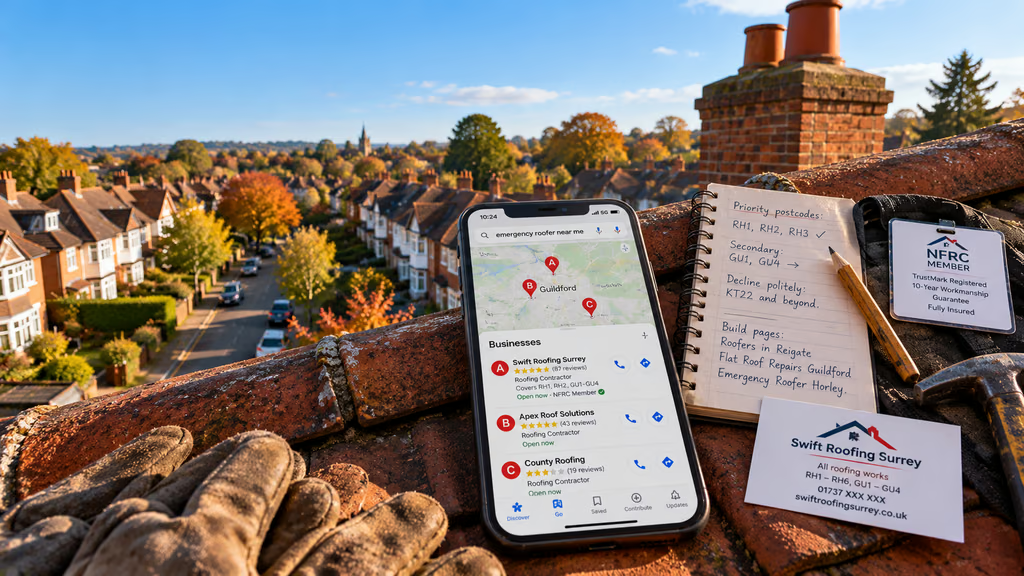
You’ll probably find your sweet spot is smaller than you assumed. Maybe it’s a ten-mile radius around your yard, or a handful of towns with older housing stock that needs regular work. Write down your priority postcode districts, your secondary areas and the places you’ll politely decline. That list becomes the blueprint for everything that follows.
Think About Job Types as Well as Places
Not every area needs the same service. Some neighbourhoods are packed with period properties needing slate repairs, while newer estates may call for flat roof work, fascias and gutters. Matching services to postcodes lets you write sharper content and attract the kind of work you prefer.
Make Google Understand Where You Work
Set Up Your Google Business Profile Properly
For local roofing searches, your Google Business Profile is often the first thing homeowners see. As a service-area business, you can hide your address if you don’t welcome customers on-site, then define the areas you cover.
Be realistic and specific. Listing every town within fifty miles may seem like a clever way to cast the net wide, but it can dilute relevance and invite enquiries you can’t profitably serve. Choose the areas you genuinely want, pick accurate categories such as roofing contractor, and list your individual services, including repairs, flat roofs, chimney work, fascias and gutters.
Keep it active with recent photos of finished jobs, updated opening hours and regular posts. A well-kept profile tells both Google and customers that you’re open, reliable and local.
Keep Your Business Details Consistent
Search engines cross-check your name, phone number and service information across the web. Make sure they match on your website, social profiles and directory listings. Register with trusted directories like Checkatrade, Yell and relevant trade bodies, and use the same wording everywhere.
Consistency strengthens trust, which in turn helps you appear in the map results where most local roofing enquiries begin.
Build a Website That Targets Local Searches
Create a Page for Each Area You Serve
If you list ten towns in one paragraph on your homepage, you’re unlikely to rank for any of them. A dedicated page for each priority area works much better. A page such as “Roofers in Guildford” or “Flat Roof Repairs in Reading” gives search engines a clear signal about where you operate.
Each page should add genuine local value. Mention the postcode districts you cover, typical roof types in the area, common problems such as storm damage or ageing tiles, and the services you offer there. Add a relevant customer review, a few project photos, and a clear call to action.
Avoid copying the same page and swapping the place name, which looks thin to Google and unconvincing to homeowners.
Pair Services With Locations
Most people don’t search for “roofer” alone. They look for “roof leak repair near me”, “emergency roofer in Reigate” or “flat roof replacement Basingstoke”. Build separate service pages for your main offerings, then connect them to your area pages through sensible internal links.
Use these phrases naturally in page titles, headings, introductions and image descriptions, but write for people first. A page that reads well and answers real questions will outperform one stuffed with keywords.
Add Structured Data and Clear Contact Details
Adding local business structured data helps Google understand your company, services and areas. Make your phone number tappable on mobile, since many roofing searches happen in a moment of urgency, such as a leak after heavy rain.
Display your phone number and enquiry button prominently on every page, and make sure the site loads quickly. If a worried homeowner can’t reach you in a few seconds, they’ll try the next roofer on the list.
Build the Trust Local Homeowners Look For
Collect Reviews From Within Your Target Areas
Reviews carry enormous weight for roofing because the job is expensive and often urgent. Ask every happy customer to leave a Google review as soon as the work is finished, and send them a direct link to make it easy.
Encourage them to mention the type of work and their town if they’re comfortable doing so. Reviews from specific areas reinforce your relevance in those places, and they reassure other local homeowners that you’ve done similar work nearby. Always reply to reviews politely, including any critical ones.
Show Your Credentials and Guarantees
Homeowners worry about cowboy builders, so make your credibility obvious. If you’re a member of the National Federation of Roofing Contractors or registered with TrustMark, display those badges clearly and explain what they mean for the customer. Mention your insurance cover, workmanship guarantees and how you handle safety.
A short “Why choose us” section, plus photos of your team and recent roofs, goes a long way. People hire roofers they feel they can trust, particularly when strangers will be working on their home.
Attract Better-Quality Enquiries
Use Your Enquiry Form to Qualify Leads
Your contact form can quietly do a lot of filtering. Ask for the customer’s postcode and the type of work they need, so you can see at a glance whether it’s a good fit. A short note beside the form, such as “We cover [your areas]”, sets expectations early and reduces time-wasting calls.
Keep the form simple. Every extra field reduces completions, so stick to name, phone number, postcode, a brief description of the problem and perhaps a photo upload. A photo can help you give a more informed first response and spot unsuitable jobs quickly.
Respond Quickly and Consistently
Roofing enquiries often come with urgency. Homeowners tend to contact several firms and choose whoever replies first with a helpful answer. Reply to every call, message and form within a short time, even if it’s only to confirm that you’ve received the enquiry and will call back at a set time.
If you can’t answer during working hours, use a missed-call text or call-forwarding system. Answering promptly signals professionalism before you’ve even seen the roof.
Be Careful With Lead-Selling Sites
Pay-per-lead platforms can send enquiries from outside your target area, or sell the same job to several competitors. If you use them, set your postcode preferences carefully and track the real cost per won job. Many roofers find that leads from their own website and Google profile convert better and cost less over time.
Earn Local Links and Mentions
Links from local websites strengthen your standing in the places you want to work. Sponsor a local football team, support a school or community event, join your local chamber of commerce or contribute advice to a community site. Each mention helps establish you as a recognised name in the area, and may send enquiries your way.
Social media can reinforce this. Share before-and-after photos, seasonal maintenance tips and finished projects, tagging the area where appropriate and always respecting customer privacy. Local Facebook groups can also be valuable, provided you contribute helpfully rather than posting constant sales messages.
Track Which Postcodes Are Working
You can’t steer your marketing without knowing where enquiries come from. Record the postcode of every enquiry and the outcome. Check Google Search Console to see which location-based searches bring visitors to your site, and review your Business Profile insights to see how people find and contact you.
If one area gives you plenty of calls but few worthwhile jobs, adjust your messaging or service area. If a valuable district is quiet, build a stronger page for it and ask recent customers there for reviews.
Aim Your Marketing at the Roofs You Want to Work On
Getting more enquiries from the right postcodes is about focus. Start by deciding where your most profitable work lives. Then tell Google clearly where you operate through a carefully set-up Business Profile, consistent listings and dedicated area and service pages. Back that up with reviews, credentials and quick responses, and use your enquiry form to filter out jobs that don’t suit you.
The result is fewer wasted journeys, better-quality quotes and a diary filled with work in the areas you’ve chosen. Pick your priority postcodes this week, tidy up your Google profile, and build your first area page. Small, targeted steps like these steadily turn a scattering of enquiries into the steady, local work you’re after.