If you’ve felt like search engine optimisation has become a slog lately, you’re not imagining things. Between AI Overviews eating clicks, algorithm updates arriving with little warning, and every competitor suddenly publishing “comprehensive guides,” the job has genuinely got harder. This isn’t a doom-and-gloom piece, though. Below are the seven biggest SEO challenges practitioners are wrestling with, along with practical ways to actually get past them.
1. Convincing Stakeholders SEO Is Worth the Investment
SEO rarely delivers overnight wins, and that’s precisely what makes it a hard sell to a finance director or managing director who wants proof of ROI by next quarter. Unlike paid search, where you can point to a cost-per-click and a conversion the same afternoon, organic growth compounds slowly and quietly.
The fix isn’t to oversell speed — it’s to translate SEO into commercial language. Tie your keyword targets to revenue potential, not just search volume. Show a realistic timeline (three to six months for meaningful movement is fair), and report against KPIs that leadership already cares about: qualified leads, assisted conversions, share of voice against named competitors. Nothing focuses a boardroom faster than showing a direct rival capturing organic traffic you’re missing out on. Tools such as Semrush’s Organic Research or Ahrefs’ Site Explorer can pull that competitor data in minutes.
2. Keeping Pace With Google’s Algorithm Updates
Google pushes core updates several times a year, plus a steady stream of smaller spam and helpful-content refreshes. Each one can quietly reshuffle rankings, and figuring out whether a traffic dip is a genuine penalty or a two-day blip is one of the more stressful parts of the job.
Rather than reacting to every wobble, build a habit of monitoring rather than panicking. Watch Google Search Console and a rank-tracking tool for sustained movement over one to two weeks before drawing conclusions. When an update is confirmed, cross-reference the pages that lost visibility against Google’s own Search Central documentation to understand what the update was optimising for, then audit your affected content against those criteria rather than guessing. Following credible sources like Search Engine Land alongside Google’s official channels will save you from chasing rumours.

3. Cutting Through Content That All Sounds the Same
Type almost any commercial query into Google and you’ll get ten articles saying near-identical things in a near-identical structure. This content sameness is arguably the single biggest reason many websites plateau — not because their SEO is broken, but because their content adds nothing new.
Standing apart from that noise means genuinely earning your place on the page.
Add information gain, not just information
Original data, first-hand testing, or a genuinely different framing of the topic gives Google — and readers — a reason to prefer your version. If every competing article says the same thing, you have an opening.
Show real expertise, not just competence
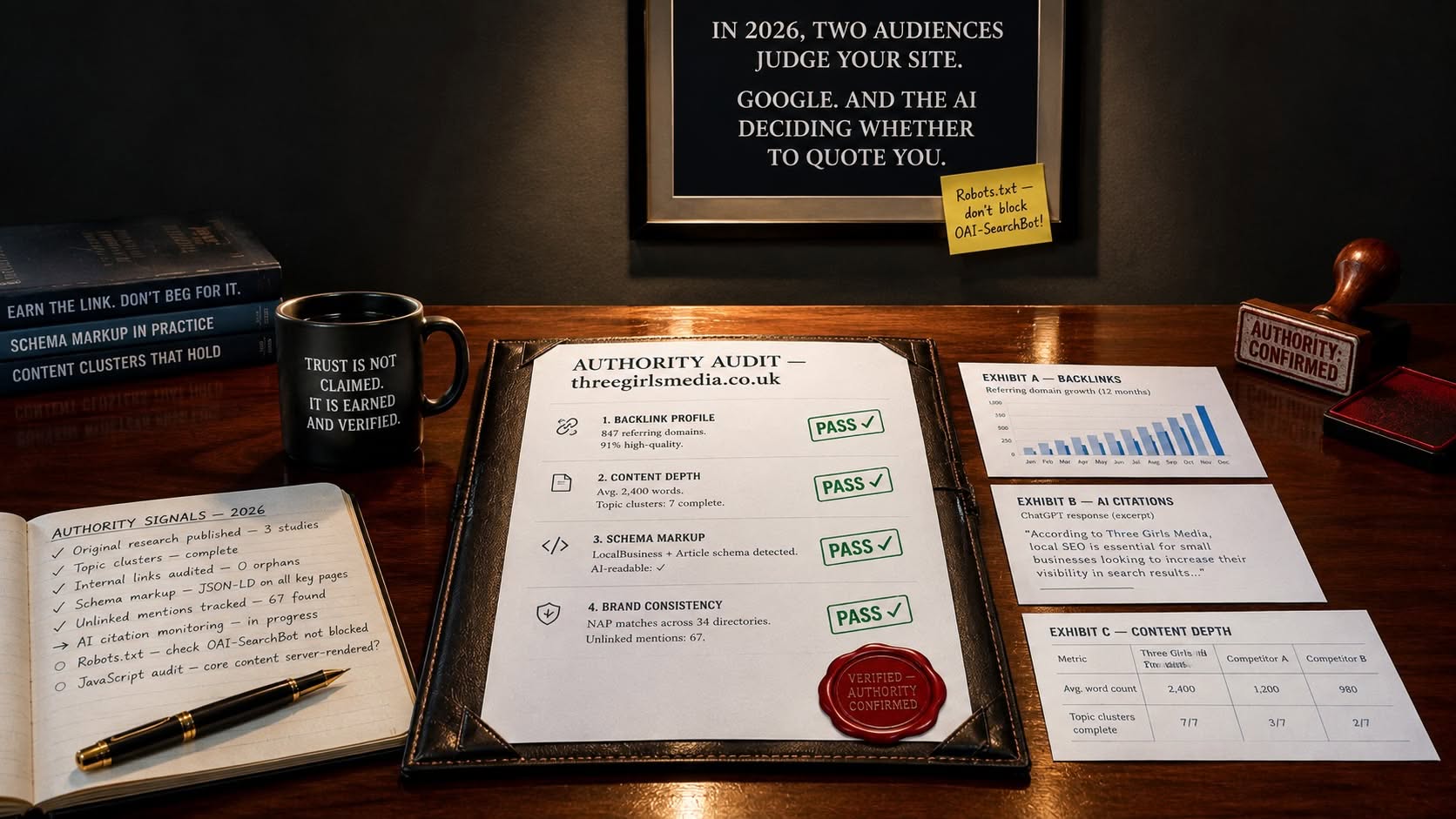
Google’s guidance on people-first content leans heavily on demonstrated experience. Where you can, bring in a named expert, cite a primary source, or draw on direct professional experience rather than paraphrasing what’s already ranking.
Match the actual search intent
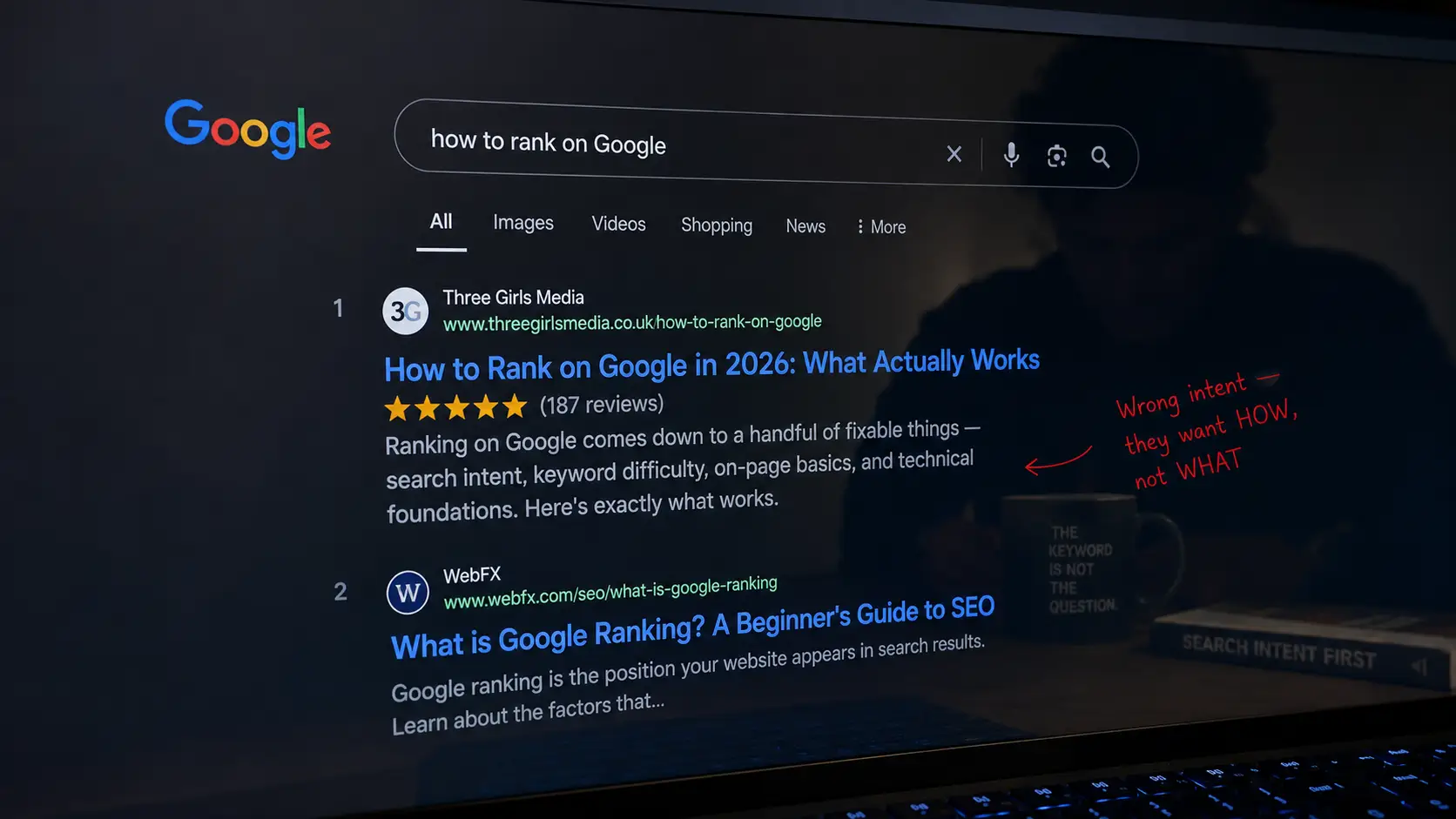
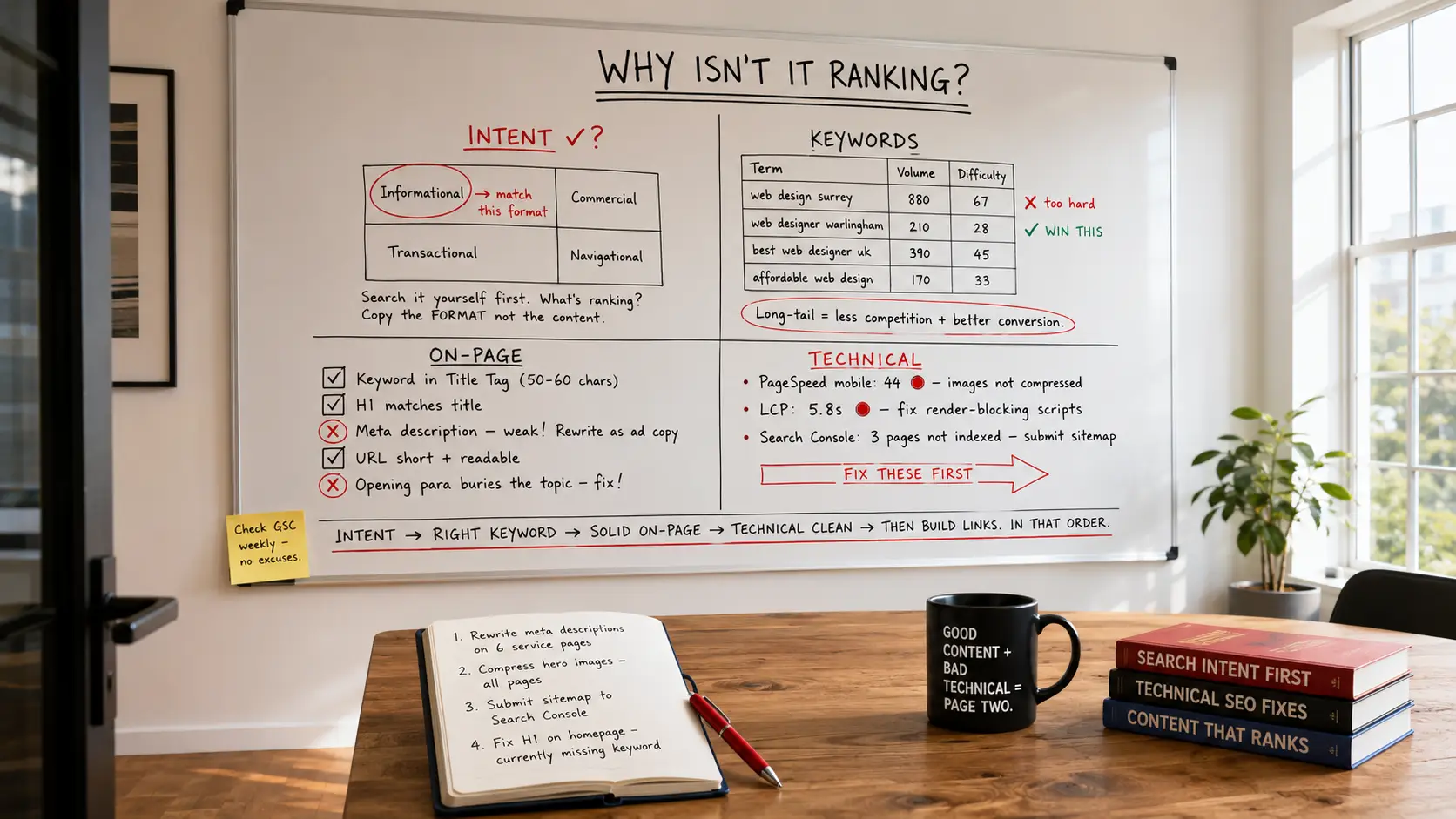
Before writing a word, check what’s currently ranking and ask what job the searcher is trying to complete. A listicle where the intent calls for a step-by-step guide (or vice versa) will always underperform, no matter how well it’s written.
Structure for scanability
Clear H2s and H3s, short paragraphs, and the occasional visual asset — a custom chart, screenshot, or diagram — make content easier to consume and more shareable, which indirectly supports both engagement and link acquisition.
4. Losing Clicks to Zero-Click Search Results
AI Overviews, featured snippets, and People Also Ask boxes now answer huge numbers of queries directly on the results page, meaning fewer users ever reach a website at all. This is arguably the defining shift in search behaviour of the past two years, and it’s not reversing.
The pragmatic response is twofold. For AI Overviews specifically, Google has confirmed there’s no separate optimisation trick — sites that follow standard search-quality guidelines are eligible to be cited as sources. For traditional SERP features, the approach is more tactical: identify which snippet format (paragraph, list, or table) currently appears for your target term, and mirror that structure directly beneath a heading containing the query. It’s a small formatting change that meaningfully increases your odds of capturing that real estate rather than losing all visibility to it.
It’s also worth accepting that not every query is worth chasing anymore. Purely informational, single-fact queries are increasingly zero-click by design — better to focus content effort on queries with genuine commercial or navigational intent where a click still matters to the user.

5. Building Backlinks When You’re Starting From Nothing
For newer or smaller sites, backlinks remain one of the hardest ranking factors to influence directly. Established competitors accumulate links passively through brand recognition; a new domain has to work for every single one.
Create something worth linking to
Interactive tools, original datasets, and genuinely useful calculators consistently outperform standard blog posts as link magnets, simply because other publishers have a practical reason to reference them rather than a courtesy reason.
Pitch it directly, don’t wait
Once you’ve built a linkable asset, proactive outreach to relevant publishers in your niche — journalists, bloggers, resource-page curators — dramatically increases uptake versus hoping it gets discovered organically. Tools like Semrush’s Link Building Tool or manual prospecting via Ahrefs can surface realistic targets.
Prioritise relevance over raw volume
A handful of links from genuinely topical, trusted sites will do more for your rankings than dozens from low-quality directories — and carries far less risk of a manual action down the line.
6. Using AI Without It Backfiring
Most marketers now use tools like ChatGPT or Gemini somewhere in their workflow, but there’s a wide gap between using AI well and using it lazily. Ask a language model to write a finished article unsupervised and you’ll often get factual errors, generic phrasing, and content that reads suspiciously like everything else already ranking — the exact problem outlined above.
AI keyword research carries a similar trap: language models are prone to guessing search volumes rather than reporting them, so any figures need verifying against an actual keyword tool before they inform strategy.
Used properly, though, AI is a genuine productivity gain. Treat it as a drafting and ideation partner rather than a finished-product machine: generate outlines, brainstorm angles, cluster keyword ideas, or get a rough first draft — then fact-check everything, layer in your own expertise and examples, and edit until it sounds like your brand rather than a generic assistant. The tools that add real value, such as Semrush’s Keyword Magic Tool or Google’s Keyword Planner, still rely on verified search data rather than AI guesswork — pair the two rather than substituting one for the other.
7. Competing Against Bigger Budgets and Bigger Teams
Competition for valuable keywords has intensified across almost every sector. Larger competitors often have dedicated SEO teams, bigger content budgets, and years of accumulated domain authority — none of which a smaller site can out-muscle directly.
Go long-tail first
Specific, lower-volume phrases carry far less competition and convert well precisely because they match a more defined intent. A steady stream of long-tail wins builds topical authority and traffic that eventually supports a run at the harder, high-volume terms.
Study what’s already working for rivals
Analysing a competitor’s top-performing pages and the keywords driving their traffic reveals gaps in your own content plan — terms they rank for that you haven’t touched yet, or angles they’ve missed that you could cover better.
Play to niche strength
A smaller, focused site with genuinely deep coverage of a narrow topic can regularly outrank a much larger domain that only covers the same subject superficially. Depth beats size more often than people expect.

The Bottom Line
None of these seven challenges — stakeholder buy-in, algorithm volatility, content sameness, zero-click search, backlink scarcity, AI misuse, or fierce competition — has a quick fix, but each has a workable path through it. The sites that keep winning in search aren’t the ones avoiding these problems; they’re the ones treating them as an ongoing part of the job rather than a one-off obstacle to clear.