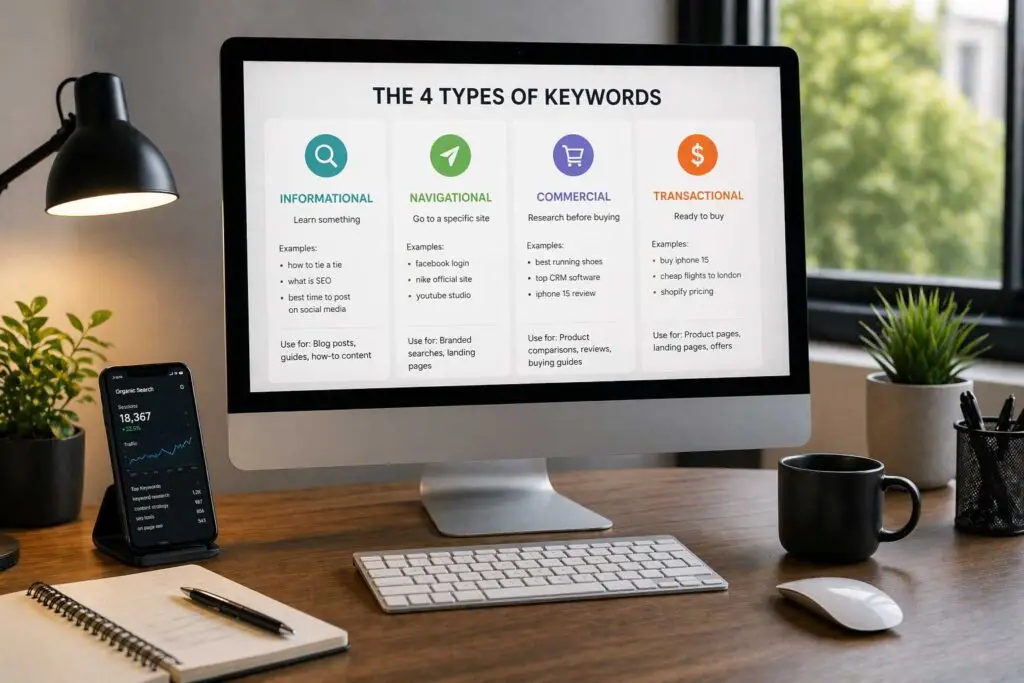
If you’ve ever wondered why some content ranks while other pieces vanish into the digital void, the answer often lies in understanding keyword intent. Not all keywords are created equal—each serves a different purpose in the user’s journey, and knowing which type you’re targeting can make or break your SEO strategy.
Let’s break down the four main types of keywords that drive search behavior, and more importantly, how you can use each one to actually connect with the people searching for your content.
Why Keyword Intent Actually Matters
Before we dive into the types, here’s the thing: Google’s gotten pretty good at understanding what people really want when they search. It’s not just matching words anymore—it’s matching intent.
When someone types “best running shoes,” they’re in a completely different headspace than someone searching “how do running shoes work.” Same topic, totally different goals. And if your content doesn’t match what they’re actually looking for, you won’t rank—period.
Understanding these four keyword types helps you create content that aligns with where someone is in their journey, whether they’re just learning about a topic or ready to pull out their credit card.
The Four Core Keyword Types
Informational Keywords: When People Want to Learn
Informational keywords are all about curiosity and learning. Someone using these terms isn’t looking to buy anything—they want answers, explanations, or guidance.
These searches often start with question words like “how,” “what,” “why,” or “when.” Think “how to fix a leaky faucet” or “what is blockchain technology.” The person behind that search is in discovery mode, gathering knowledge before making any decisions.
Why they matter for your strategy: Informational content builds trust and authority. When you consistently provide helpful answers without immediately pushing a sale, you become the go-to resource. This is your chance to get in front of people early in their journey and establish credibility.
The beauty of targeting informational keywords is the volume. These searches are incredibly common because everyone starts somewhere. The downside? They don’t convert directly. But that’s not the point. You’re playing the long game—building brand awareness and demonstrating expertise that pays off when they’re ready to take action.
How to optimize for informational intent: Create comprehensive guides, tutorials, and explanatory content. Use clear headings that directly answer questions. Include relevant examples and break down complex concepts into digestible pieces. Link to deeper resources on your site to keep readers engaged and moving through your content ecosystem.
Think blog posts, how-to guides, glossaries, and educational videos. The goal is to be genuinely helpful first, promotional second (or not at all).
Navigational Keywords: When People Know Where They’re Going
Navigational keywords are used when someone’s trying to reach a specific website, page, or brand. They already know what they want—they’re just using Google as a shortcut to get there.
Examples include searches like “Facebook login,” “Amazon Prime,” or “Mailchimp pricing page.” These aren’t discovery searches. The user has a destination in mind and wants the fastest route there.
Why they matter for your strategy: If you’re an established brand, you need to own your navigational keywords. Sounds obvious, but you’d be surprised how many companies don’t optimize their own brand terms properly, allowing competitors or affiliate sites to steal traffic that should be theirs.
For most businesses, navigational keywords represent people who already know about you. Maybe they’re existing customers, past visitors, or someone who heard about you through word of mouth. Capturing these searches is about protecting your brand presence and making it stupid-easy for people to find you.
How to optimize for navigational intent: Make sure your homepage, product pages, and key landing pages are properly optimized for your brand name and common variations. Keep your site structure clear so Google can easily index and serve the right pages. Consider using site links in search results to help users navigate directly to specific sections.
Also, monitor your brand terms. If competitors are bidding on your brand name in paid search, you might need to defend that space. And if other sites are ranking for your navigational terms, figure out why and address any gaps in your own site’s optimization.
Transactional Keywords: When People Are Ready to Buy
Transactional keywords signal purchase intent. These are the searches people make when they’ve done their research and they’re ready to take action—usually by making a purchase, signing up, or requesting a service.
Common patterns include “buy,” “discount,” “deal,” “coupon,” “free shipping,” or “order online.” Someone searching “buy iPhone 15 Pro Max unlocked” isn’t browsing—they’re shopping.
Why they matter for your strategy: These are your money keywords. Transactional searches have the highest conversion potential because the intent is crystal clear. The person is ready to make a decision, and if your page answers their needs, you can close the deal.
The challenge with transactional keywords? Competition is fierce. Everyone wants to rank for “buy [product]” because everyone knows these searches convert. That means you need strong product pages, competitive pricing, clear calls-to-action, and trust signals like reviews and guarantees.
How to optimize for transactional intent: Your product or service pages should be laser-focused on conversion. Include detailed specifications, high-quality images, clear pricing, and an obvious path to purchase. Add trust elements like customer reviews, security badges, and return policies.
Make the buying process as frictionless as possible. Answer common objections on the page itself. If someone’s searching with transactional intent and lands on your site, don’t make them work to figure out how to buy from you.
Also, consider using schema markup to display rich snippets like ratings, pricing, and availability directly in search results. This can significantly improve click-through rates for transactional queries.
Commercial Investigation Keywords: When People Are Comparing Options
Commercial investigation sits between informational and transactional. These searchers know they want to buy something eventually—they’re just not ready to commit yet. They’re in comparison mode, weighing options and looking for the best choice.
You’ll recognize these searches by phrases like “best,” “top,” “review,” “comparison,” “vs,” or “alternative.” For example: “best project management software for small teams” or “Asana vs Monday.com comparison.”
Why they matter for your strategy: This is where you can seriously influence buying decisions. People searching with commercial intent are actively evaluating their options, which means they’re receptive to persuasive, helpful content that guides them toward a decision.
If you can create content that genuinely helps someone understand their choices—without being overly salesy—you position yourself as a trusted advisor. And when they’re ready to buy, guess who they’ll remember?
How to optimize for commercial intent: Create comparison guides, product roundups, reviews, and “best of” lists. Be honest about pros and cons—people can smell BS from a mile away, and being transparently helpful builds more trust than perfect marketing speak.
Use tables or comparison charts to make it easy to evaluate options side-by-side. Include real user feedback and address specific use cases or audience needs. If you sell one of the products being compared, you can mention it, but focus on being genuinely useful rather than obviously promotional.
The key is balancing helpfulness with conversion. Yes, you want to guide people toward your solution, but if you oversell or ignore legitimate alternatives, you lose credibility. The best commercial investigation content educates first, converts second.
Matching Content Types to Keyword Intent
Here’s a practical breakdown of what to create for each keyword type:
For informational keywords: Blog posts, tutorials, guides, FAQs, educational videos, glossaries, and infographics. Focus on teaching and explaining without pushing products.
For navigational keywords: Ensure your homepage, about page, contact page, and key product pages are optimized. Make navigation clear and use consistent branding across all pages.
For transactional keywords: Optimize product pages, service pages, pricing pages, and landing pages. Include clear CTAs, detailed product information, and trust signals.
For commercial investigation keywords: Create comparison posts, product reviews, buyer’s guides, “best of” lists, and case studies. Balance objectivity with persuasion.
Finding the Right Keywords for Your Content Strategy
Understanding the four types is one thing. Finding the actual keywords to target? That’s where the real work begins.
Start with keyword research tools that show search volume and competition. Look at what your competitors are ranking for. Pay attention to the questions people ask in forums, social media, and review sites.
Don’t just chase high-volume terms. Sometimes the best opportunities are lower-volume keywords with clear intent and less competition. A keyword with 500 monthly searches and high commercial intent might be worth more than a 10,000-volume informational term that never converts.
Also, think about user journey mapping. What questions does someone ask at each stage? What problems are they trying to solve? Map your keywords to those stages and create content that addresses each step.
Bringing It All Together
The magic happens when you stop thinking about keywords as just things to rank for and start seeing them as signals of what people actually need.
Informational keywords let you educate and build authority. Navigational keywords help people find you when they already know you exist. Commercial investigation keywords guide people through their decision-making process. And transactional keywords capture demand when people are ready to buy.
Your content strategy should include all four types. Yes, transactional keywords convert better, but if you only target those, you miss everyone earlier in the journey. And those people might convert eventually—just not today.
Build a content ecosystem that serves people at every stage. Answer their questions when they’re learning. Help them compare options when they’re evaluating. Make it easy to buy when they’re ready. That’s how you turn search intent into real business results.
Related reading: Content Creation Is Harder Than It Looks — Here’s How to Actually Do It Right, Proven Ways to Boost Your Website Traffic in 2026.