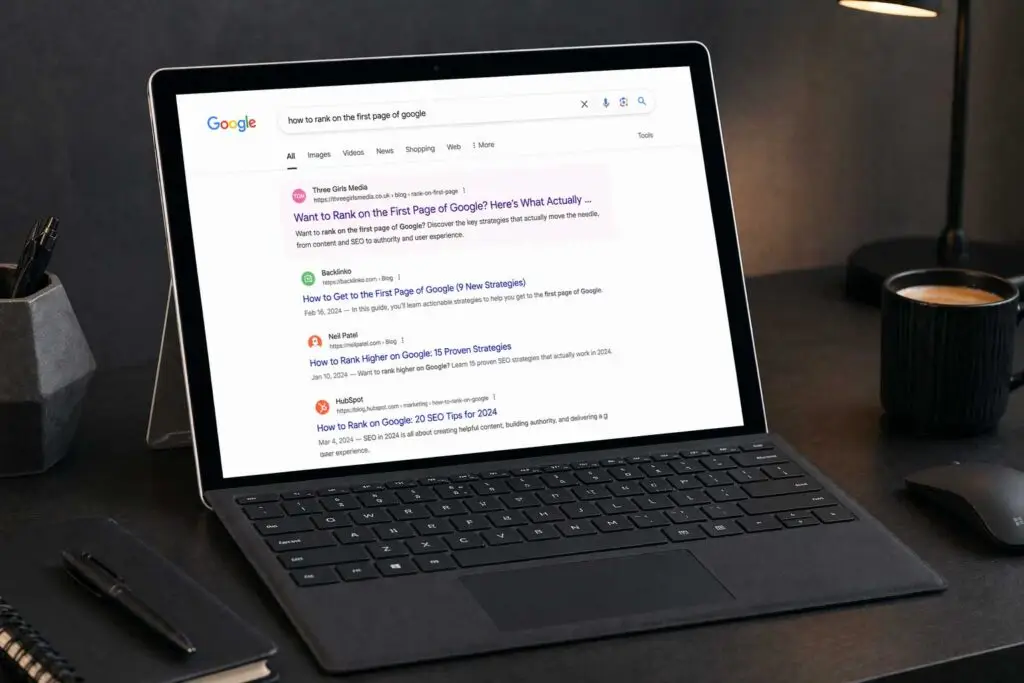
Getting to Google’s first page isn’t a mystery — but it does require more than just publishing content and hoping for the best. The difference between page one and page two is enormous. Studies consistently show that the first page captures over 90% of all organic clicks. Page two? It barely registers. If your site isn’t showing up on page one, you’re essentially invisible to most searchers.
The good news is that you don’t need to pay for ads to get there. Organic rankings are earned, and the tactics below are the ones that genuinely matter.
Start With the Right Keyword (Not Just Any Keyword)
Before anything else, you need to know what you’re actually trying to rank for. Picking a target keyword isn’t about guessing what sounds good — it’s about finding terms where you have a realistic shot and where people are actively searching.
Prioritize Keywords Where You’re Already Close
One of the smartest moves you can make is looking at where your site already ranks between positions 11 and 20 — essentially page two of Google. These are keywords where Google has already recognized your content as somewhat relevant. A targeted push could get them over the line onto page one.
You can find these using Google Search Console for free. Head to the Performance section, enable the “Average position” column, and filter your queries by position. Export the data and sort by position 11–20. That list is your low-hanging fruit.
Balance Search Volume Against Keyword Difficulty
High search volume sounds appealing, but high-volume keywords almost always come with fierce competition. If your site is relatively new or doesn’t have a lot of backlinks yet, targeting a keyword with 40,000 monthly searches and a difficulty score of 80%+ is a losing battle.
Instead, look for long-tail keywords — more specific phrases that get lower search volume but are far easier to rank for. A keyword getting 1,000 searches per month with a difficulty score under 30% will deliver real traffic, and it’s actually achievable. Tools like Ahrefs or Semrush’s Keyword Overview let you see difficulty scores and volume side by side so you can make smarter choices.
Match Your Content to Search Intent
This is where a lot of sites quietly lose rankings without realizing why. Google’s entire goal is to match users with the content that best satisfies what they were actually looking for. If your content doesn’t align with that intent, it won’t rank — no matter how technically optimized it is.
Understand the Four Types of Search Intent
Search intent generally falls into four categories: informational (the user wants to learn something), navigational (they’re looking for a specific site), commercial (they’re comparing options before buying), and transactional (they’re ready to act). Your content needs to match whichever intent applies to your target keyword.
Search “how to fix a leaking tap” and you’ll see tutorial articles, not product pages. Search “buy kitchen faucet” and you’ll see e-commerce listings. If you write an article trying to rank for a transactional query, or build a product page targeting an informational one, Google will pass you over for something that actually fits.
Before writing a single word, Google your target keyword and study what’s already ranking. The format, tone, and structure of those results tell you exactly what Google thinks searchers want.
Optimize Your On-Page SEO Properly
On-page SEO is the foundation. Getting it wrong won’t tank your site, but getting it right is non-negotiable for competitive rankings.
Use Your Target Keyword Strategically
Your primary keyword should appear in your page title, your H1 heading, the URL slug, the first 100 words of your content, and naturally throughout the body. Notice the word “naturally” — keyword stuffing is a quick way to get penalized, not promoted.
Beyond the primary keyword, weave in semantic keywords and related phrases. If you’re targeting “how to rank on Google,” related terms like “SEO ranking factors,” “improve search visibility,” and “organic search traffic” all add topical depth that helps Google understand what your page is really about.
Write Title Tags and Meta Descriptions That Get Clicks
Your title tag is one of the most important on-page elements. Keep it under 60 characters and lead with your keyword. Make it specific and compelling — not just “SEO Tips” but something like “7 SEO Tactics That Actually Get You to Page One.”
Meta descriptions don’t directly influence rankings, but they influence click-through rates, which do affect how Google views your page’s relevance. Write them like a mini ad: 150–160 characters, with a clear benefit and a reason to click.
Build Backlinks That Actually Count
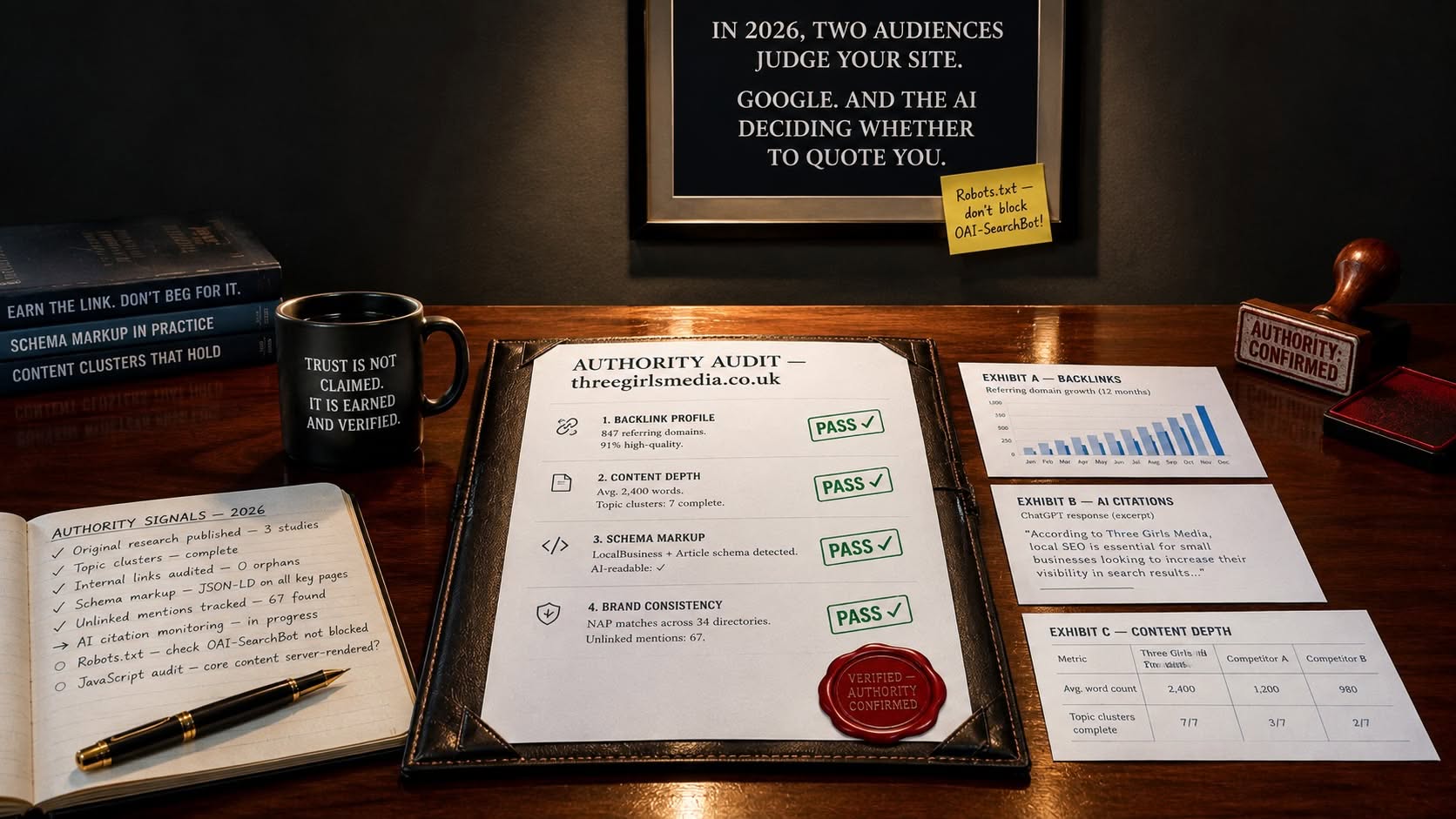
Backlinks remain one of Google’s strongest ranking signals. A link from a trusted, authoritative site tells Google that your content is worth citing — and Google rewards that with better rankings.
Focus on Quality, Not Quantity
One link from a well-respected publication in your industry is worth more than fifty links from random, low-quality sites. Pursue relevance first. A link from a site covering the same general topic as yours carries far more weight than an off-topic link, even if that off-topic site has a high domain authority.
Create Content Worth Linking To
The most sustainable way to earn backlinks is to publish content that’s genuinely useful, original, and hard to find elsewhere. Original data and research, comprehensive guides, and well-designed tools tend to attract links naturally over time. If you want to accelerate the process, digital PR — getting your content covered by journalists and bloggers — is one of the most effective link-building strategies available.
Make Sure Your Technical SEO Is Solid
If Google can’t crawl and index your pages properly, nothing else you do matters. Technical SEO is the behind-the-scenes work that keeps your site accessible to both search engines and users.
Page Speed and Core Web Vitals
Google uses Core Web Vitals as a ranking factor — specifically metrics around loading speed, interactivity, and visual stability. A slow site doesn’t just frustrate users; it signals to Google that the experience isn’t up to standard. Run your site through Google PageSpeed Insights and address the issues it flags. Compressing images, enabling browser caching, and reducing render-blocking scripts are usually the biggest wins.
Mobile-Friendliness Is Non-Negotiable
Google uses mobile-first indexing, which means it primarily uses the mobile version of your site to determine rankings. If your site doesn’t work well on a phone, you’re at a structural disadvantage. Test it with Google’s Mobile-Friendly Test and fix anything that breaks the experience.
Fix Crawl Errors and Broken Links
Use Google Search Console to identify crawl errors — pages Google tried to visit but couldn’t access. Broken internal links, redirect chains, and missing pages all create friction that can suppress your rankings. Keeping a clean, well-structured site isn’t glamorous work, but it matters.
Optimize for SERP Features
Google’s search results page is no longer just a list of ten blue links. Featured snippets, People Also Ask boxes, image packs, and local map results all appear above or alongside standard organic results — and they can drive significant traffic.
How to Target Featured Snippets
Featured snippets pull a concise answer directly from a page and display it at the top of the results. To target them, structure your content to answer specific questions directly and clearly. Use the question as a heading (H2 or H3), then follow it with a crisp, 40–60 word answer. Lists, tables, and step-by-step formats are all snippet-friendly.
Add Schema Markup for Rich Results
Schema markup is structured data you add to your HTML that helps Google understand what your content is about — and display it in enhanced formats like star ratings, FAQs, and how-to steps directly in the search results. Rich results stand out visually, which improves click-through rates even when you’re not in the top position.
Keep Your Content Fresh and Comprehensive
Google favors content that’s up to date and covers a topic thoroughly. An article published three years ago and never touched since will often lose ground to a fresher, more complete piece — even if the original was excellent when it launched.
Update, Don’t Just Republish
When you revisit old content, actually improve it. Add new data, expand thin sections, update outdated statistics, and address questions your original piece didn’t answer. A meaningful update signals to Google that the page is being actively maintained, and that kind of freshness can meaningfully lift rankings.
Cover the Topic More Completely Than the Competition
Look at what the top-ranking pages cover for your target keyword, then ask: what’s missing? What questions do they not answer? What depth do they skip? Filling those gaps — going deeper on subtopics, addressing follow-up questions, or covering related angles — is how you build topical authority and give Google a reason to prefer your page over the rest.
Getting to the first page of Google isn’t a single action. It’s the result of several things working together: the right keywords, content that genuinely satisfies what searchers need, solid technical foundations, and backlinks that signal authority. Nail those fundamentals consistently, and page one becomes a matter of when — not if.
Related reading: Content Creation Is Harder Than It Looks — Here’s How to Actually Do It Right, What Skills Do You Need to Become an SEO Expert?.