Search engine optimization has never been more competitive than it is right now. And yet, most websites are still making the same foundational mistakes they were making five years ago — thin content, ignored search intent, sluggish load times, orphan pages floating in the void.
If your traffic has plateaued or your rankings are stuck, this isn’t about algorithm conspiracy theories. It’s about getting the fundamentals right, then going deeper. Here are the SEO moves that actually move the needle.
Start with Keyword Research That Actually Matches What People Want
Every good SEO strategy begins with understanding what your audience is actually typing into Google — not what you think they’re typing. The difference matters enormously.
Before writing a single word, run your seed terms through a tool like Google Keyword Planner or Semrush’s Keyword Magic Tool to surface real search demand. Look at three things: monthly search volume, keyword difficulty, and search intent. A keyword with 10,000 monthly searches sounds great until you realize every authoritative site on the internet is already targeting it.
For most sites, commercial and transactional keywords deserve the most attention because they connect directly to revenue. But informational keywords — the “how,” “what,” and “why” queries — are how you build an audience that trusts you before they ever need to buy.
Don’t Skip the Keyword Gap Analysis
One of the most underused research moves is comparing your domain to competitors to find keywords they rank for that you don’t. This is called a keyword gap analysis, and it’s a fast way to uncover content opportunities you didn’t know existed. You’re not guessing what might work — you’re looking at what’s already working for sites in your space.
Align Every Piece of Content with Search Intent
Ranking for a keyword you have no business targeting is like opening a steakhouse in a vegan neighborhood. Even if people find you, they won’t stay.
Search intent is the reason behind a query, and Google has gotten extremely good at matching results to intent. The four main categories are informational (users want to learn), navigational (users want a specific site), commercial (users are researching before buying), and transactional (users are ready to act).
If someone searches “best noise-canceling headphones,” they want a comparison roundup — not a product page with a buy button. If they search “buy Sony WH-1000XM5,” they want the buy button. Getting this wrong means your content won’t rank, full stop.
A reliable approach: search your target keyword, look at the top five results, and notice what format they use. If they’re all listicles, write a listicle. If they’re all comprehensive guides, write a guide. Then do it better.
Make Your Content Actually Worth Reading
Content that ranks but doesn’t hold attention is a ranking that won’t last. Dwell time, bounce rate, and engagement signals all factor into how Google evaluates your page over time.
Write for Humans, Not for Algorithms
Plain language wins. If you’re writing about technical topics, explain jargon the first time you use it. Short sentences are easier to follow than long, winding ones that try to say too many things at once — like that one. Paragraphs should stay tight, ideally three or four lines, with plenty of white space to let the reader breathe.
Readable content targets around a Flesch-Kincaid score of 60 or higher, which roughly corresponds to an 8th or 9th grade reading level. That’s not dumbing things down — it’s respecting your reader’s time.
Structure Matters as Much as the Words
Headings are doing double duty: they help readers navigate, and they help search engines understand your content’s hierarchy. Use your primary keyword in the H1. Work related keywords into H2s and H3s naturally, without forcing it. Every heading should genuinely reflect the content below it.
Demonstrate E-E-A-T — and Mean It
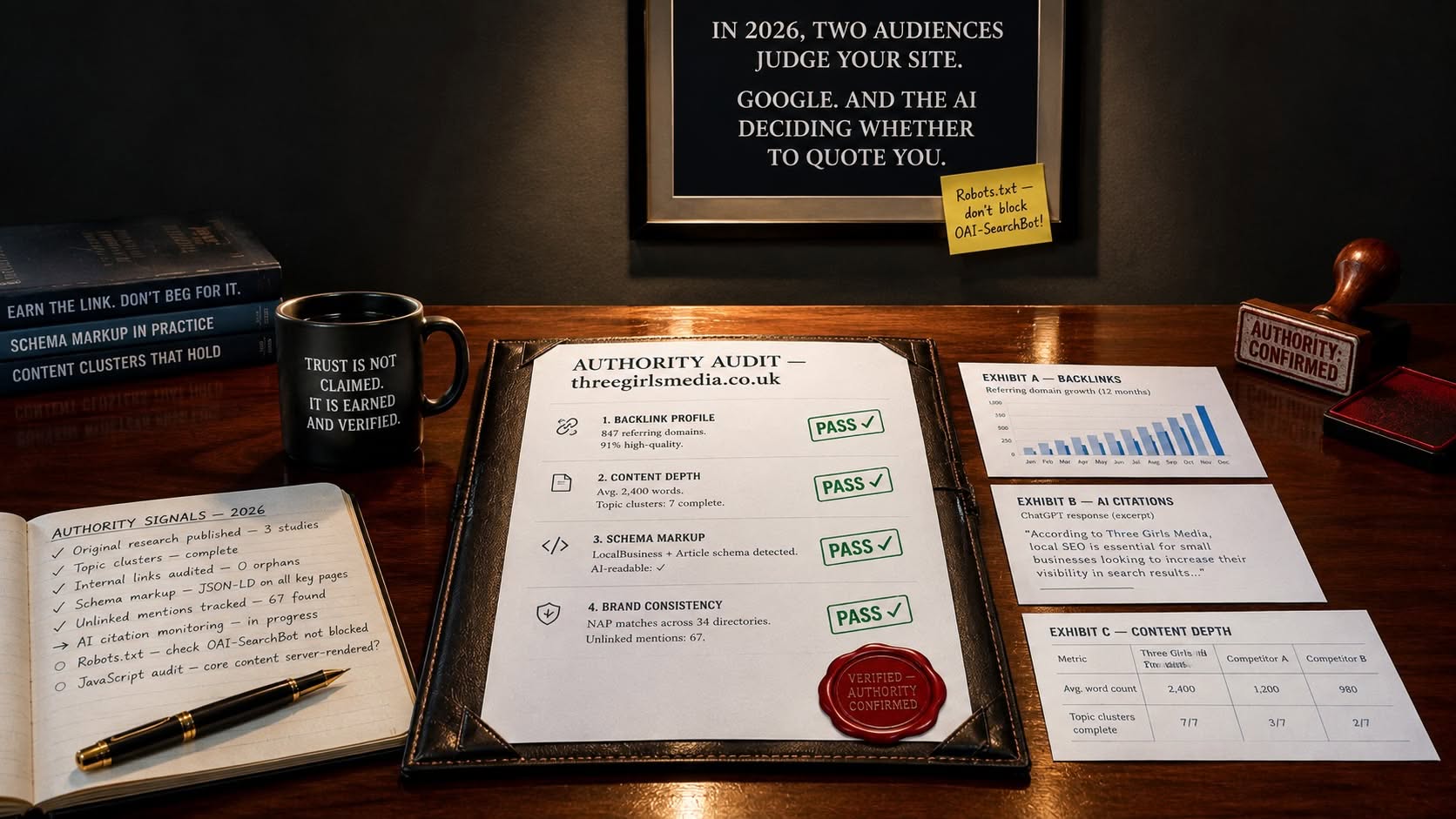
E-E-A-T stands for Experience, Expertise, Authoritativeness, and Trustworthiness. Google uses these signals to evaluate content quality, especially in competitive or sensitive niches.
This isn’t just a checklist item. Real E-E-A-T comes through in how you write. Have you actually used the product you’re reviewing? Have you run the campaigns you’re advising on? First-hand experience shows in the details, and readers — and search quality raters — notice the difference between someone who knows their subject deeply and someone who aggregated surface-level information from other sources.
Author bios matter here too. A byline that includes credentials, years of experience, and a link to a full author page signals trust both to human readers and to Google’s crawlers. Publishing consistently on a topic builds topical authority over time, which is one of the strongest long-term SEO advantages a site can develop.
Go After Featured Snippets
Featured snippets sit above the organic results — the coveted “position zero.” They’re pulled from existing pages Google decides best answer a question concisely, and they drive significant click-through traffic.
To earn them, find queries where a snippet already appears but a competitor holds it. Then write a version of that answer that’s tighter, clearer, and more direct. If the current snippet is a paragraph, write a clean two- or three-sentence answer. If it’s a numbered list, format yours as a numbered list. Keep the text concise — around 200 to 300 characters is the sweet spot — and front-load the most important information.
Technical SEO: The Foundation That Makes Everything Else Work
You can have brilliant content and still lose rankings to a site with a faster, cleaner website. Technical SEO is the infrastructure behind your content, and neglecting it is like putting premium furniture in a leaky house.
Page Speed Is Non-Negotiable
Page speed is a confirmed Google ranking factor for both desktop and mobile. A one-second delay in load time can reduce conversions by up to 7%, according to Cloudflare’s research. The levers here include using a content delivery network (CDN), compressing images before uploading, minifying JavaScript and CSS, and reducing third-party scripts that phone home to external servers on every load.
Internal Links Move Both People and Rankings
Internal linking is one of the highest-return, lowest-cost SEO activities you can do. Link from high-traffic pages to pages you want to rank, use descriptive anchor text instead of “click here,” and make sure important pages are reachable from multiple entry points on your site.
Equally important is fixing orphan pages — pages that have no internal links pointing to them. If Google can’t crawl to a page through your internal structure, it may not index it effectively. Run a site audit periodically to catch these.
Use Short, Descriptive URLs
A URL like /seo-tips-for-beginners is immediately clearer than /page?id=4829475. Short, keyword-relevant URLs are more trustworthy to users and easier for search engines to parse. Avoid including dates — updating the content later creates a redirect headache and potential ranking loss if done incorrectly.
Optimize for AI Search, Not Just Traditional Results
This point isn’t on most SEO checklists yet, but it should be. Generative AI tools like ChatGPT increasingly pull from Google’s index, and the same signals that help you rank in traditional search — topical authority, clear structure, trustworthy sourcing — are the same signals that get your content surfaced in AI-generated answers.
Generative engine optimization is still emerging, but the foundation is identical to good SEO: demonstrate expertise, earn backlinks from credible sources, structure content clearly, and answer questions directly.
The Bottom Line
None of these strategies are secret. The gap between sites that rank and sites that don’t usually comes down to execution — doing the research, aligning content to what searchers actually want, building the technical foundation, and creating content with genuine depth and credibility.
Start with the areas where your site is weakest. Keyword research and search intent alignment will give you the fastest visible impact. Technical fixes will compound over time. And building real topical authority is the play that separates sustainable rankings from ones that disappear with the next algorithm update.
SEO rewards consistency more than cleverness. The sites winning organic traffic in two or three years are building that position right now.
Related reading: Meta Tags and On Site SEO, Proven Ways to Boost Your Website Traffic in 2026.