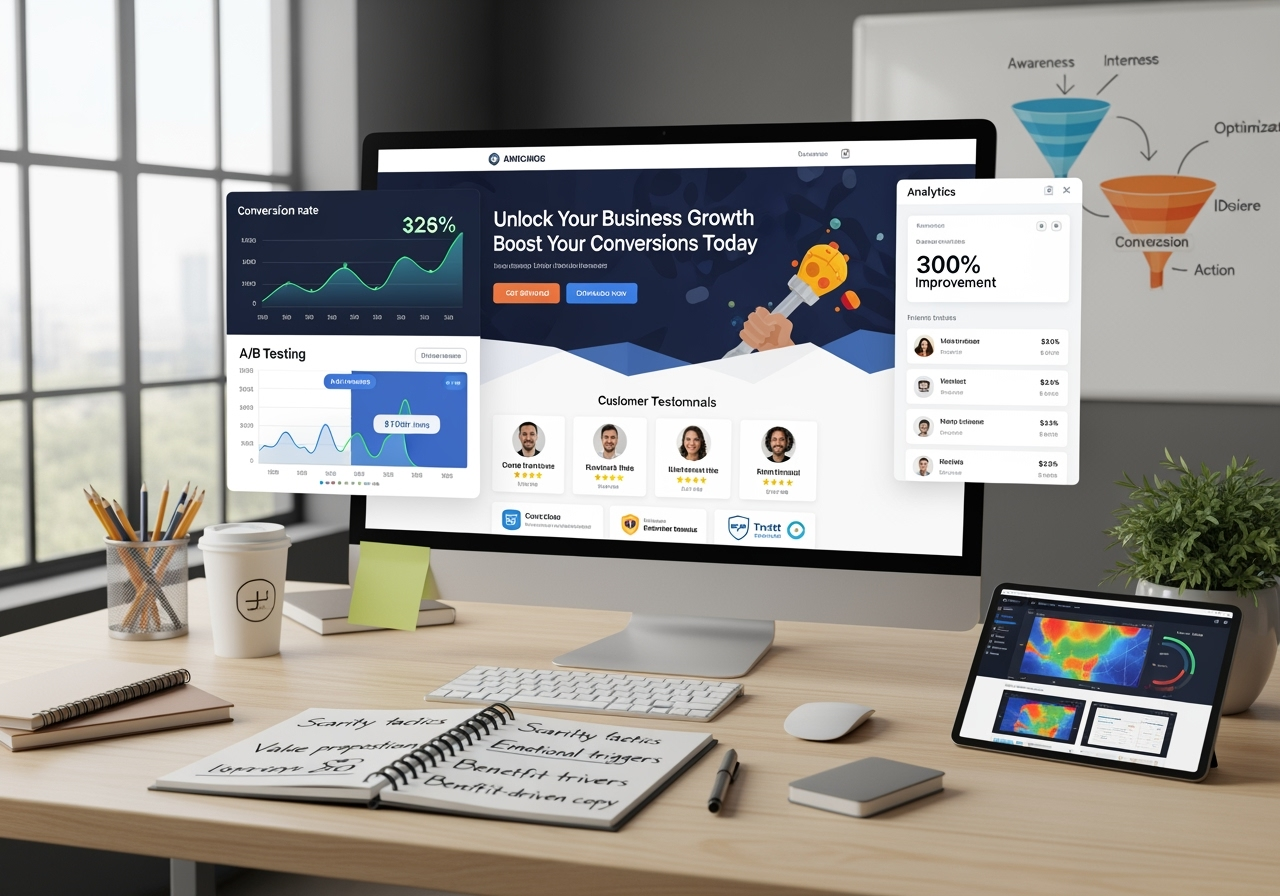
Creating a landing page that drives conversions means understanding what moves visitors to action and removing every barrier between them and your call-to-action button. Whether you’re capturing leads, selling products, or growing your email list, your page needs to convince people to click.
The average landing page conversion rate is 6.6% across industries. Top performers hit double digits by focusing on what matters. This guide covers building a high-converting landing page from strategy to launch.
Start With Crystal-Clear Strategy
Before you write a single word or choose a color scheme, you need absolute clarity on your landing page’s purpose. Are you generating leads for a B2B service? Selling an ecommerce product? Collecting webinar signups? Your entire page architecture depends on this decision.
Define your conversion goal with precision. Instead of “get more customers,” aim for something measurable like “achieve 200 demo requests per month” or “convert 8% of paid traffic to free trial signups.” This specificity informs every element you’ll add to your page.
Know Your Audience Inside Out
Your target audience determines messaging, design, and objections you’ll address. A page targeting executives needs concise copy and fast mobile design. Technical buyers require detailed specifications and integration information.
Map out your visitor’s journey. Did they click a Google Ads campaign or find you through search? Each traffic source brings different expectations. Your landing page must match the message that brought them there.
Write Copy That Converts Visitors Into Customers
Your landing page copy has one job: move readers toward your call-to-action. Every headline, subheading, and body paragraph should guide them closer to conversion.
Craft Headlines That Command Attention
Your headline is the first element visitors see, and it determines whether they’ll stick around. Make it specific, benefit-driven, and immediately relevant to what brought them to your page.
Instead of generic headlines like “Welcome to Our Platform,” use value-focused alternatives: “Cut Your Customer Support Time in Half” or “Generate 300% More Qualified Leads This Quarter.” These headlines communicate a clear benefit that resonates with your target audience.
Structure Your Message Strategically
Your body copy should flow naturally from problem to solution. Use short paragraphs (no more than three lines each) to maintain readability. Break up text with strategic white space, making the page scannable for visitors who skim.
Address your audience directly using “you” language. Instead of “Our product helps businesses,” write “You’ll see results within 30 days.” This approach creates a personal connection that cold, corporate copy can’t match.
Design Calls-to-Action That Get Clicked
Your CTA button isn’t just a design element—it’s the culmination of your entire landing page strategy. Use action-oriented language: “Start Your Free Trial,” “Download the Guide,” “Get My Discount.” Generic CTAs like “Submit” or “Click Here” waste your most valuable real estate.
Place your primary CTA above the fold where visitors see it immediately, then repeat it as they scroll. Research shows featuring a single, focused CTA can boost clicks by up to 371% compared to multiple competing actions.
Choose the Right Visual Elements
Images, videos, and graphics should support your message, not distract from it. Every visual element needs a purpose—whether that’s demonstrating your product, building trust, or reinforcing your value proposition.
Select Your Hero Image Carefully
The hero image sits at the top of your landing page and creates that crucial first impression. Choose high-quality visuals that show your product in action or demonstrate the transformation your service provides. Avoid generic stock photos that could appear on any website.
For SaaS products, show your interface solving a real problem. For physical products, use lifestyle shots that help visitors envision themselves using what you’re selling. Service businesses can use authentic team photos or client success imagery.
Build Trust With Social Proof
Testimonials, case studies, and trust badges dramatically improve conversion rates by reducing visitor anxiety. Display specific results when possible: “Increased our conversion rate by 47%” carries more weight than “Great product!”
Customer reviews, client logos, security certifications, and media mentions all serve as social proof. Feature them prominently, but don’t overwhelm your landing page design with too many elements competing for attention.
Select Your Landing Page Platform
Your choice of landing page builder directly impacts how quickly you can create pages and iterate based on performance data. Different platforms serve different needs, from drag-and-drop simplicity to complete customization.
Consider No-Code Solutions
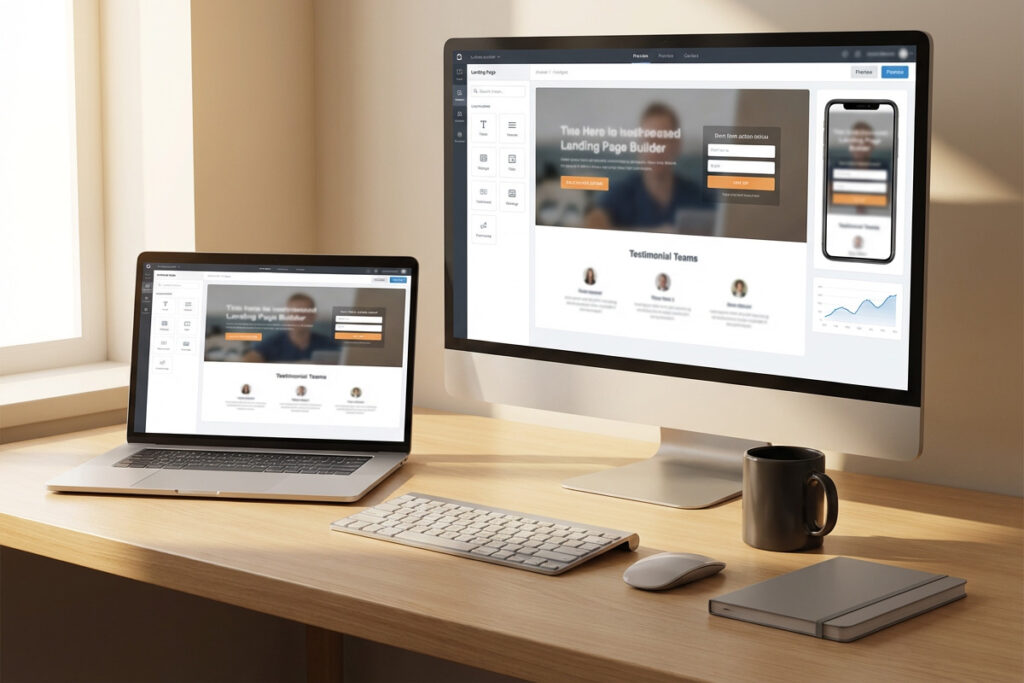
Modern landing page builders eliminate the need for coding expertise. Tools like Unbounce, Leadpages, and Instapage offer pre-built templates optimized for conversions, along with built-in A/B testing capabilities.
These platforms typically include form builders, analytics integration, and mobile optimization features. You can launch professional landing pages in hours instead of weeks, freeing up time to focus on optimization and testing.
Integrate With Your Tech Stack
Your landing page platform needs to connect seamlessly with your existing marketing tools. Look for native integrations with your email service provider, CRM system, and analytics platforms.
Essential integrations include Google Analytics for traffic analysis, email marketing tools like Mailchimp or HubSpot, and your CRM for lead management. These connections ensure data flows automatically without manual exports or complex workarounds.
Optimize for Mobile and Speed
Mobile devices account for over 62% of global web traffic, and that number continues climbing. Your landing page must deliver an exceptional experience on smartphones and tablets, or you’re losing more than half your potential conversions.
Prioritize Mobile-First Design
Design your landing page for mobile screens first, then enhance it for desktop. This approach ensures your most critical elements—headline, primary benefit, and CTA—appear prominently on smaller screens.
Make your CTA button at least 44 pixels tall so it’s easy to tap with a thumb. Simplify forms for mobile users by reducing the number of required fields. Every additional form field costs you conversions, especially on mobile devices.
Maximize Page Load Speed
Your landing page should load in under three seconds. Every second of delay costs you conversions as impatient visitors bounce to competitors. Compress images without sacrificing quality, minimize CSS and JavaScript files, and leverage browser caching.
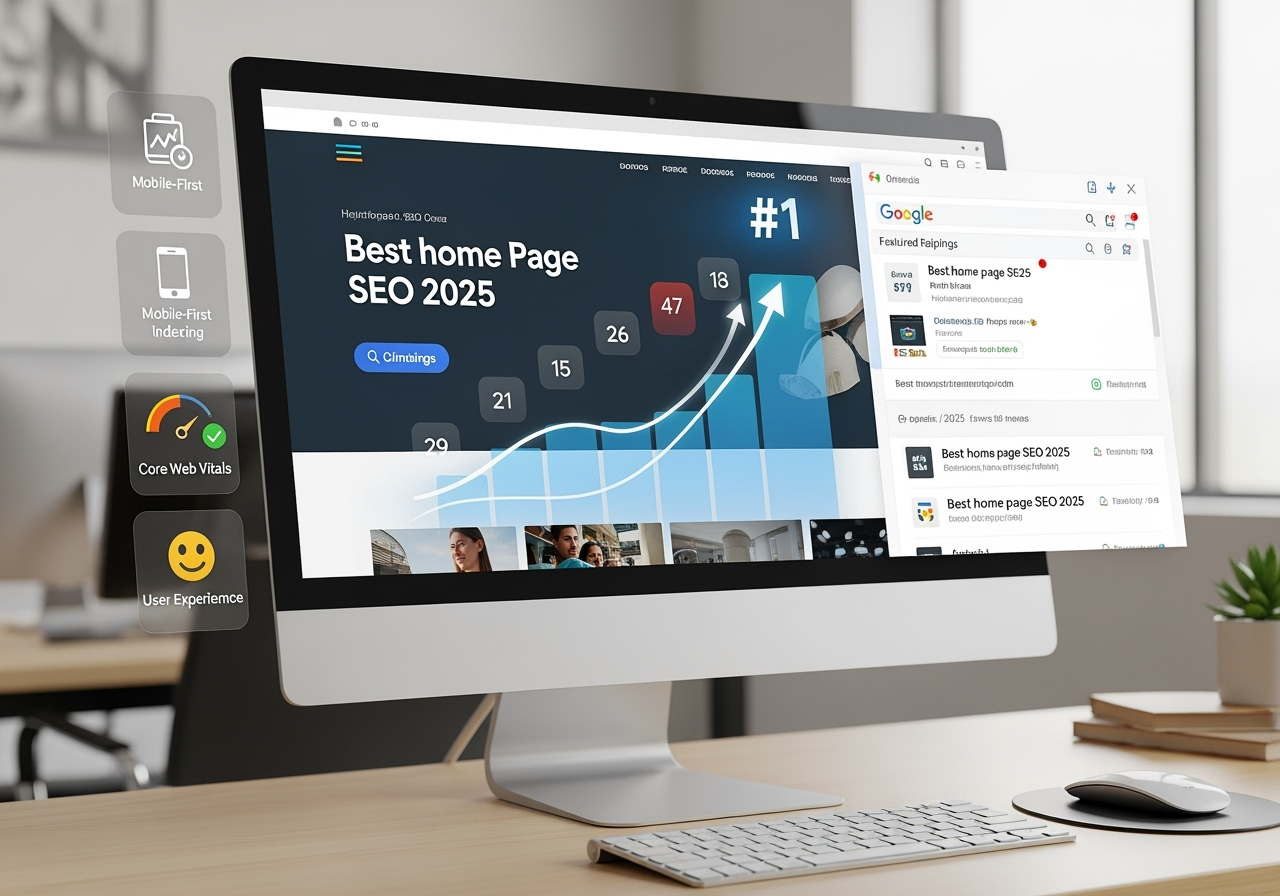
Use Google’s PageSpeed Insights to identify specific performance bottlenecks. Focus on fixing issues that impact Core Web Vitals, as these metrics directly affect both user experience and search rankings.
Implement SEO Best Practices
Even conversion-focused landing pages can rank in organic search results and drive free, targeted traffic. Smart landing page SEO means balancing conversion optimization with search engine visibility.
Target Specific, Relevant Keywords
Choose long-tail keywords that match both search intent and your conversion goal. Instead of broad terms like “project management,” target specific phrases like “project management software for remote teams” or “Agile project tracking tools.”
Use keyword research tools to identify terms with decent search volume but manageable competition. Incorporate your primary keyword naturally in your H1 headline, first paragraph, and throughout your body copy.
Optimize Your On-Page Elements
Your title tag and meta description influence click-through rates from search results. Write a compelling title under 60 characters that includes your target keyword. Your meta description should expand on your value proposition in 155 characters or less.
Structure your content with clear heading hierarchy (H1, H2, H3) that incorporates semantic keywords related to your main topic. Include descriptive alt text for images that provides context while naturally working in relevant keywords.
Create Content That Serves Search Intent
Google ranks pages that best answer searcher queries. If your target keyword is “how to build a landing page,” search results will reveal whether users want step-by-step guides, templates, or builder comparisons.
Analyze the top-ranking pages for your target keywords. Look at content type, structure, and depth. Your landing page should match or exceed this quality while maintaining its conversion focus.
Connect Your Analytics and Tools
Data drives optimization. Set up comprehensive analytics before launching to make decisions based on user behavior instead of guesses.
Track the Right Metrics
Monitor conversion rate, bounce rate, time on page, and scroll depth. These metrics reveal where visitors drop off and which elements engage them.
Use heat mapping tools like Hotjar to visualize where users click and scroll. Configure goal tracking in Google Analytics to measure conversions. Connect your landing page to your CRM and email platform so leads flow automatically into your sales funnel.
Launch and Continuously Optimize
Your landing page launch is the starting point for ongoing optimization. Plan to test, measure, and refine based on visitor behavior.
Create A/B test variants of headlines, CTA colors, form lengths, or images. Run one test at a time to isolate conversion drivers. Split traffic evenly between variants and let tests run until reaching statistical significance.
Review analytics weekly for patterns. If mobile bounce rates spike, investigate design and load speed. If visitors scroll past your CTA without converting, test repositioning or strengthening your value proposition. Set a regular optimization schedule and commit to it—small improvements compound into significant conversion gains.
Building Landing Pages That Drive Results
High-converting landing pages combine strategic thinking, persuasive copywriting, and data-driven optimization. Focus on clear goals, craft messages that resonate with your audience, and continuously test based on performance data.
The best landing pages share common elements: focused messaging around a single goal, friction-free experiences, compelling social proof, and mobile-optimized designs that load fast. Master these fundamentals first.
Your initial landing page won’t be perfect—and that’s expected. Build a solid foundation using these principles, launch quickly, then improve based on real visitor behavior. Consistent optimization turns good landing pages into conversion machines that reliably transform browsers into customers.