Getting your website to appear on Google’s first page isn’t about luck or magic formulas. It’s about understanding what Google values and delivering it consistently. With over 8.5 billion searches happening daily, capturing even a small fraction of that traffic can transform your business. Yet most websites never make it past page two, where virtually no one looks.
The difference between ranking and obscurity often comes down to executing the fundamentals correctly. This guide walks you through the exact strategies that consistently move pages from invisible to prominent in search results.
Understanding How Google Actually Ranks Pages
Google’s algorithm evaluates hundreds of signals to determine which pages deserve top positions. While the exact formula remains proprietary, the core principles are well-established through official documentation and extensive testing.
The Foundation: Relevance and Quality
Google’s search algorithm primarily assesses whether your content genuinely answers what someone is searching for. This goes beyond simply including keywords—it requires comprehensive coverage of a topic that satisfies user intent.
Quality signals include content depth, accuracy, proper grammar, logical structure, and whether the page provides unique value. Pages that merely rehash existing content without adding new insights struggle to rank competitively.
Technical Performance Matters
Site speed, mobile responsiveness, and secure connections (HTTPS) directly impact rankings. Google’s Core Web Vitals measure loading performance, interactivity, and visual stability. Pages that provide poor user experiences get deprioritized regardless of content quality.
Authority and Trust Signals
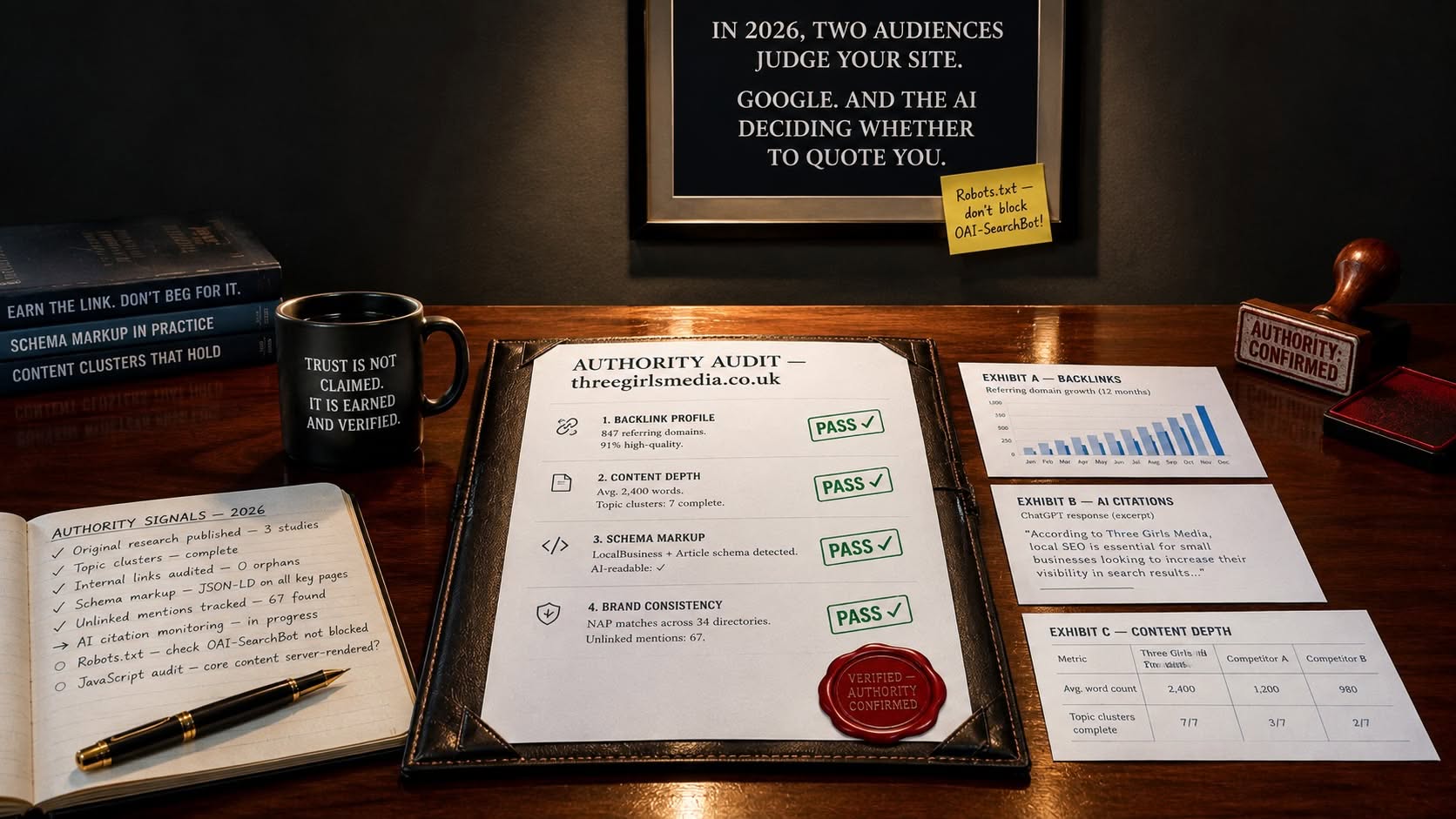
Google evaluates your site’s overall authority through backlinks from reputable sources, consistent publishing history, and adherence to E-E-A-T principles (Experience, Expertise, Authoritativeness, Trustworthiness). New sites face steeper challenges because they haven’t established this trust yet.
Finding Keywords That Actually Drive Traffic
Ranking for keywords nobody searches is pointless. Effective keyword research identifies terms with sufficient search volume and achievable competition levels for your site’s current authority.
Start With Keyword Research Tools
Platforms like SEMrush, Ahrefs, and Google Keyword Planner reveal monthly search volumes, competition levels, and related terms. Enter your main topic and analyze which variations get the most searches.
Look for keywords with monthly search volumes between 100-10,000 depending on your niche. Extremely high-volume terms usually face intense competition from established sites with massive link profiles.
Analyze Search Intent
Not all keywords indicate someone ready to engage with your content. Understanding the four types of search intent prevents wasted effort:
Informational intent: Users seeking knowledge (“how to rank on Google”) Navigational intent: Users looking for specific sites (“SEMrush login”) Commercial intent: Users researching before buying (“best SEO tools”) Transactional intent: Users ready to take action (“buy SEO audit”)
Match your content type to the dominant intent. Informational queries need comprehensive guides, while transactional searches require clear conversion paths.
Focus on Long-Tail Variations
Long-tail keywords—specific phrases of three or more words—convert better and face less competition. Instead of targeting “SEO tips,” consider “SEO tips for small business websites” or “SEO tips for beginner bloggers.”
These longer phrases attract users with specific needs who are more likely to engage deeply with content that addresses their exact situation.
Evaluate Keyword Difficulty
Most research tools provide difficulty scores indicating how challenging ranking would be. For newer sites, target keywords with difficulty scores below 30. Established sites can pursue scores up to 60-70 depending on their domain authority.
Compare your site’s authority against the top 10 results. If every ranking page has hundreds of referring domains and you have fewer than 20, that keyword likely remains out of reach currently.
Creating Content That Outperforms Competitors
Once you’ve identified target keywords, the real work begins: producing content that deserves to outrank what already exists.
Conduct Competitor Content Analysis
Search your target keyword and thoroughly analyze the top 10 results. Note what topics they cover, how comprehensive they are, their content structure, word count ranges, and what seems missing or inadequately explained.
Your goal isn’t copying these pages but understanding what Google currently rewards for this query and identifying opportunities to do better.
Structure Content for Maximum Readability
Organization dramatically affects both user experience and SEO performance. Implement clear hierarchical heading structures using H2s for main sections and H3s for subsections.
Use Clear, Descriptive Headings
Every heading should clearly communicate what the following section covers. “Getting Started” tells readers nothing, while “Setting Up Your First Keyword Research Campaign” sets clear expectations.
Implement Strategic Keyword Placement
Include your primary keyword in the title, first paragraph, at least one H2 heading, and naturally throughout the content. Secondary keywords should appear in H2/H3 headings and body text where relevant.
Avoid forced keyword insertion that disrupts natural reading flow. Modern Google algorithms recognize and penalize obvious keyword stuffing.
Optimize Content Depth
Comprehensive coverage typically requires 1,200-2,500 words for competitive informational queries, though this varies by topic. Match or exceed the average word count of top-ranking pages while ensuring every paragraph provides value.
Longer content isn’t inherently better—only when it thoroughly addresses the topic without unnecessary filler.
Add Unique Value Elements
What makes your content worth reading over alternatives? Pages that offer something unavailable elsewhere have natural advantages in both attracting backlinks and satisfying users. Original data or research from your own surveys or analysis provides citable statistics others can reference.
Expert insights from industry professionals add credibility and depth. Visual explanations through custom graphics or diagrams help readers understand complex concepts. Alternative perspectives that challenge common assumptions spark engagement and discussion. Updated information that corrects outdated advice in existing content fills important gaps.
Pages that offer something unavailable elsewhere have natural advantages in both attracting backlinks and satisfying users.
Building Technical SEO Foundations
Content quality alone won’t secure rankings if technical issues prevent Google from properly accessing, understanding, and indexing your pages.
Ensure Proper Site Architecture
Create logical site structure where every page sits no more than three clicks from the homepage. Use descriptive URLs that indicate page content—/seo-keyword-research-guide/ beats /page?id=12847.
Implement internal linking to connect related content, helping both users and search crawlers discover relevant pages while distributing authority throughout your site.
Optimize Page Speed
Google’s PageSpeed Insights identifies specific performance issues slowing your site.
Common fixes include compressing images to appropriate file sizes, enabling browser caching, minimizing CSS and JavaScript files, using a content delivery network (CDN), and upgrading to faster hosting. Pages loading in under three seconds significantly outperform slower alternatives in both rankings and user engagement.
Ensure Mobile Optimization
Over 60% of searches now happen on mobile devices. Google predominantly uses mobile versions of pages for indexing and ranking. Test your site using Google’s Mobile-Friendly Test and fix any issues immediately.
Responsive design that adapts layouts to different screen sizes remains the most reliable approach.
Create and Submit XML Sitemaps
XML sitemaps help search engines discover and index all important pages. Most content management systems automatically generate these, or you can use free tools to create them manually.
Submit your sitemap through Google Search Console to ensure Google knows about all your content.
Earning Quality Backlinks
Backlinks—links from other websites to yours—remain among Google’s strongest ranking signals. They function as votes of confidence indicating your content deserves attention.
Focus on Quality Over Quantity
One link from a highly authoritative, relevant site carries more weight than dozens from low-quality directories or spam sites.
Pursue links from industry publications and news sites, educational institutions (.edu domains), government sources (.gov domains), established blogs and resources in your niche, and professional organizations and associations.
Create Link-Worthy Content
The most sustainable link-building strategy involves producing content others naturally want to reference. This includes:
Original research and data that provides citable statistics Comprehensive guides that become go-to resources Unique tools or calculators that provide practical utility Controversial or thought-provoking content that sparks discussion
When your content provides genuine value, links accumulate organically as others discover and reference it.
Implement Strategic Outreach
Identify websites that have linked to competitors or covered similar topics. Reach out with personalized messages explaining why your content would benefit their audience.
Avoid generic templates. Reference specific articles, explain what makes your content valuable for their readers, and make linking easy by providing the exact URL and suggested anchor text.
Leverage Broken Link Building
Find broken links on relevant websites using tools like Ahrefs’ Broken Link Checker. Contact site owners to alert them about the broken link while suggesting your relevant content as a replacement.
This approach provides value to site owners while earning quality backlinks.
Optimizing for User Experience Signals
Google increasingly prioritizes user experience metrics. Pages where visitors quickly leave or show disengagement signals struggle to maintain rankings.
Reduce Bounce Rates
High bounce rates signal content didn’t meet user expectations. Improve this by:
- Delivering on the promise made in your title and meta description
- Providing immediate value in the opening paragraph
- Using clear formatting that makes scanning easy
- Ensuring fast load times
- Including compelling calls-to-action that encourage exploration
Increase Dwell Time
The longer visitors engage with your content, the stronger the quality signal to Google.
Increase dwell time through comprehensive content that thoroughly addresses topics, engaging writing that maintains interest, strategic internal links to related content, multimedia elements like videos or infographics, and interactive elements that encourage participation.
Improve Click-Through Rates
Your meta title and description determine whether searchers click your result over competitors. Write compelling titles under 60 characters that clearly indicate content value.
Meta descriptions should be under 155 characters and emphasize benefits or unique angles. Include target keywords naturally while prioritizing persuasiveness.
Monitoring and Refining Your Strategy
SEO isn’t set-and-forget. Rankings fluctuate as competitors improve and Google updates algorithms. Continuous monitoring reveals what’s working and where adjustments are needed.
Track Rankings Consistently
Use tools like SEMrush Position Tracking or Google Search Console to monitor keyword rankings weekly. Identify pages gaining or losing positions and investigate causes.
Don’t obsess over daily fluctuations—focus on month-over-month trends indicating real movement.
Analyze Traffic Patterns
Google Analytics shows which pages attract traffic, how visitors found them, and what they do after arriving. Identify high-performing content to understand what resonates with your audience and replicate those approaches.
For underperforming pages, analyze whether the issue stems from low rankings, poor click-through rates, or content quality problems.
Update Content Regularly
Google favors fresh, current content. Regularly review and update existing pages by:
- Adding new information or developments
- Updating statistics with recent data
- Removing outdated references or broken links
- Expanding sections that could use more depth
- Improving readability and structure
Even small updates signal to Google that you maintain and improve your content library.
Getting Started Today
Reaching Google’s first page requires consistent execution across multiple areas: thorough keyword research, comprehensive content creation, solid technical foundations, strategic link building, and ongoing optimization.
Start by auditing your existing content. Identify pages targeting valuable keywords but ranking on pages 2-3, then improve them using these strategies. Quick wins from improving existing content often deliver faster results than creating new pages from scratch.
Focus your efforts on building topical authority within specific niches rather than sporadically covering disconnected topics. Concentrated expertise in particular subject areas signals to Google that your site represents a trustworthy resource for those topics.
The path to first-page rankings demands patience and persistence, but it remains the most cost-effective long-term strategy for driving qualified traffic to your website. Every optimization compounds over time, gradually building momentum that becomes increasingly difficult for competitors to overcome.
Related reading: Want to Rank on the First Page of Google? Here’s What Actually Moves the Needle, Landing Page Copywriting: 7 Proven Strategies to Boost Conversions by 300%.